Portuguese
  Spanish


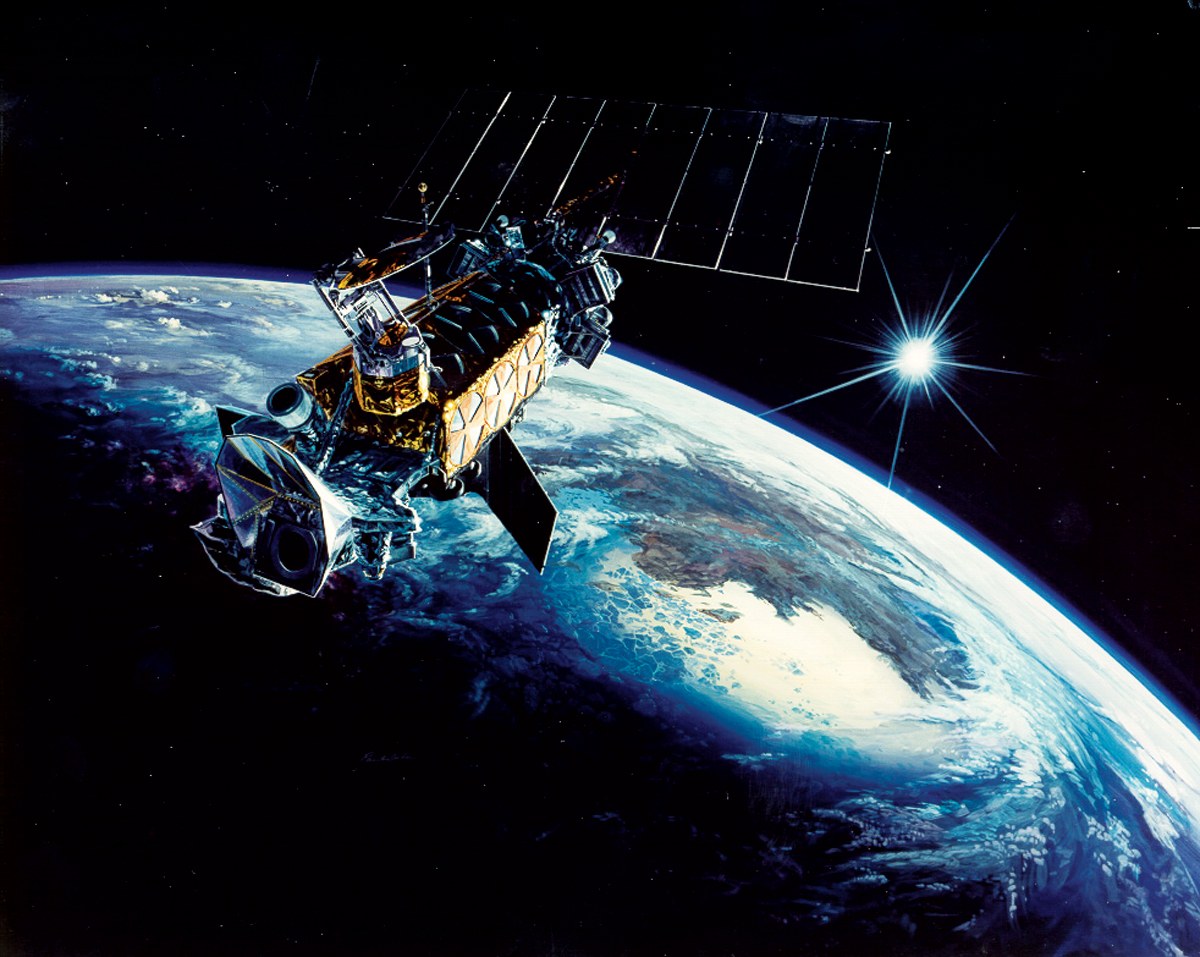
After more than two centuries without going to war, Sweden has just done something that changes the way the country sees the world: it has launched its first military reconnaissance satellite into orbit, a pair of its own eyes hundreds of kilometers high capable of photographing practically any point on the planet.
The launch marks the debut of the Swedish Armed Forces in space treated as a military domain, and it’s not just any technical detail. Until now, when the country needed satellite images to monitor a tense border or a troop movement far from home, it depended on allies who decided what to show and when. With its own device in orbit, Sweden can now look on its own, whenever it wants.
A neutral country decides to have its own eyes
Sweden carries an old reputation for neutrality. It stayed out of both world wars and built much of its identity around this, avoiding military alliances for more than two hundred years. This design began to crumble after Russia invaded Ukraine in 2022 and the country decided to join NATO in 2024, abandoning a tradition that lasted generations. The satellite is the natural continuation of this shift: a state that once avoided commitment now invests to see threats on its own, without asking anyone’s permission.
Geography helps to understand the urgency. Sweden overlooks the Baltic Sea, just a few hundred kilometers from the Russian enclave of Kaliningrad and the routes the Russian fleet uses to enter and exit the Atlantic. Monitoring this piece of sea and coast has become a priority for the entire northern flank of the alliance, and having its own images means not depending on Washington’s agenda to know what is moving there next door.
-
The United States launches autonomous drone ship capable of hunting submarines and firing missiles

-
Poland’s Massive Tank and Artillery Purchases Make It Europe’s Largest Land Army Overnight
-
Indonesia Recovers Underwater Spy Drone, Sparking Debate: Is It a Machine or a Warship?
-
UK, Italy, and Japan Collaborate to Build Stealth Fighter Jet Set to Dominate Skies by 2035


How such an eye works up there
The satellite was built by Planet Labs, one of the companies that understands the most about small Earth observation satellites and already operates one of the largest commercial imaging fleets on the planet. The device went into space aboard a Falcon 9 rocket, from SpaceX, launched from the Vandenberg base in California. American and European technology together to give a country the size of Sweden something that, until recently, was exclusive to a handful of powers.
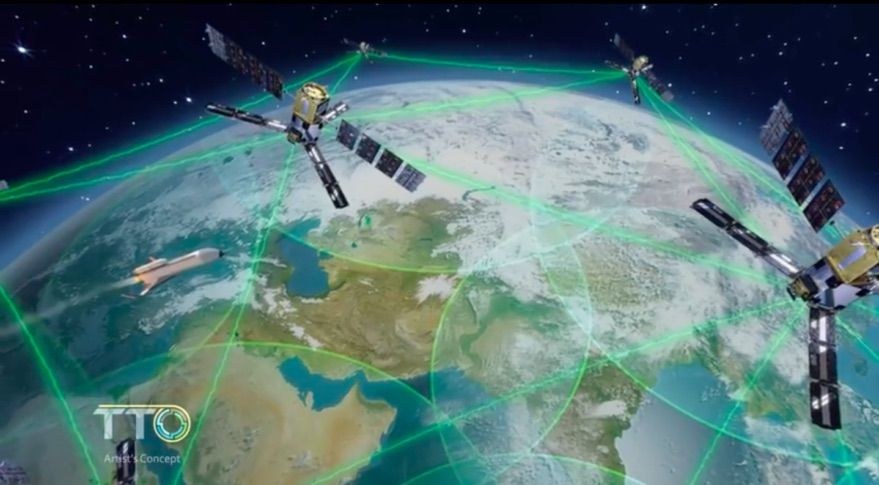
It operates in low orbit, the band that is a few hundred kilometers from the surface, much closer than communication satellites that live thousands of kilometers high. The closer, the sharper the image. From there, it captures high-resolution photos and, as it makes several orbits around the planet per day, it can revisit the same region at short intervals to compare what has changed from one pass to the next.
To give an idea of the scale, observation satellites of this size usually orbit between 500 and 600 kilometers in altitude, and even as small as they are, Planet already maintains more than a hundred of them orbiting the Earth for commercial use. Operating a military reconnaissance satellite, however, is another story: it remains the domain of a club of just over ten countries worldwide, and Sweden has just become one of them, alongside names like the United States, Russia, China, France, and Israel.
This is the kind of capability that turns a point on the map into truly useful information. I confess it’s easy to underestimate what it means to have this in hand: it’s not just taking beautiful pictures of Earth, it’s being able to confirm, with your own means, if a ship has moved, if a convoy has appeared, or if construction has grown in a sensitive region. Those who rely on borrowed images never have complete certainty and are still at the mercy of the satellite owner’s schedule.
A fleet of ten and the silent race of medium countries
The most revealing thing is not the first satellite, but the plan behind it. Sweden does not want to stop at one device: the military space program plans to put about ten satellites into orbit in the coming years, forming a constellation capable of monitoring areas of interest almost all the time, without those gaps of hours when no one is watching. And the schedule moved quickly, going from paper to real operation before the original 2030 target, at a pace that surprised even those who follow the sector closely.
A good part of this progress is credited to the cooperation between the defense procurement agency, FMV, and the research institute FOI, which together shortened the path from idea to functioning hardware. It’s a reminder that space capability doesn’t just come from a giant budget, it also comes from organization and knowing exactly what you want to buy.
The Swedish move fits into a trend that was almost invisible: of medium countries ceasing to be mere spectators in space. For decades, having a spy satellite was a privilege for those with billions to spend. Now, nations with more modest budgets are breaking into this club, precisely because satellites have become smaller, cheaper, and easier to launch hitching a ride on a commercial rocket that is already going up anyway. The cost of entering the game has plummeted, and with it, the excuse to stay out has fallen.
I imagine the effect of this combined: dozens of new eyes in orbit, each from a different country, all seeing the same planet from their own angles. Space, which was once the territory of just two superpowers, is gradually becoming a busy place, and Sweden is now entering through the front door signaling that it intends to stay. I ask you, because it’s the kind of thing that stirs us:
do you think this cheap access to space makes the world safer, with everyone watching each other, or more dangerous? Share your thoughts below.