Portuguese
  Spanish


Submerged railway crossing between San Francisco and Oakland reveals a curious work of American engineering, formed by giant modules sunk at the bottom of the San Francisco Bay to create a transportation corridor hidden under the water and surrounded by seismic challenges.
One of the most impressive submerged railway crossings in the United States was born from 57 giant steel and concrete sections sunk at the bottom of the San Francisco Bay, in an operation that transformed colossal modules into a railway tunnel.
Used by the BART system, the Transbay Tube connects San Francisco to Oakland via tracks installed under the water, creating an underground metropolitan transportation corridor in a region marked by heavy traffic, unstable soil, and seismic risk.
Unlike a conventional tunnel fully excavated underground, the work was constructed with large modules manufactured on land, launched into the water, towed across the bay, and positioned at the bottom, within a trench prepared beforehand.
-
Natal installed 19,000 Lego-type concrete blocks to hold back the advancing sea before the beach nourishment, and what seemed like an improvised barrier became the foundation of a R$ 110 million project to protect the boardwalk, tourism, and one of the most famous shorelines in Brazil.

-
Brazilian baker had his Kombi destroyed, started over from scratch with his wife and children, transformed 6 irrigated hectares into a mango farm and today produces 108 tons per year, showing how technical knowledge can lift a family out of improvisation and become a reference in fruit growing.
-
The happiest city in Brazil is located in the interior of São Paulo, boasts high employment, and has become the dream of thousands seeking safety, opportunities, and a better life.
-
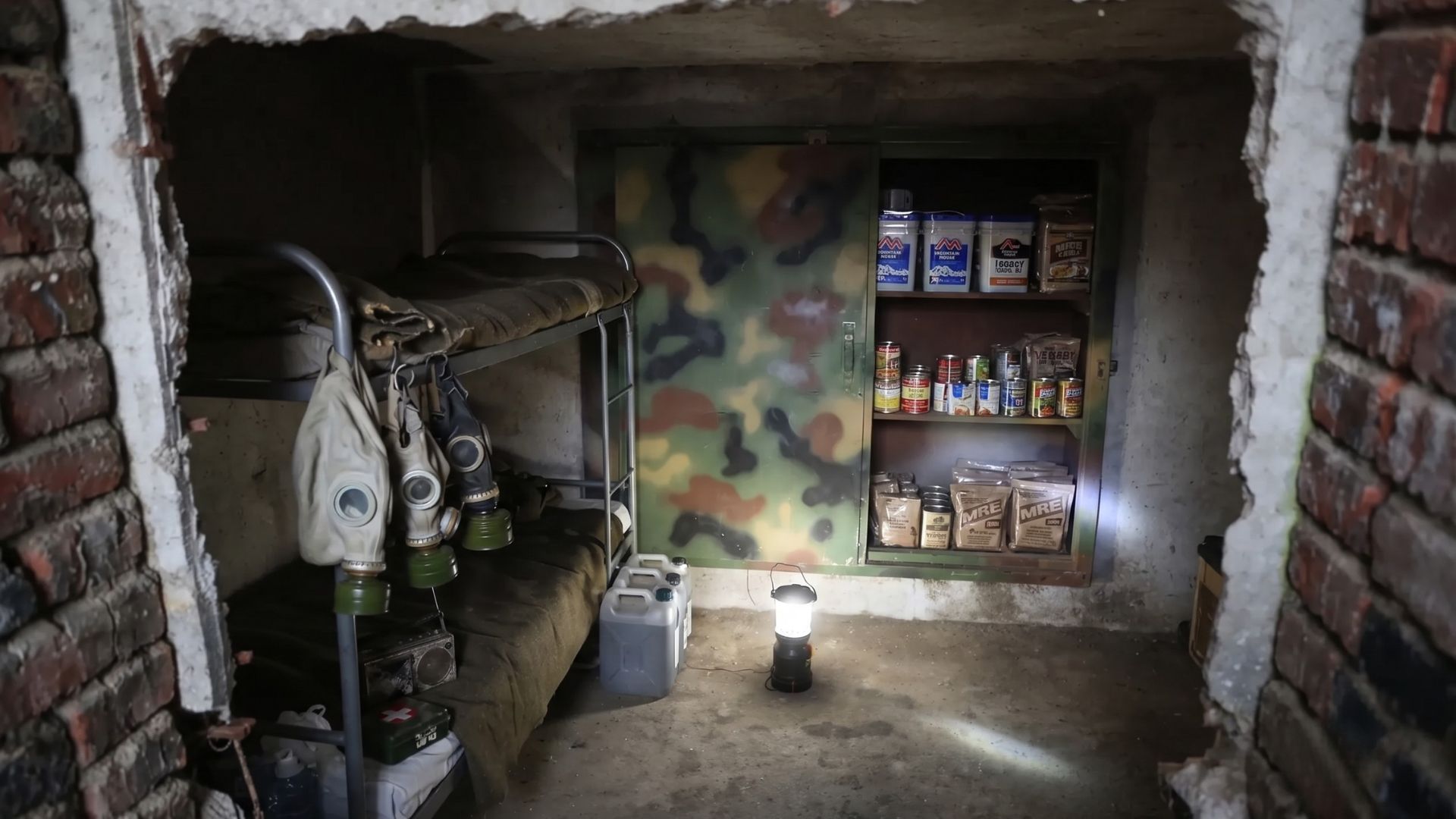
Family buys house from former survivalist, finds false doors, hidden underground bunker, beds, gas masks, and secret food storage behind camouflaged panels.


Each section was, on average, 330 feet long, about 100 meters, a dimension comparable to a football field, which helps explain the visual impact of such a large structure being sunk under the water.
Transbay Tube was assembled with 57 giant sections at the bottom of the bay
According to BART, the crossing is formed by 57 sections produced at Bethlehem Shipyards, in South San Francisco, before proceeding to the maritime stage that would transform the modules into a submerged railway connection.
After manufacturing, the segments were launched into the sea, transported to the defined route, and sunk in the correct positions, forming a submerged railway tube about 5.8 kilometers between two major urban centers in the region.
Due to its internal shape, the structure also deviates from the common image of a simple tunnel, as its cross-section resembles a pair of elongated binoculars, with two parallel railway tunnels and technical galleries between them.
Within these central galleries, maintenance areas, ventilation, utilities, and technical access allow teams to move through the interior of the structure, even with the entire set installed below the San Francisco Bay.
Submerged work required precise excavation in the San Francisco Bay
Before the installation of the modules, the bottom of San Francisco Bay underwent extensive preparation to receive the crossing, an essential step to ensure that each section could fit correctly into the planned alignment.
According to BART, more than 5.7 million cubic yards of material were removed during the trench opening, a volume that shows the scale of the intervention made on the bay bed.
To maintain the precision required by the work, engineers used lasers positioned at different points on the coast, guiding the barges responsible for dredging and helping to control the path of the underwater excavation.
In a construction made up of giant pieces, small deviations could compromise the fit between segments that weighed thousands of tons and needed to form a continuous railway corridor under the water.
Giant tubes were towed and sunk in exact positions
Each section required its own maritime operation, as the modules were almost floating, needed to remain stable during the movement, and depended on strict control until reaching the planned point at the bottom of the bay.
Upon reaching the defined location, the segments were slowly lowered with the aid of hydraulic systems and monitoring instruments, which tracked the weight distribution during the descent to the final position.
According to BART, each segment received 500 tons of gravel ballast to assist in the controlled descent, a process necessary to stabilize the pieces before connecting with the other modules.
In the final stage of settlement, divers monitored the positioning of the structures on the submerged bed, guiding necessary adjustments so that each section joined the set without compromising the tunnel’s path.
After the descent and connection between the modules, the installation sequence advanced with industrial pace, maintaining simultaneous activities on land and over the water to transform isolated pieces into a continuous crossing.
Railway tunnel connects San Francisco to Oakland underwater
The scale of the Transbay Tube is directly linked to the urban role of the bay, as San Francisco and Oakland are separated by a body of water central to the economy, regional circulation, and metropolitan transportation.
Before the submerged railway connection, travel between the two shores depended on bridges, ferries, and congested roads, which limited fluidity between the region’s dense and economically connected areas.
With the tube’s operation, trains began to cross the bay via a direct route underwater, without occupying space on the surface or competing for passage with local maritime traffic.
Starting from the West Oakland region, the trains go through the tunnel to downtown San Francisco, connecting strategic urban areas and allowing BART to function as an integrated regional network.
Region surrounded by seismic faults increased the engineering challenge
In addition to the presence of water and the weight of the material deposited on the structure, California’s geological environment made the project even more complex for engineers responsible for the crossing.
The San Francisco Bay Area is surrounded by significant seismic faults, including the Hayward and the San Andreas, which required solutions compatible with an earthquake-prone area.
For this reason, the submerged tunnel needed to withstand not only maritime conditions but also ground movements and safety demands associated with an operational railway infrastructure.
In the structural design, joints and solutions aimed at this scenario were incorporated to allow the tube to better respond to seismic forces without relying on excessive rigidity.
BART itself describes that the tube was designed to flex in response to seismic movements, reducing the risk of rupture and allowing a certain degree of controlled movement of the structure.
Submerged structure received reinforcements for seismic safety
Throughout its operation, the crossing underwent subsequent reinforcements within the agency’s seismic safety program, including interventions aimed at points subject to greater structural stress.
Among these measures, BART cites the installation of internal steel linings in certain sections and improvements in pumping systems, resources planned to reduce infiltration risks.
Inside the tunnel, the railway operation coexists with a complex technical infrastructure, consisting of two train circulation tubes and central galleries used for access, ventilation, and maintenance.
According to the agency, five-story ventilation structures are located at the ends, allowing staff entry and supporting the operation of a facility installed below the bay.
Corrosion protection helps preserve the tunnel in the marine environment
As the structure combines steel, concrete, and a submerged environment, corrosion protection has become an essential part of preserving the Transbay Tube over time.
To reduce the effects of oxidation, the tunnel relies on cathodic protection systems, with sets of anodes installed externally that help preserve the structure’s steel.
These elements function as sacrificial pieces, extending the lifespan of the tube and contributing to the maintenance of infrastructure installed in demanding maritime conditions.
Even hidden under the water, the Transbay Tube has established itself as one of the most important pieces of regional mobility, operating below a bay that concentrates navigation, dense cities, and intense economic activity.
The combination of scale, geological risk, and underwater engineering has made the crossing a reference among major urban transport works, especially by transforming giant modules into an invisible railway route on the surface.
The history of the structure shows how a work little perceived by those crossing the city can concentrate some of the greatest technical challenges of a coastal metropolis.
After all, how many people cross the San Francisco Bay without imagining that they are passing through 57 giant tubes sunk at the bottom of the sea?