






 Portuguese
  Spanish


In a report published in July 2026, the operation of the Army’s R3 ration, the Emergency Operational Ration that feeds a single soldier for 12 hours even when the troop operates far from any kitchen or food service, gained the spotlight in Brazil.
According to NSC Total, this operational ration of the Brazilian Army was designed for soldiers who operate autonomously in isolated points, and it reaches the troops’ hands within a military survival kit with a portable stove, gel fuel, and matches, all ready to function in the field.
According to the portal Estratégia Militar, the Army’s R3 ration is part of the family of operational rations of the Armed Forces as provided in Normative Ordinance No. 1417 of the Ministry of Defense. In practice, each unit of this 12-hour emergency ration includes two complete meals, designed so that the combatant does not depend on fixed structures to eat during a mission in a remote location.
What is the Army’s R3 ration and why does it feed for 12 hours

The Army’s R3 ration is, above all, a logistical response to a simple problem to state and difficult to solve: how to keep a soldier fed when there is no kitchen, cafeteria, or supply line nearby. The acronym identifies the Emergency Operational Ration, and the number indicates the model within the set of operational rations of the Armed Forces. Each unit has been calibrated to sustain a combatant for 12 hours, the interval that gives the name to the 12-hour emergency ration.
-
Meet Coraline: A 17-Year-Olds’ Animatronic Robot with 20 Servomotors and a Camera, Showcasing Brazilian Artistic Robotics

-
769 BMWs Arrive in Brazilian Port, Boosting Vehicle Imports to 16,200 in 2026 Amid Cargo Operations Resumption
-
Track&Field: From a School Project in São Paulo to a Leading Premium Sportswear Brand with Over 360 Stores and $270 Million in Revenue

-
From Humble Beginnings to Industry Leader: How Dudalina Became Brazil’s Top Shirt Exporter with $416 Million in Revenue



Unlike a regular meal, this operational ration of the Brazilian Army does not assume a stove, pot, or refrigerator. Everything the soldier needs to eat comes packaged together, forming a self-sufficient military survival kit. That is why the Army’s R3 ration often appears in scenarios of displaced troops, where food autonomy weighs as much as ammunition or potable water.
There is also an energy rationale behind the 12-hour timeframe. Half a day of operation is the time a combatant usually goes without contact with the rear in many tactical situations. Covering exactly this window, without excess weight in the backpack, is what makes the model so practical for those planning troop movement in hostile terrain.
What comes inside the military survival kit of the R3 ration
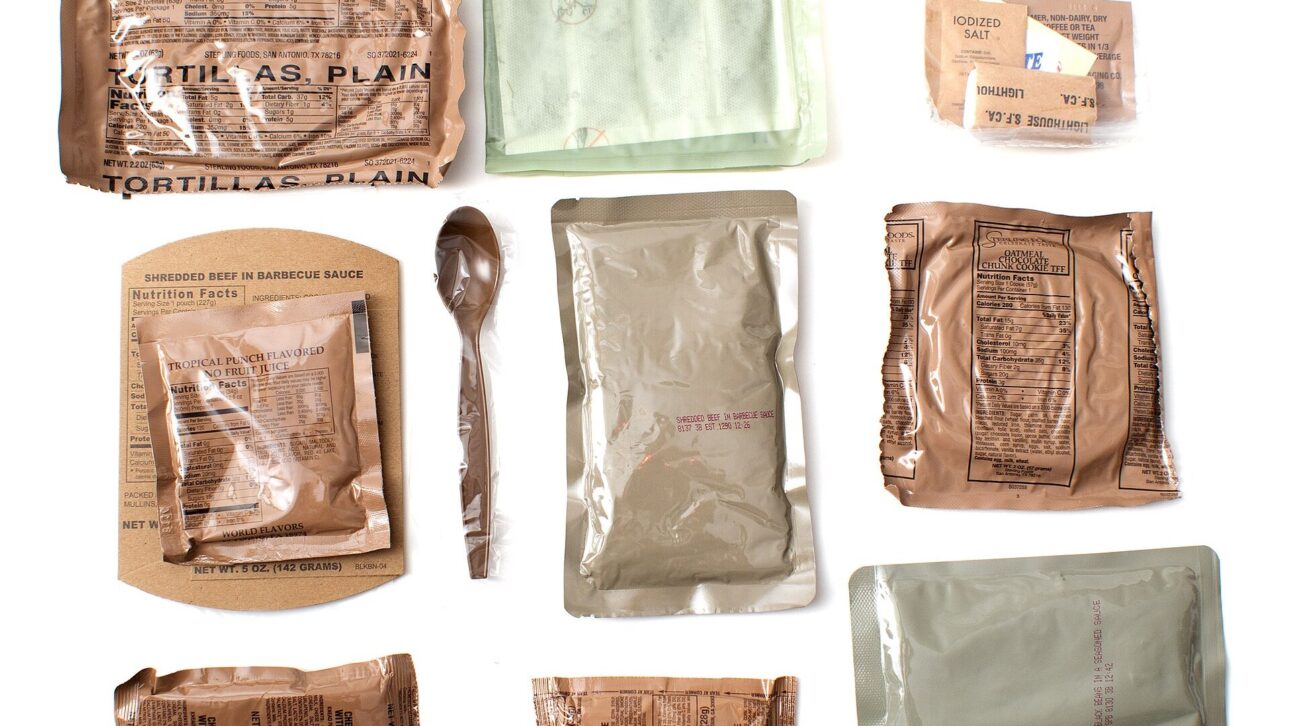
What stands out in the Army’s R3 ration is the list of items that fit into a single package. The military survival kit brings ready-to-eat meals, powdered drinks like coffee and refreshments, an electrolyte replacer, candies, cereal bars, and even rapadura, that concentrated energy source that is part of Brazilian food culture and provides quick calories in moments of exertion.
More than just food, the military survival kit includes the means to prepare and heat the food: a portable stove, gel fuel, and matches. This combination turns the Brazilian Army’s operational ration into a closed system, where the soldier carries the meal and, along with it, their own miniature kitchen. No piece depends on an outlet, piped gas, or external structure to function.
Notice the care with nutritional balance. It’s not just about quenching hunger: there are items for immediate energy, like candies and rapadura, and replenishment items, like the electrolyte replenisher, important for those who sweat a lot in hot weather. Each component occupies a thoughtfully considered place within the Army’s R3 ration, ensuring nothing is superfluous and nothing is missing.
Stove, gel fuel, and matches: how the military heats food without a kitchen
The trio of stove, gel fuel, and matches is the practical heart of the Army’s R3 ration. The portable stove functions as a small metal base that supports the food container. The gel fuel, lit with the matches that accompany the military survival kit, generates the controlled flame that heats the meal in minutes, without excessive smoke and without the mess of an improvised campfire.
This arrangement explains why the 12-hour emergency ration is so valued in real operations. An isolated soldier doesn’t need to search for firewood, improvise a campfire, or wait for support to have a hot meal. They open the Brazilian Army’s operational ration, set up the stove, light the gel, and in a matter of minutes, transform a package into ready-to-eat food.
It’s autonomy taken to detail, and one of the reasons operational rations of the Armed Forces pay so much attention to heating. Hot food is not a luxury in the field: it boosts morale, aids digestion, and makes a real difference in the disposition of those who spend hours in physical exertion, often in rain or cold.
Two meals per unit: how the 12-hour emergency ration is divided
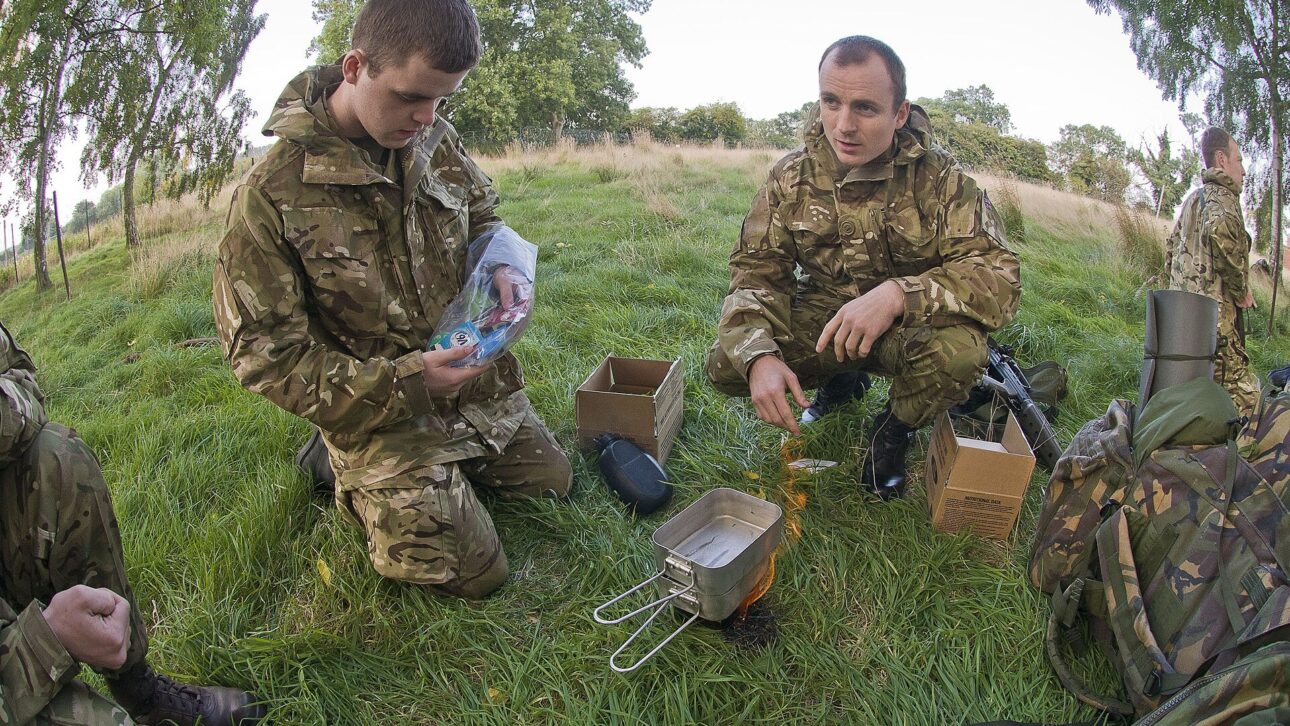
Each unit of the Army’s R3 ration is organized to cover two meals within that 12-hour window. In practice, this means breakfast and lunch, or dinner and supper, depending on when the troop receives the supply. The logic is straightforward: half of the operational day, two meal times, one single package.
This division is what supports the name 12-hour emergency ration. Instead of delivering a single meal, the Brazilian Army’s operational ration provides a short and complete food cycle, with energy distributed throughout the period. For military planning, this facilitates the calculation of how many units each soldier needs to carry on a mission of two, three, or more days, something central to the logistics of the Armed Forces’ operational rations.
Dividing into two meals also has a psychological effect. Having a breakfast moment and another for lunch, even in the field, helps maintain a minimal routine that organizes the combatant’s day. Small eating rituals sustain troop morale in difficult conditions, and this weighs as much as the nutritional value of the dish.
How many calories does the operational ration of the Brazilian Army have?
Here comes a point that requires caution, because the calorie numbers vary according to the documentation consulted. A survey on the Army’s R3 ration indicates an energy value in the range of 1,200 to 1,800 kcal per unit. Meanwhile, the technical reference related to the standardization of operational rations of the Armed Forces cites a minimum floor of 2,100 kcal for rations of this type.
It’s not about choosing one number and discarding the other. These are figures that appear in different sources and may reflect different criteria of calculation, composition, or specific model within the system. Mixing the figures would be a mistake, so the most honest approach is to present them side by side and make it clear that each comes from its own reference.
What matters to the reader is to understand that the 12-hour emergency ration carries enough concentrated energy to sustain a military person in exertion, even if the exact figure depends on the source. On the essentials, practically everything converges: 12 hours of autonomy, two complete meals, and a military survival kit with heating means included.
Ordinance No. 1417 of the Ministry of Defense: the normative basis of operational rations of the Armed Forces
None of this is improvised. The Army’s R3 ration exists within a formal framework, Ordinance No. 1417 of the Ministry of Defense, which organizes the operational rations of the Armed Forces into standardized models. It is this norm that defines categories, purposes, and the place of each ration within the military feeding system.
Standardization matters because it ensures that the operational ration of the Brazilian Army is predictable: a commander knows what to expect from each unit, no matter where the troop is. Thus, the 12-hour emergency ration ceases to be a standalone item and becomes a piece of a larger logistical puzzle, in which each model has a defined function.
It is also what separates the Army’s R3 ration from a simple field lunchbox. There is a norm, there is control, and there is a chain of responsibility over composition, quality, and distribution. This rigor is what gives confidence for the troop to depend on the item in a critical situation, knowing that the content follows a tested standard.
What the Army’s R3 ration has to do with Brazil
Brazil has a geography that makes this type of solution almost mandatory. Think of a troop in the Amazon, kilometers from any road, or a border platoon in a remote part of the country. In these scenarios, setting up a field kitchen is not always feasible, and that’s where the Army’s R3 ration shows its real value.
The Brazilian Army’s operational ration is, at its core, a tool of logistical sovereignty. It allows the country to keep troops fed in the jungle, caatinga, pantanal, or border strip without relying on fixed infrastructure. The military survival kit solves, in the palm of your hand, a problem that would otherwise require entire convoys of support, fuel, and personnel just to cook.
Therefore, understanding the 12-hour emergency ration is understanding how the Brazilian Armed Forces project presence in such a vast territory. The operational rations of the Armed Forces are, in this sense, as strategic as a vehicle, a radio, or a pair of boots: without them, the troop simply cannot sustain itself far from the base for long.
Why does a troop need a ration that dispenses with a kitchen?
The question seems obvious, but the answer reveals the engineering behind the Army’s R3 ration. A field kitchen requires water, fuel, utensils, trained personnel, and setup time. In many missions, none of this is available, and it is for these moments that the 12-hour emergency ration exists.
By concentrating everything in a military survival kit, the Army reduces logistical weight and gains speed. The soldier does not wait for the structure: he carries the Brazilian Army’s operational ration, and it works on its own. This changes the planning of any operation, as it frees the troop to move faster and reach places where a kitchen would never arrive.
It’s the difference between relying on the rear and having true autonomy. In a scenario of infiltration, long patrol, or rescue in a remote area, this independence can be the factor that decides whether the mission continues or stops due to lack of food. Feeding oneself, without support, ceases to be a detail and becomes a tactical advantage.
Army R3 Ration: what changes in the supply logistics of the Armed Forces
When looking at the whole, the Army’s R3 ration ceases to be just food and becomes a planning tool. Each unit has its own weight, volume, and characteristics that are factored into the calculations of those organizing a mission. Multiplying by hundreds of soldiers and several days, the 12-hour emergency ration becomes one of the most sensitive items of any prolonged operation.
That is why the operational rations of the Armed Forces receive so much standardization and control care. The operational ration of the Brazilian Army needs to be light enough to fit in the backpack, energetic enough to sustain the effort, and resistant enough to withstand heat, humidity, and transport over rough terrain. The military survival kit that accompanies the Army’s R3 ration is the materialization of this balance between nutrition, weight, and autonomy.
In the end, the Army’s R3 ration tells a story larger than that of a meal: it tells how a country feeds those who defend it in the most difficult places to reach, without relying on luck or improvisation.
And you, have you ever stopped to think about how a soldier eats hundreds of kilometers away from the nearest kitchen? The Army’s R3 ration shows that behind every operation, there is meticulous planning that transforms a simple package into total autonomy.
Tell us in the comments what surprised you the most about the 12-hour emergency ration and share this article with that friend who enjoys the world of the Armed Forces.


