






 Portuguese
  Spanish


Far from being a novelty of 2026, the phenomenon has been studied for decades and was demonstrated in the field and laboratory by geologists led by Giulio Di Toro in 2006. The braking effect is real, but limited, and at great depths, the fusion tends to lubricate the fault instead of stopping the tremor.
The idea that rock melted by friction can hold a tremor is not a recent discovery, nor does it tell the whole story. The behavior was described in detail back in 2006, in a study published in the journal Science by a team led by Italian geologist Giulio Di Toro, then at the University of Padua, alongside researchers like Takehiro Hirose, Stefan Nielsen, Giorgio Pennacchioni, and Toshihiko Shimamoto. The research showed, from geological faults exposed on the surface and high-speed experiments, that the molten material generated by the friction between rocks can act in two opposite ways during an earthquake.
During an earthquake, the rapid sliding between tectonic plates generates enough heat to melt minerals like quartz and feldspar and form a thin film of molten material. According to the study by Di Toro and colleagues, this layer of melted rock can both slow down the movement, by offering viscous resistance and helping to stop the rupture, and lubricate the fault, reducing friction and accelerating the sliding. In other words, the same phenomenon described as a brake can also act as a dangerous lubricant, and the central conclusion of that work was that, at intermediate depths of the crust, lubrication tends to prevail.
How friction transforms solid rock into magma in a fault
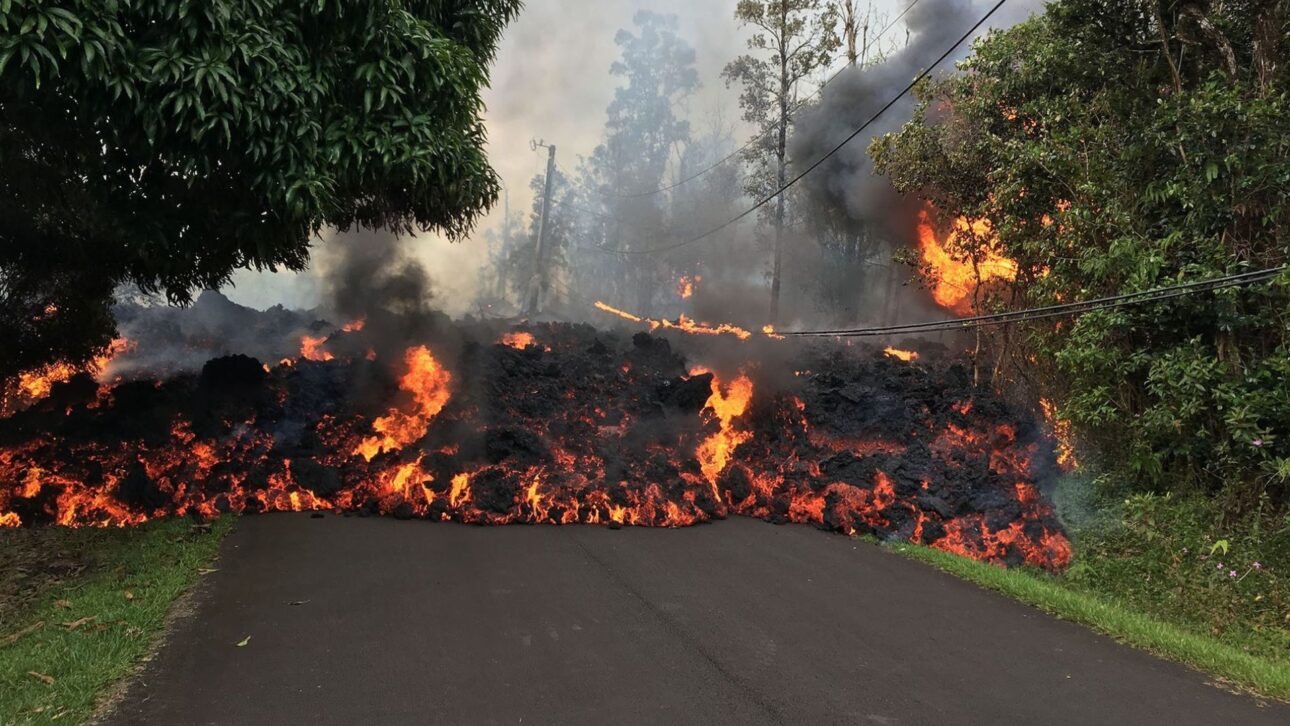
When the rock blocks of two tectonic plates slide against each other at speeds of about one meter per second, the friction generates intense heat concentrated in a very narrow band of the fault.
-
Artesian Well Becomes Lifeline for Small Brazilian Farm: Drilling Reaches 60 Meters, Finds Marble, Navigates Rock Fissures, and Strikes Fresh Water

-
Street Cleaner in Brazil Finds Discarded Books That Helped His Wife Pass Civil Service Exam and Become Police Captain
-
July’s Night Sky to Feature Planetary Alignments, New Moon, Venus at Sunset, Buck Moon, and Two Meteor Showers

-
Fisherman Catches 18kg Catfish Near Brazil’s Itaipu Lake, Among Largest Recorded in Recent Years



This heating is capable of melting common minerals of the crust, such as quartz, feldspar, and biotite, forming a film of melted material a few millimeters thick.
High-speed friction experiments show that this melting occurs at lower temperatures than previously thought.
Quartz, which melts near 1700 degrees Celsius under normal conditions, can melt around 1000 to 1200 degrees Celsius in the context of a fault, according to laboratory measurements with rocks such as granodiorite and gabbro.
The explanation lies in the extreme reduction of grain size and chemical reactions in the contact zone.
When this melted rock solidifies, it forms dark veins called pseudotachylites, described by geologist Robert Sibson back in the 1970s as the fossil signature of ancient earthquakes.
The viscous brake that can halt a tremor
This is where the side of the story known as the natural brake comes in.
At the moment the rock begins to melt, the molten material can offer a viscous resistance to sliding, in an effect that researchers call the viscous brake.
Instead of facilitating movement, the pasty film hinders the slipping of the fault walls and helps dissipate part of the accumulated mechanical energy.
This braking mechanism was proposed and modeled by geophysicist Yuri Fialko in the early 2000s and observed in experiments conducted by Toshihiko Shimamoto and Takehiro Hirose.
Under certain conditions, especially with silica-rich and more viscous magmas, this extra friction can even halt and interrupt the rupture of a fault, limiting the size of the tremor.
The decisive detail, however, is that this effect has well-defined limits and does not work in every situation.
The lubricating side that the original report leaves out
What the simplified version often omits is that the same melted rock can produce the opposite effect.
As the heat continues to accumulate, the viscosity of the molten material plummets, internal friction collapses, and the fault begins to slide much more easily.
This process, known as thermal runaway, leads to a sharp drop in resistance and can accelerate the sliding and amplify the tremor instead of containing it.
This was, in fact, the central conclusion of the study by Giulio Di Toro and colleagues published in Science in 2006.
By analyzing geological faults exposed in granitic rocks and reproducing the conditions in the laboratory, the team concluded that, at intermediate depths of the crust, around ten kilometers, the friction-melted material tends to lubricate the fault, with resistance well below expected.
Years later, in 2011, the group reinforced this depiction in a new work in the journal Nature, specifically focused on fault lubrication during earthquakes.
Why this is not a safety net against major earthquakes


The practical consequence is that there is no natural panic button ensuring the safety of cities in the face of a tremor.
Which of the two effects will prevail, the brake or the lubricant, depends on factors such as rock composition, magma viscosity, slip velocity, and especially the pressure to which the fault is subjected.
Studies indicate that the efficiency of the viscous brake drops significantly under high pressures, precisely the typical conditions of the depths where major earthquakes originate.
There are still other variables that complicate the picture and are under investigation.
The presence of water and other fluids in fault zones can cause phenomena such as thermal pressurization, which weakens contact and favors slipping, a topic explored in experiments published in the journal Nature Communications.
Recent research also shows that molten material does not always behave like a viscous liquid and can react in an almost brittle manner under very rapid deformation.
Therefore, treating melted rock only as a brake that prevents catastrophes is an incomplete reading of what science observes.
The rock that melts at the bottom of a fault is both a brake and an accelerator, and this ambiguity is the most interesting point of the story.
Reducing the phenomenon to a safety system that protects us from major earthquakes is comforting, but it distorts knowledge that geophysics has been building for decades.
The real behavior depends on a delicate balance of heat, pressure, and mineral composition, and that is why scientists continue to take samples from these zones to high-pressure presses in the laboratory.
And you, did you know that the same melted rock capable of braking a tremor can also lubricate a fault and intensify slipping? Do you think scientific discoveries like this should be disclosed more cautiously, without promises of protection that do not exist? Leave your opinion in the comments, respecting different views, and share this article with those interested in geology and the mysteries of the Earth’s interior.


