






 Portuguese
  Spanish
  5 min of reading
  0 comments


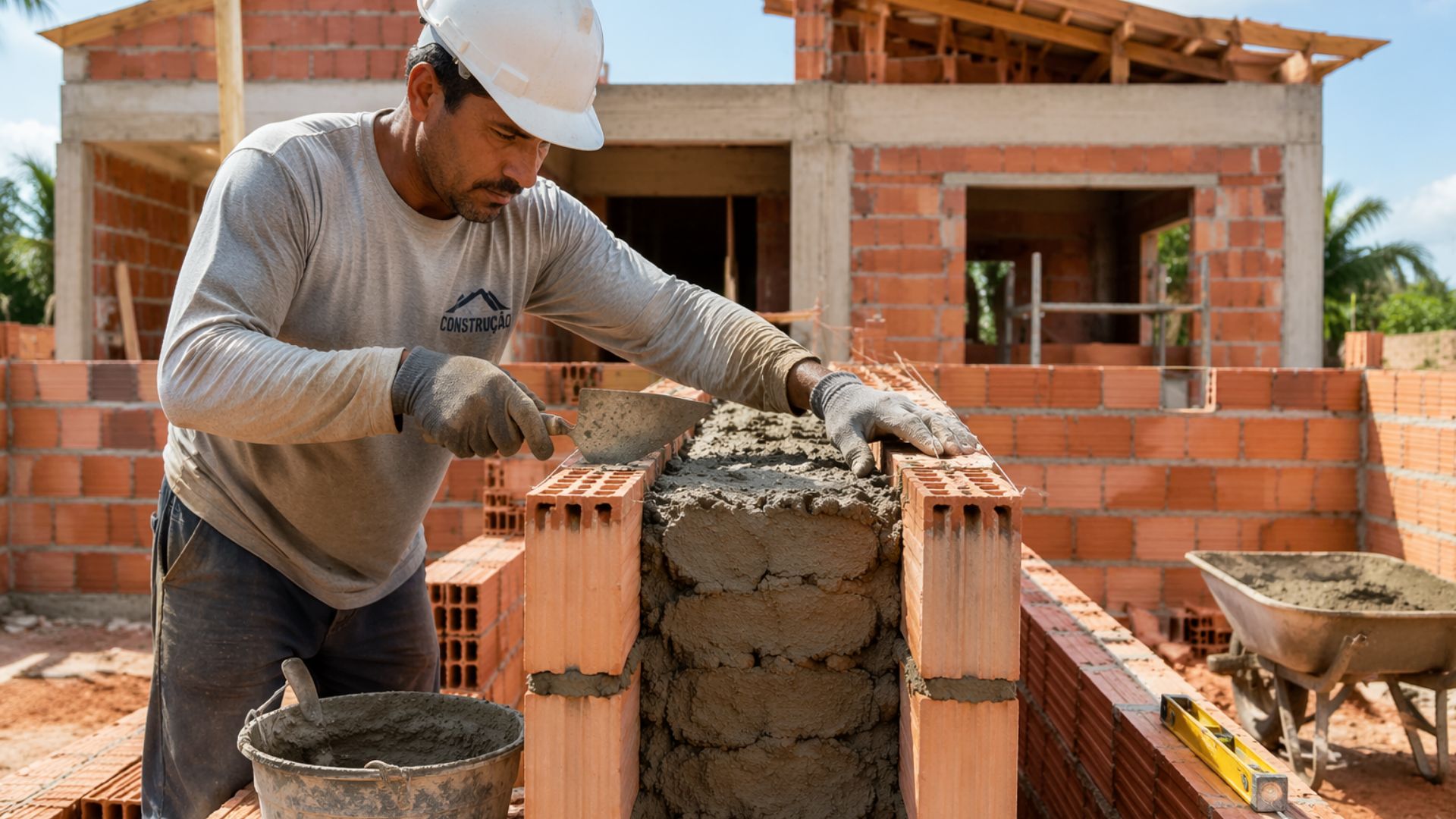
Construction strategies are highlighted by combining thermal mass, cross ventilation, and efficient roofing to reduce internal heat, improve comfort, and decrease dependence on electricity in hot regions.
In various hot regions of the country, residential projects have begun to prioritize thicker walls, high-density materials, and efficient roofing, as the heat accumulated during the afternoon tends to keep indoor environments warm for long periods.
In this context, instead of relying exclusively on electrical equipment, the construction proposal aims to delay the entry of heat and reduce internal thermal peaks, creating more stable conditions throughout the day and night.
Thermal inertia and performance of thick walls
Known in engineering as thermal capacity or thermal inertia, this characteristic is related to the ability of materials to absorb and store heat before transferring it, being widely considered in Brazilian technical standards and construction performance guidelines.
-
Bolivian Female Construction Workers Form Association to Combat Discrimination and 38% Pay Gap in the Industry

-
Near Amsterdam, residents buy land and discover they must also build streets, manage drainage, handle waste, and grow food on half their plot.
-
Brazil’s WEG to Open New Factory in China by 2027, Expanding Production of Large Rotating Electric Machines and Low to Medium Voltage Motors in Rugao

-
Chinese Shipyard Secures $1 Billion in Orders for Low-Carbon Container Ships Amid Global Fleet Renewal Efforts


In practice, when heavier components are used, there is a gradual absorption of thermal energy throughout the day, with a delay in transfer to the interior, which significantly reduces the feeling of heat during peak sunlight hours.
As a direct consequence of this behavior, the thermal load tends to reach the interior of the residence only hours later, often when the external temperature has already begun to drop, contributing to a more comfortable environment.
Depending on the solution adopted, high-mass systems can shift this heat gain by several hours, completely altering the thermal dynamics of indoor spaces throughout the day.
Materials like adobe and solid blocks gain space

With the advancement of requirements related to the thermal performance of buildings, materials and construction techniques have begun to be analyzed with greater rigor, directly influencing decisions about comfort, energy efficiency, and climate adaptation of homes.
In this scenario, denser blocks, double walls, and traditional solutions like adobe and stabilized earth stand out, as they exhibit more suitable thermal behavior in regions subject to high temperatures.
In addition, adobe stands out for combining high thermal inertia, lower environmental impact, and the ability to regulate internal temperature and humidity, being valued in both contemporary constructions and bioclimatic approaches.
When correctly applied and adapted to the local climate, this type of material contributes to greater thermal stability and reduction of temperature variation within the environments.
Double wall with air mattress improves insulation
Among the most efficient construction strategies, the double wall with air chamber stands out, adding an additional barrier against the transfer of heat from direct solar radiation.
In this system, the air confined between the two layers acts as a thermal insulator, while the mass of the walls slows down the propagation of the heat wave, increasing the thermal performance of the building as a whole.
When correctly sized, this solution helps to reduce the flow of heat into the interior, favoring a more balanced environment throughout the daily temperature variations.
Cross ventilation enhances natural cooling
Even with thicker walls, thermal comfort directly depends on air renewal, especially in hot and humid climate regions, where the accumulation of heat and humidity can compromise thermal sensation.
For this reason, cross ventilation becomes essential, allowing continuous entry and exit of air, as long as the openings are strategically positioned on opposite sides of the building.
To achieve efficiency, the airflow needs to traverse the internal environments, avoiding stagnation zones and facilitating the removal of accumulated heat throughout the day.
Moreover, the absence of obstacles near the external openings significantly contributes to the performance of this natural cooling system.
Roof directly influences internal temperature

Another determining factor in the thermal behavior of residences is the roof, which receives a large part of solar radiation throughout the day, especially in single-story buildings with greater direct exposure.
In this sense, thin and highly exposed tiles tend to transfer heat quickly to the interior, raising the temperature of the environments and compromising the thermal comfort of the residents.
On the other hand, solutions that combine greater mass, thermal insulation, or ventilation in the roofing can delay this heating, contributing to more efficient performance throughout the daily cycle.
The appropriate choice of roofing system, therefore, directly influences the internal thermal stability and the need for artificial cooling.
Shading and solar orientation make a difference
In addition to the materials used, controlling the incidence of sunlight on external surfaces plays a fundamental role in reducing the thermal gain of buildings.
Architectural features such as eaves, balconies, and brise-soleils act by blocking direct radiation, preventing walls from absorbing excessive heat during the most intense sunlight periods.
This reduces the amount of thermal energy that reaches the structure, favoring the maintenance of more balanced internal temperatures throughout the day.
Energy efficiency and impact on consumption
From the perspective of energy consumption, adopting these constructive strategies can lead to a significant reduction in the need for artificial cooling equipment, especially in hot climate regions.
This occurs because the lower internal heat gain decreases the reliance on fans and air conditioning systems, directly impacting electricity expenses over time.
National energy efficiency guidelines indicate that the thermal performance of the building is one of the most relevant factors for controlling consumption in residential environments.
When all these elements are properly integrated — including materials, ventilation, roofing, and solar orientation — the result tends to be a more stable, efficient environment aligned with local climatic conditions.





Be the first to react!