






 Portuguese
  Spanish


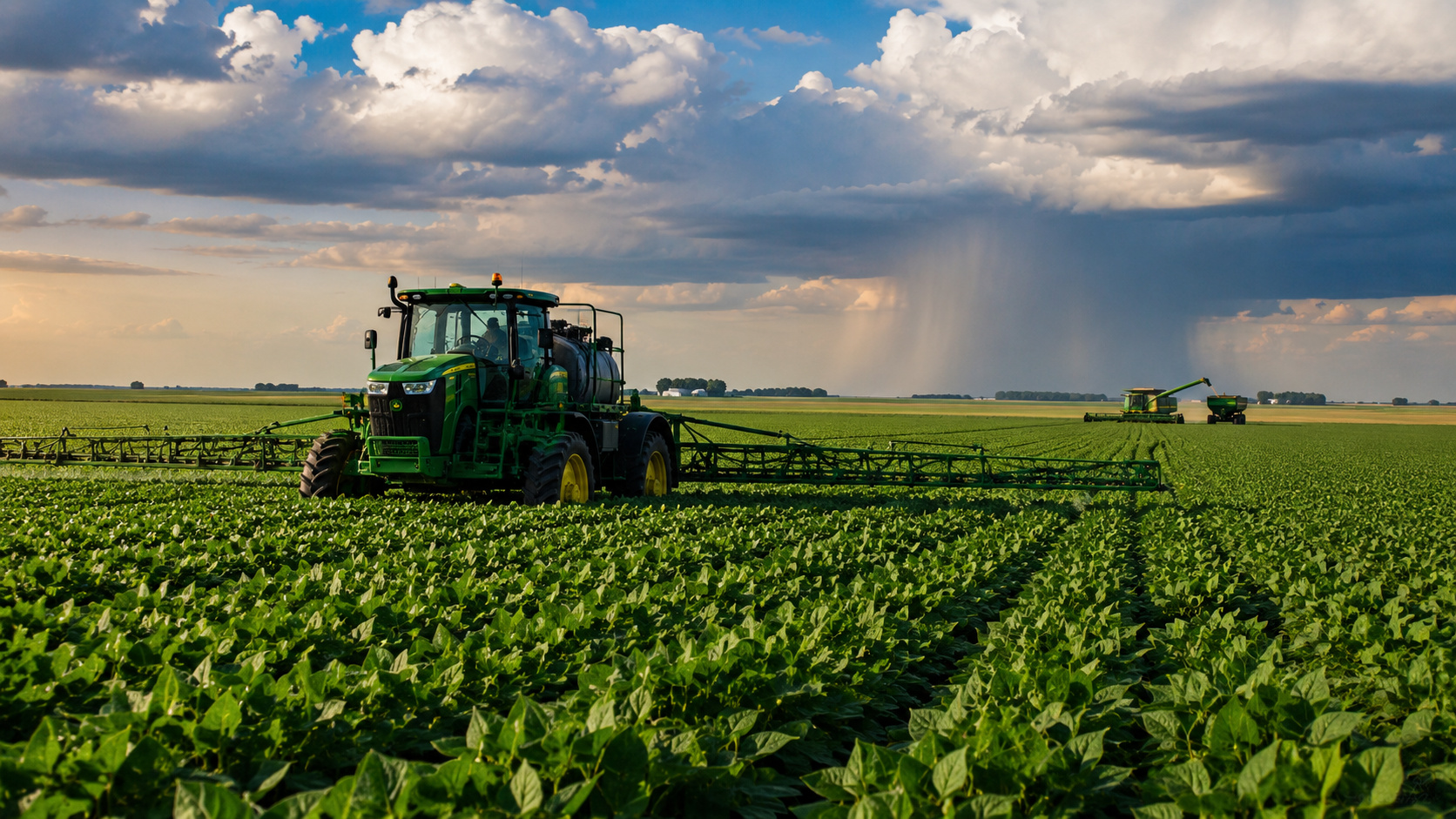
Significant drop in international quotations, accelerated progress of North American planting, and positive climate forecasts reduce buying appetite and increase caution in Brazilian agribusiness
The international market for soybeans recorded a sharp drop on Tuesday, June 2, 2026, putting pressure on global commodity prices and directly impacting sales in Brazil. The information was released by the Notícias Agrícolas portal, with analyses by journalist Carla Mendes and data from the United States Department of Agriculture (USDA), which pointed to a very favorable scenario for the 2026/27 North American crop.
Furthermore, the downward movement was not restricted to soybeans. As with corn and wheat, the oilseed was pressured by both technical and fundamental factors. As a result, futures contracts ended the day with significant losses on the Chicago Board of Trade (CBOT), while Brazilian producers chose to slow down negotiations in anticipation of better opportunities.
Ideal weather in the United States brings down soybean prices in Chicago
The main reason for the drop in soybeans in Chicago is related to the good development of the U.S. crop.
-
India’s Sugar Export Cuts and Ethanol Shift Amid El Niño Threat Could Impact Global Prices and Stocks

-
Quarantine Pest Threatening Palm Trees Puts Brazilian Authorities on Alert, Prompts Monitoring at University of Taubaté and Potential Control Measures Across São Paulo
-
Global Alert: Report Finds 159 Pesticides in Coffee Beans Sold in Europe, Posing Serious Risks to Millions of Farm Workers
-
Low-Demand Brazilian Beef Offal Gains Popularity Abroad: Indonesia Purchases $19.5 Million, Boosting Revenue and Reducing Waste




According to the weekly crop monitoring report released by the USDA, planting progressed rapidly and surpassed the indices observed last year and the historical average.
The numbers show that the United States has already reached 87% of the total area sown. In the same period of 2025, the index was 83%. The historical average for this time of year is 80%.
Additionally, in the first assessment of crop conditions for the 2026/27 season, the USDA reported that 66% of the areas are classified as good or excellent.
Consequently, the market began to work with the expectation of a robust crop.
In this scenario, soybean futures contracts recorded declines between 11 and 16 points in the most traded positions.
The contract for July delivery closed at $11.65 per bushel, while the August contract ended the session at $11.69 per bushel.
At the same time, soybean oil and meal markets also followed the downward trend.
Regular rains reinforce expectation of large global supply

Another factor that contributed to the pressure on prices was the weather forecast for the Corn Belt, the main producing region of the United States.
According to data from the NOAA, the official U.S. meteorological agency, the coming weeks are expected to see regular rains and mild temperatures in important producing states.
Among them are Iowa, Illinois, Indiana, Ohio, Missouri, and Minnesota.
Moreover, climate maps indicate good precipitation volumes for practically the entire U.S. agricultural belt over the next seven days.
As a result, investment funds intensified the sale of futures contracts.
The market logic is simple: the higher the production expectation, the greater the global supply tends to be and the lower the upward pressure on prices usually is.
According to an analysis by Grupo Labhoro, the market does not currently identify significant risks to the U.S. summer crop.
The consultancy emphasizes that the recently observed rain volumes and forecasts of widespread precipitation reduce concerns about production losses.
The only exception remains part of the eastern region of the agricultural belt, where the forecasted accumulations remain more limited.
Meanwhile, investors are also closely monitoring China’s position regarding the promised reduction of tariffs on U.S. agricultural products.
Chinese demand remains slow and reduces market support
In addition to favorable weather, another factor weighs on international soybean prices.
Chinese demand for U.S. soybeans remains below expectations.
As a result, the market finds it difficult to identify factors capable of sustaining more consistent recovery movements.
Without new buying stimuli and given the prospect of an abundant crop in the United States, investors maintain a defensive stance.
For this reason, the market remains pressured and subject to new negative fluctuations if weather conditions remain favorable.
In Brazil, prices fall and producers reduce sales
The decline recorded in Chicago quickly reflected in the Brazilian market.
Soybean prices fell in several producing regions, although the intensity of the declines varied according to the behavior of the dollar and export premiums.
At Brazilian ports, references remain close to R$ 130.00 per sack.
However, even at this level, the market remains stalled.
Furthermore, premiums remain pressured internally, limiting the potential for price recovery.
In this scenario, many Brazilian producers prefer to wait for better opportunities before making new deals.
Consequently, liquidity remains reduced in various trading areas.
The predominant strategy among sellers is to wait for possible market rebounds to proceed with new contracts.
Market remains attentive to the next moves
Although the current scenario is negative for soybean prices, experts point out that the agricultural market remains highly dependent on weather conditions.
Changes in weather forecasts for the Corn Belt or alterations in Chinese demand can quickly change investor sentiment.
For now, however, the fundamentals continue to favor a comfortable supply scenario.
Meanwhile, Brazilian producers closely monitor Chicago, the dollar, and export premiums in search of better trading opportunities.
With the U.S. harvest advancing at a fast pace and no significant weather threats on the horizon, the short-term trend remains pressured, both for soybeans traded in the United States and for prices practiced in the Brazilian market.
If you were a rural producer at this moment, would you sell your soybeans now to ensure a margin or wait for a price recovery in the coming weeks?





Be the first to react!