Portuguese
  Spanish


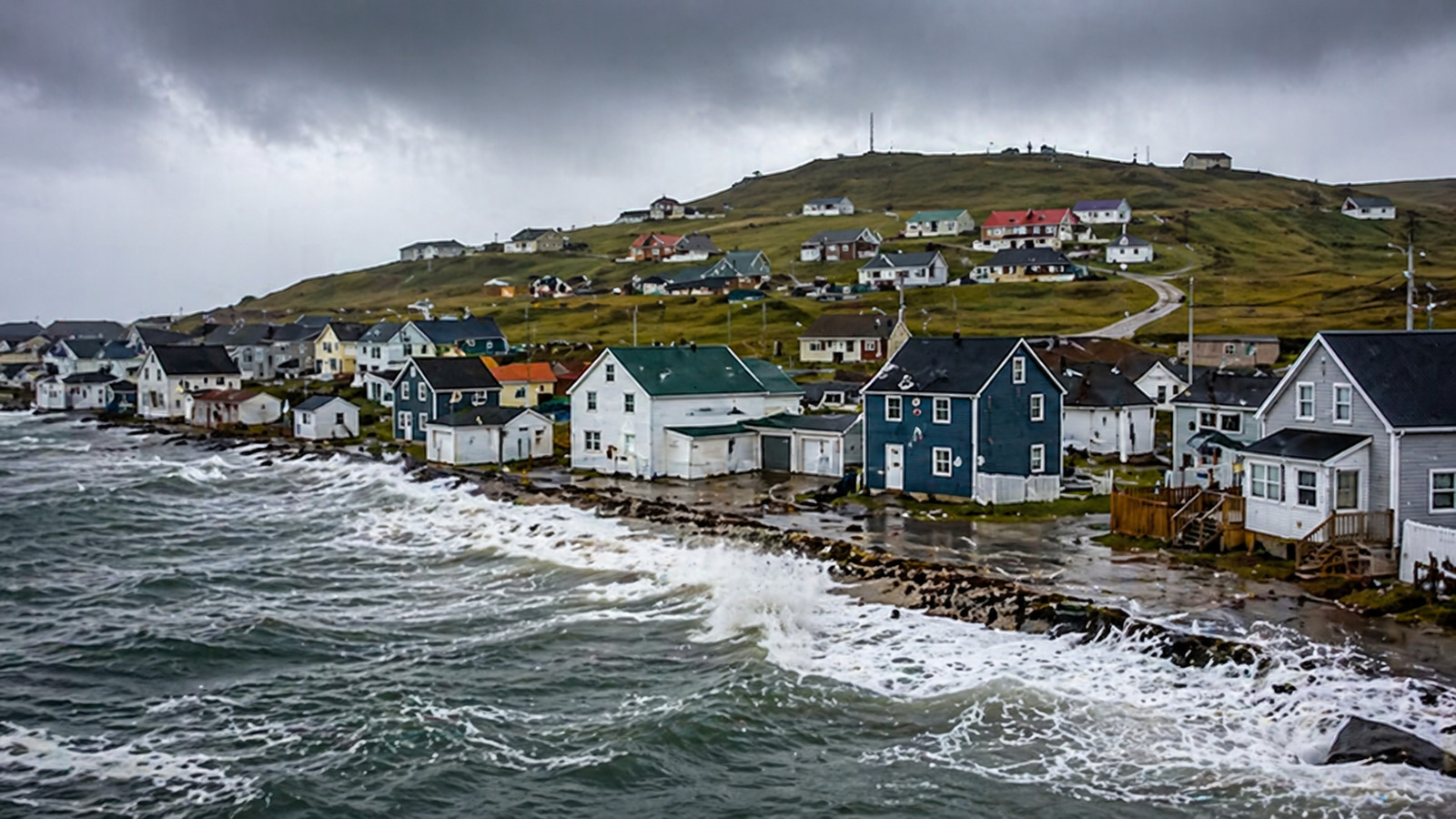

With only 600 inhabitants and situated 2 meters above sea level, Miquelon prepares a gradual move to a hill, trying to keep its community alive in the face of floods, storms, and the risk of disappearance in the near future
Miquelon, a village of about 600 inhabitants in Saint Pierre and Miquelon, is preparing a climate relocation to a hill 40 meters high after floods, storms, and the risk of disappearing due to rising sea levels.


Climate relocation tries to save Miquelon
The community is located off the Canadian coast, south of Newfoundland. Its houses are only 2 meters above sea level, a condition exposed to the advancing ocean.
The new land is on a grassy hill, about 800 meters from the current village. From above, approximately 400 buildings appear.
-
Black Granite Sarcophagus Found in Alexandria Reveals Three Skeletons, Strange Liquid, and an Ongoing Archaeological Mystery in Egypt

-
Childhood Psychology: Experts Highlight How Playing Outdoors Until Dusk Boosted Autonomy, Decision-Making, and Resilience in Previous Generations, Influencing Adult Behavior Today
-
Former Truck Driver from Brazil Builds Logistics Company Aiming for $70 Million Revenue with 11 Branches, 700 Monthly Clients, and $10 Million Fleet Investment

-
World’s First Plasma Dress Turns Fashion Show into Scientific Spectacle with Controlled Electric Discharges and Ionized Gases in Iris Van Herpen’s Groundbreaking Tech-Fashion Creation





When completed, the move should make Miquelon the first French village relocated due to the climate emergency.
For Mayor Franck Detcheverry, the priority is to preserve the community without breaking its identity.
2014 warning restricted constructions
The plan gained momentum in 2014 when François Hollande became the first French head of state to visit Miquelon. He warned residents that the village could disappear.
The concern came from the prediction that sea levels would rise up to one meter by the end of the century. After that, the locality entered a coastal risk prevention plan.
The measure prohibited new constructions, directly affecting the future of the village. Without new houses, many residents understood that staying there would mean limiting growth and pushing families out.
Initial resistance diminished after two consecutive storms flooded homes and damaged properties. The risk ceased to be just a prediction and became part of the local routine.
Hurricane Fiona accelerated municipal decision
The process advanced in 2022, after Miquelon narrowly escaped Hurricane Fiona, one of the most expensive climate events in Canadian history. Since then, the municipality has treated the move as a priority.
The climate relocation involves the construction of a new area with houses, basic infrastructure, and a storm shelter. The structure aims to protect the population during extreme events.
The transition will be gradual, keeping the two areas connected. While most residents remain in the old part, the town hall, school, and other public buildings will stay where they are.
Barnier Fund will finance property buyback
The move will have financial support from the French government through the unprecedented use of the Barnier Fund. The mechanism was created to help citizens whose homes are threatened by the climate crisis.
The fund provides for the buyback of properties at risk. Normally, residents would need to leave soon after the government purchase, but the municipality negotiated three years to build new homes.
The forecast is to relocate about seven to eight houses per year. For now, participation is voluntary, and almost 50 people have already signed up.
Last month, nine residents signed rental contracts and received building permits. Workers began bringing water and electricity from the current village to the hill.
Residents face attachment, losses, and doubt
Among the first participants is Phillippe Detcheverry, a retired executive from a utility company. He built his own house 40 years ago, like many inhabitants.
After facing floods, he states that leaving the property became easier. The property lost value due to coastal risks, and building in a safe area became a way to protect his children.
The change, however, divides opinions. Some residents still believe there is time before the threat becomes inevitable. Others avoid discussing the matter because conversations become tense.
In a small community, everyone knows each other. Many relationships are close, and decisions about home, street, church, cemetery, and family memories carry emotional and historical weight.
New village tries to preserve tradition and future
Bernard Briand, president of Saint Pierre and Miquelon, supports the land transfer but questions whether it will be possible to recreate the soul of the village elsewhere.
Architects involved say that the new Miquelon will try to carry elements of the old. Residents will be able to build their own homes, maintaining a local tradition, and some of the materials should be reused.
The immediate priority, however, is to move people out of the most vulnerable area. In addition to the threat from the sea, Miquelon also faces economic and demographic problems that pressure its continued existence.
Cod fishing, the historical basis of the region, collapsed in the early 1990s, and the local economy never fully recovered. Without a university, many young people leave and do not return.
For proponents of the change, the new village could open up space for housing, attract young people back, and ensure continuity. The risk now is political, because there will still be local elections next year.
It is unclear whether a future government will maintain the project. For Franck Detcheverry, without the climate relocation, Miquelon would lose its future.
With information from The Guardian.