






 Portuguese
  Spanish
  3 min of reading


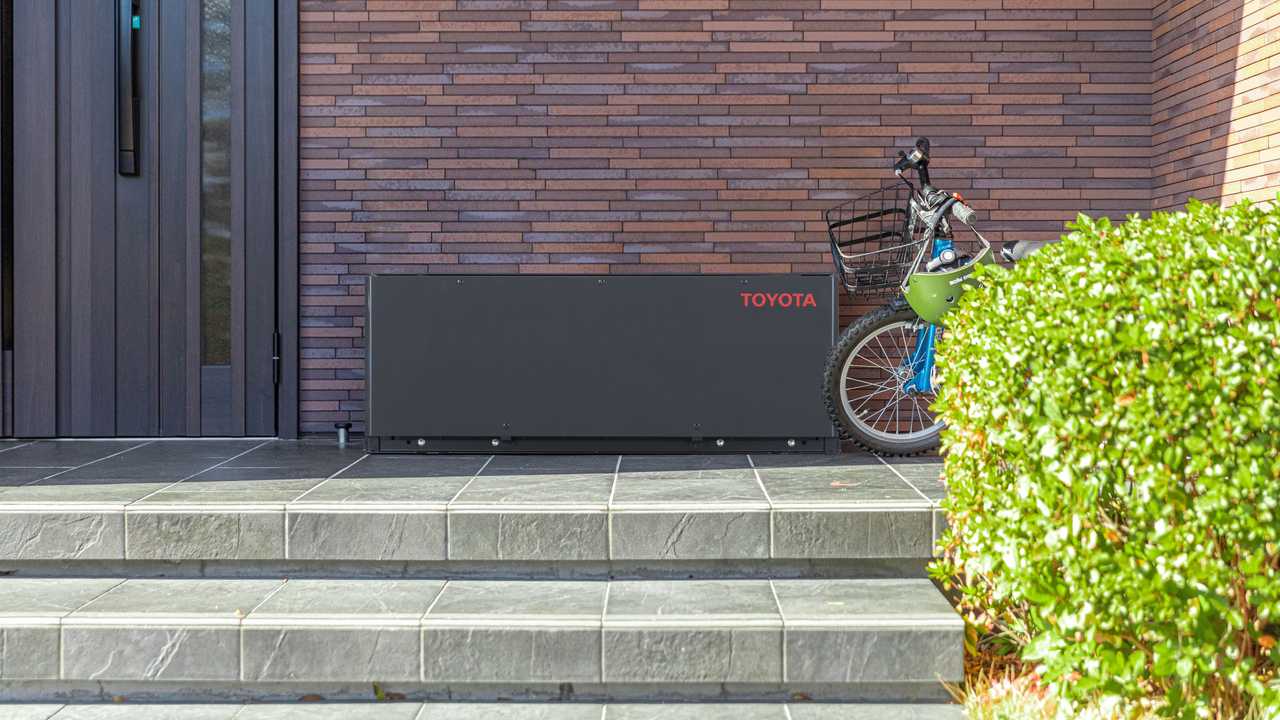
Toyota, similar to BMW and Tesla, decided to launch its new energy storage system for electrified vehicles that can function mainly when there are blackouts.
Following the same path as other automakers, such as Tesla and BMW, the Japanese Toyota announced last week (03), the launch of its new energy storage system based on electrified vehicle batteries for home use, grounded on the concept of safe and long lifespan, high performance, and good cost-effectiveness. It is important to remember that, although Toyota has not launched a major success in electric cars, it has been producing hybrids for a long time, thus having great experience with traction batteries.
Toyota’s Energy Storage Battery is 8.7 kWh
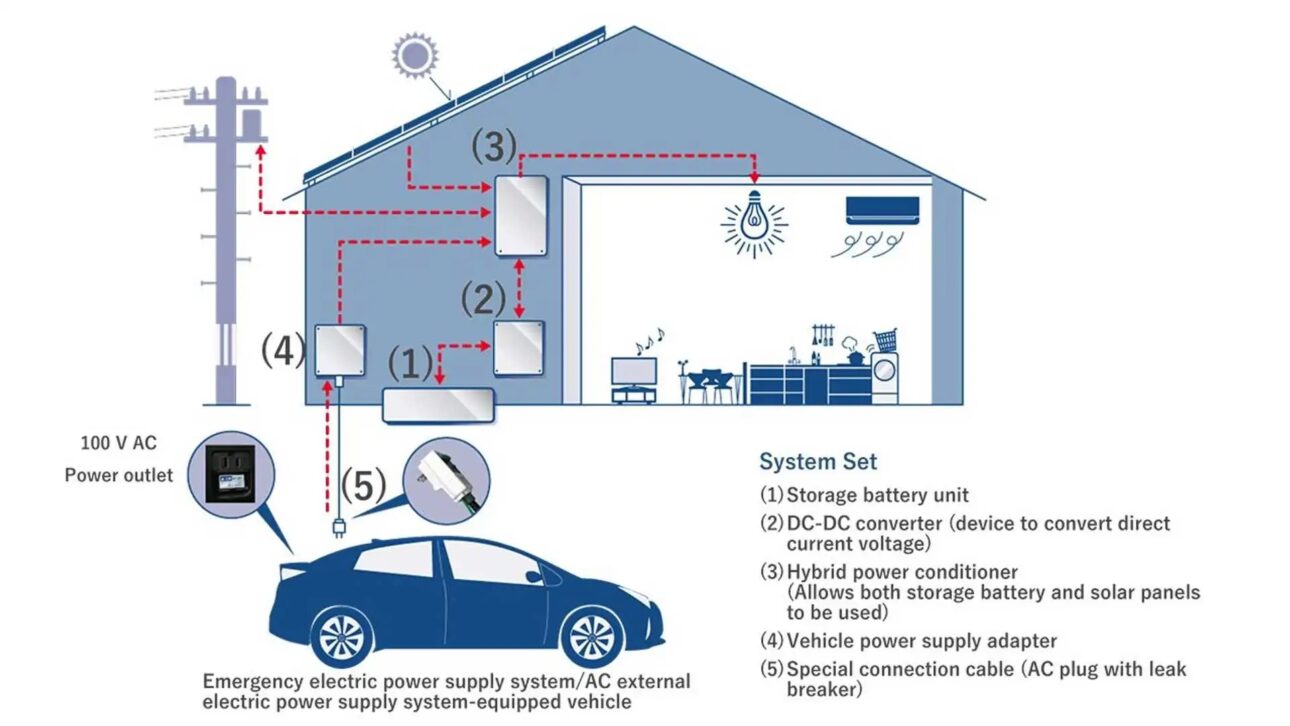
According to the automaker, the system based on electrified vehicle batteries, named Kyuden O-Uchi, was developed with many years of experience in electric vehicles, as well as onboard parts. The equipment will be used for normal usage, that is, off-peak electricity, charging electrified vehicles and supporting domestic photovoltaic systems.
In addition, it also serves as an emergency electricity source during power outages caused by natural disasters. The energy storage capacity of the battery is 8.7 kWh, while its output power is up to 5.5 kW. In its official statement, the automaker does not clarify if it is possible to combine multiple units into a single energy storage system to achieve greater capacity or output.
-
Uber Faces Shareholder Scrutiny as Board Accused of Ignoring Safety, Compliance, and Harassment Warnings Amid Over 3,500 U.S. Lawsuits

-
Ferrari’s First Electric Car Divides Fans, Priced at $630,000, Amid Concerns Over Limited Editions; Brand Clarifies It’s Not Just for Future Perks
-
BYD Dolphin Mini: The Electric Car That Defies Depreciation, Losing Only 3.58% in a Year and Becoming the Best-Selling Retail Model Under $22,000

-
Electric Car JAC E-JS4 Loses $19,000 in Value in One Year, Leading Record Depreciation of Used Cars in Brazil Due to Expensive Battery and New Models


An interesting element of the Toyota O-Uchi Kyuden System is the bidirectional capability of the vehicle to the home (up to 1.1 kW output) using an AC charging inlet and a special adapter.
Toyota Electrified Vehicles Function as a Battery
According to an official note from the company, Toyota’s energy storage system supports electricity supply from electrified vehicles HEV, BEV, FCEV, and PHEV at 100 V AC, and can also utilize stored energy in electric vehicles as a backup power source during outages, providing greater peace of mind to users.
The electrified vehicles from the Japanese brand can also provide energy through AC (100V) outlets onboard. By using a wireless LAN router linked to a hybrid power conditioner and an app, it is also possible to view status and change system settings.
At least at this beginning, the Toyota O-Uchi Kyuden System is available only in the automaker’s home country, which has recently started receiving orders, while sales will begin in August through general constructors.
Automaker Has Plans for the Global Green Hydrogen Market
In addition to the new energy storage technology, the automaker is also showcasing a functional prototype of a hydrogen cartridge that can be taken anywhere. Basically, the Japanese automaker plans to promote the use of this energy for various activities both inside and outside of the home, well beyond vehicles.
These cartridges are cylinders with 400 mm in length and 180 mm in diameter with a target weight of 5 kg when full.
The devices can transport about 3.3 kWh of usable energy, according to Toyota, depending on the efficiency of the external fuel cell used to convert the hydrogen back into electricity. To make transportation even easier, small handles on the top of the cartridges have been designed.






Be the first to react!