





 Portuguese
  English
  Spanish
  3 min of reading
  52 comments


Toyota Announces Ambitious Target of 2.5 Million Vehicles Annually by 2030 to Compete with BYD in Chinese Market
According to information from Reuters, Toyota, the largest automaker in the world, has an ambitious target for the Chinese market in the coming years: to manufacture up to 2.5 million vehicles annually in China by 2030, according to international sources. One of the goals would be to regain lost ground to BYD.
This plan marks an important shift for the manufacturer in the world’s largest automotive market, aiming to recover lost space to local companies like BYD. The expected volume represents a 63% increase compared to the record of 1.84 million vehicles in 2022.
Approach to the Chinese Market Dominated by BYD
Unlike other Japanese automakers that have chosen to reduce their presence in China, Toyota is betting on a more collaborative approach with the local market.
-
With a 1.0 turbo engine producing 116 hp, the Volkswagen Polo Highline joins the club of the cheapest cars in Brazil with a discount of R$ 18,000 in the PcD version.

-
Larger than the T-Cross and costing up to R$ 150,000, the new Omoda 4 arrives in 2026 with the size of a mid-size SUV, advanced technology, and poses a real threat to the Pulse, Kardian, and Tera in Brazil.
-
Without stopping once to charge, Mercedes’ electric car traveled 1,205 kilometers — more than the distance from São Paulo to Florianópolis — with a solid-state battery that weighs 25% less than current ones.

-
The “unbreakable” from Toyota: why the 2015 Etios is still an excellent deal as a used car?


The company plans to increase the independence of its local executives, transferring more responsibilities to them in the development of vehicles. This change, therefore, aims to ensure that the preferences of Chinese consumers are met more quickly and efficiently.
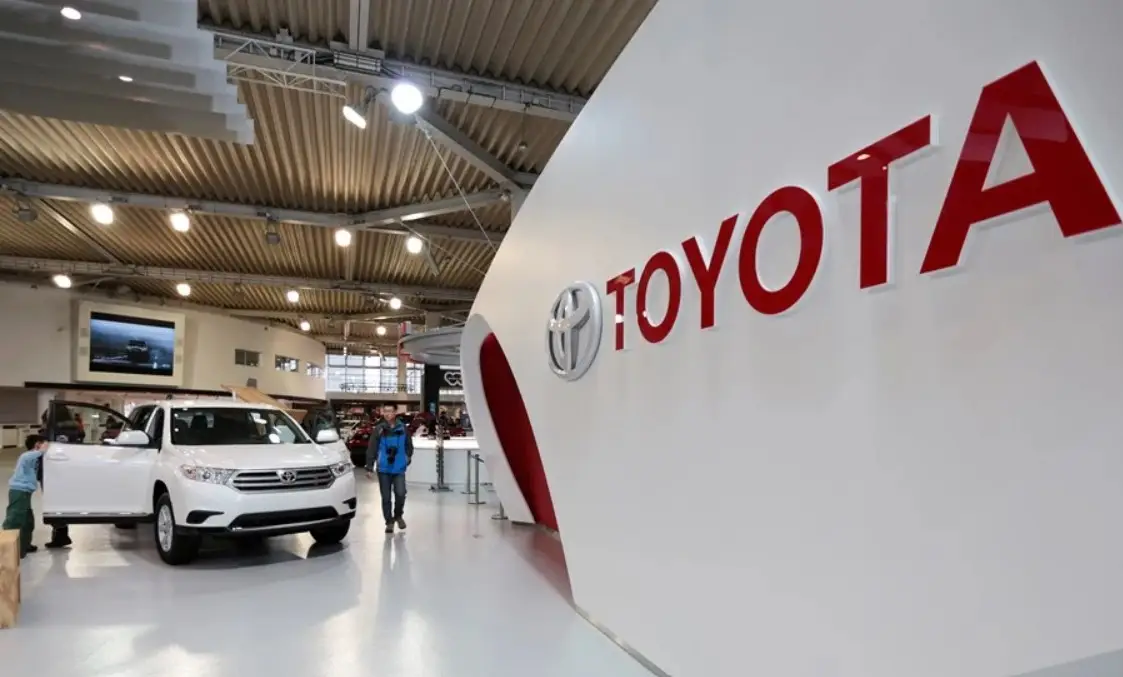
Partnership with Local Joint Ventures
The strategy includes a closer relationship with the two joint ventures Toyota has in China, FAW Toyota Motor and GAC Toyota Motor. The automaker aims to consolidate the production of each vehicle in one of the joint ventures, optimizing costs and increasing efficiency.
This means that the same car model could be available in deliveries from both partnerships, facilitating transport and simplifying production complexity.
Challenges for Toyota in the Chinese Market
Despite the ambitious plan, Toyota faces significant challenges in China. Competition with local manufacturers, especially in the production of electric and affordable vehicles, has been intense.
Brands like Hongqi and Aion EV, from FAW Group and GAC Group, respectively, have outperformed Toyota’s models in sales. This performance reflects the appeal of local brands, which appear to be more agile in adapting to market demands.
Toyota’s Investment in Research and Development
To remain competitive, Toyota intends to deepen cooperation between its Research and Development (R&D) center in Jiangsu and its Chinese joint ventures. The goal is to accelerate the creation of electrified and connected vehicles, aligning with the preferences of the Chinese public for advanced technologies.
Integrating local know-how into the production of new models is one of the bets to consolidate the brand’s presence in the country.
Impact on Japanese Suppliers
Toyota’s deliveries also directly affect its Japanese suppliers operating in China. Auto parts companies are facing difficulties maintaining their competitiveness in the face of rapid innovations from Chinese brands.
Toyota hopes that increased production will help reassure these suppliers about their continued presence in the market, ensuring the continuity of supply chains.
Pressure on Operating Profit
As such, Toyota announced a decline in operating profit in China in the first half of the fiscal year, a result of high marketing costs due, mainly, to intense competition with Chinese brands.
The search for cost-cutting strategies and production efficiency is at the center of the automaker’s efforts to increase profitability.
Withdrawal of Other Japanese Automakers
Toyota’s strategy also contrasts with the stance of other Japanese automakers in China. Recently, Mitsubishi Motors decided to withdraw from the country, while Honda and Nissan opted to reduce their local purchases.
Toyota, on the other hand, intends to consolidate its market share in China, thus investing in synergy with local partners and expanding its production line.
Toyota’s commitment to China represents an attempt to recover in the world’s largest automotive market.
With increased production and closer ties with local joint ventures, the automaker seeks not only to gain new consumers but also to solidify its position in the face of intense competition.







Wonderful post — practical and well-researched. Subscribed!
I appreciate you sharing this blog post. Thanks Again. Cool.
I appreciate the honesty in your assessment — refreshing to see.