






 Portuguese
  Spanish


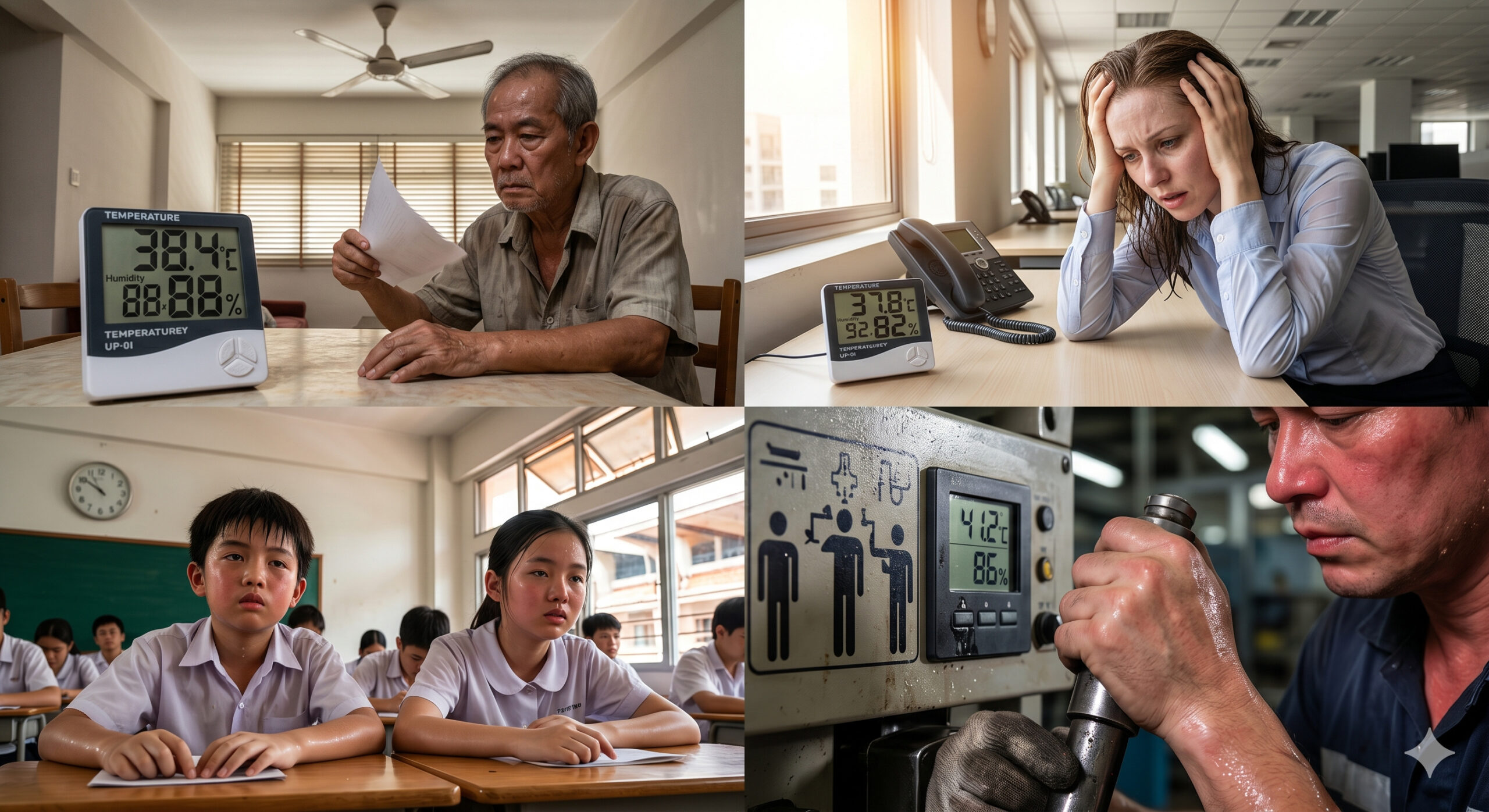

Heat inside enclosed spaces becomes a global alert in 2026, with a silent risk for billions of people in homes, schools, and workplaces.
In 2026, international organizations related to climate and public health placed a new focus at the center of the global debate: heat inside enclosed spaces. The initiative gained momentum with Heat Action Day, scheduled for June 2, 2026, coordinated by the Global Heat Health Information Network with support from the World Meteorological Organization and the World Health Organization. The central theme of the campaign is straightforward: heat is not just on the streets; it is inside homes, schools, factories, and hospitals, often without any alert system or adequate protection.
The concern is based on a critical point: while heat waves are monitored with external weather alerts, the indoor environment remains invisible to public policies and monitoring systems, even though it is where people spend most of their time.
Internal temperatures can exceed safe limits even without direct sun exposure
One of the most concerning aspects highlighted by international organizations is that enclosed spaces can reach dangerous temperatures even without direct sun exposure.
-
German Engineer Developed Diesel Engine Running on Vegetable Oil Decades Before Electric Cars Became Popular; Can This Forgotten Idea Work in 2026?

-
James Webb Telescope Uncovers Unexpected Clues on Mysterious Moon, Potentially Redefining Planetary Origins

-
$1.5 Billion Sleipnir Vessel Transforms Ocean into Floating Construction Site with 12 Hybrid Engines and Capacity to Lift 20,000 Tons

-
23 Years After Tragedy, Brazil’s Alcântara Space Center to Launch New Suborbital Rocket in 2026 with South Korean SEBIT Project Targeting Near-Space Tests


Without adequate ventilation, efficient thermal insulation, or cooling systems, heat can accumulate inside buildings throughout the day, raising the internal temperature to levels equal to or even higher than those of the external environment.
This phenomenon is exacerbated by factors such as:
- Building materials that retain heat
- Low air circulation
- High occupancy density
- Equipment that generates internal heat
The result is an environment where the human body continues to be exposed to thermal stress even after leaving the sun.
Hot nights transform homes into risky environments and prevent body recovery
Another critical factor pointed out by organizations is the increase in nighttime temperatures. In scenarios of extreme heat, nights cease to provide thermal relief, especially in urban areas.


Inside homes without adequate cooling, the temperature can remain high throughout the night, preventing the physiological rest necessary for the body’s recovery. This process is considered one of the main risk factors during heatwaves because:
- The body cannot dissipate the heat accumulated during the day
- The quality of sleep is compromised
- Thermal stress accumulates over several days
This continuous cycle turns heat into a persistent risk, not just a one-time event.
Schools and workplaces are on the frontline of thermal risk in 2026
The global campaign also highlights the impact of heat in collective environments, such as schools and workplaces. In schools, children spend hours in classrooms often without adequate air conditioning, which can affect:
- Concentration ability
- Cognitive performance
- Physical health
In workplaces, especially those without thermal control, heat can lead to:
- Decreased productivity
- Increased risk of accidents
- Health problems related to thermal stress
These environments are considered critical because they concentrate large groups of people exposed to heat simultaneously.
Billions of people may be exposed without realizing the risk inside enclosed environments
One of the most alarming points of the global alert is the number of people potentially exposed. Since most of the world’s population lives and works in enclosed environments, indoor thermal risk can affect billions of people at the same time.

The problem is exacerbated by the fact that heat in indoor environments is often underestimated. Many people do not associate symptoms such as fatigue, headache, or dizziness with the heat accumulated inside their homes or workplaces.
This transforms internal heat into a silent risk, which can evolve without the individual realizing the gravity of the situation.
Internal heat is already treated as a global health emergency by international organizations
The World Meteorological Organization and the World Health Organization classify extreme heat as one of the most relevant climate threats to public health.
With an expanded focus on indoor environments in 2026, the phenomenon is treated as a global health emergency, with a direct impact on:
- Mortality
- Cardiovascular diseases
- Respiratory problems
- Heat stress
The absence of specific policies for monitoring and mitigating internal heat is one of the main challenges identified by organizations.
Urban infrastructure and unprepared housing increase vulnerability to heat
The risk of internal heat is directly linked to the quality of urban infrastructure and buildings. In many regions of the world, especially in lower-income areas, constructions are not designed to handle high temperatures. This includes:
- Lack of thermal insulation
- Absence of cross ventilation
- Use of materials that retain heat
These conditions turn residences into true “thermal traps” during heat waves, increasing exposure to risk.
Climate change intensifies the problem by elevating external and internal temperatures simultaneously
The increase in global temperatures is directly related to the intensification of internal heat. As the external environment becomes warmer, the heat accumulated inside buildings also rises.
This creates a combined effect, where external heat feeds internal heat, amplifying the impact on the human body.
Moreover, more frequent and prolonged extreme events increase the duration of this effect, making the problem more persistent over time. Unlike external heat waves, which have meteorological monitoring systems, internal heat still lacks broad alert mechanisms.
This means that:
- There are no standardized indicators for internal thermal risk
- The population does not receive specific warnings
- Public policies are still limited
This gap makes indoor heat one of the most complex challenges for climate adaptation on a global scale.
2026 marks a shift in the focus of climate debate by bringing risk indoors
The emphasis placed on indoor heat in 2026 represents an important change in how the phenomenon is addressed.
Until then, the main focus was on external events, such as heatwaves in open areas. Now, the debate includes the spaces where people live, work, and study. This change broadens the understanding of the problem and highlights that the impact of heat goes beyond direct exposure to the sun.
Do you believe that cities and homes are prepared to handle heat that does not appear in traditional warnings
The global alert about indoor heat reveals a challenge that goes beyond weather forecasting. It is a risk that develops within everyday spaces, often without visibility or adequate preparation.
In light of this scenario, the central question is clear: are cities, buildings, and public policies ready to face a type of heat that does not appear in traditional warnings but can affect billions of people at the same time?


