Portuguese
  Spanish


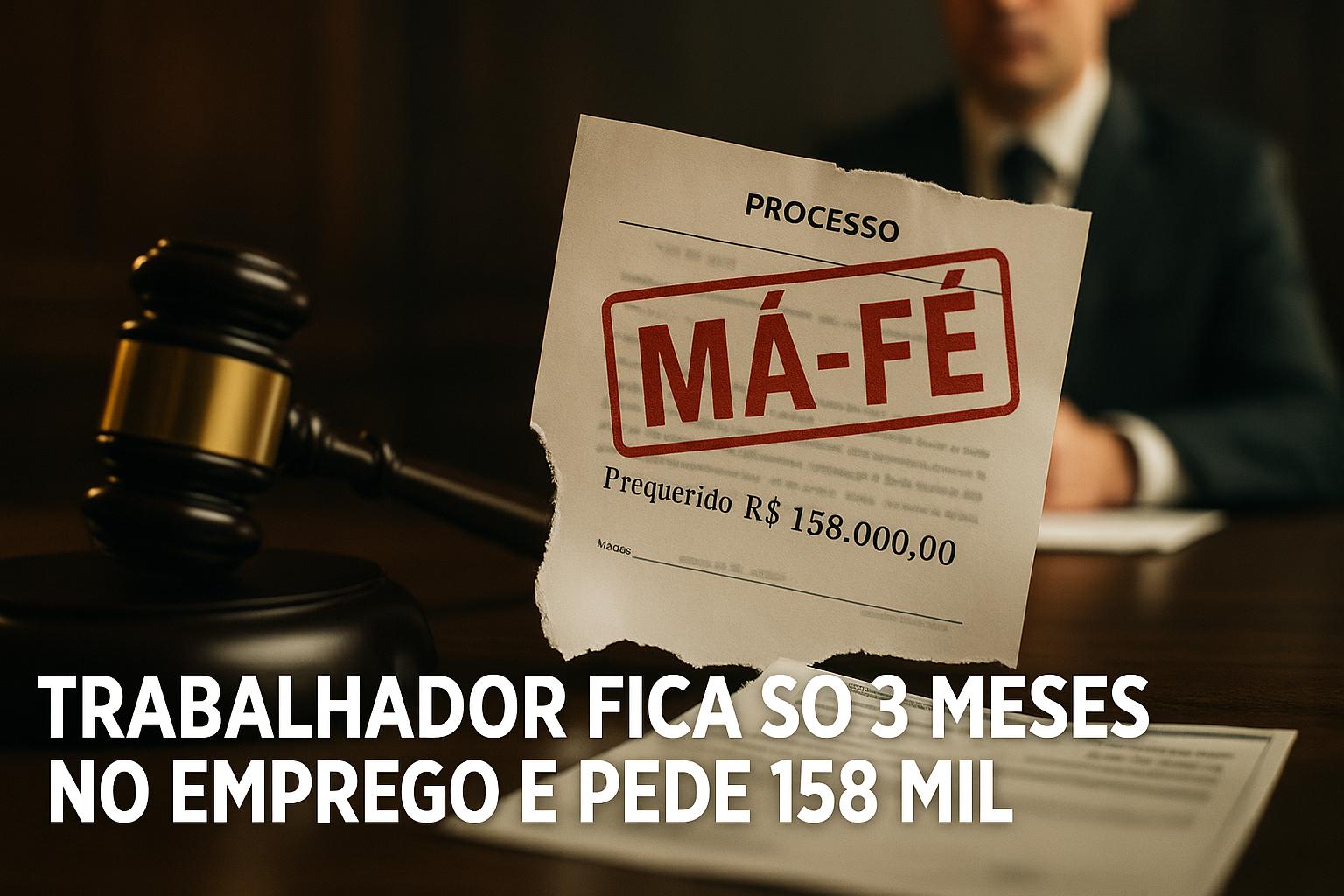


Worker Stays Only 3 Months On The Job, Requests R$ 158 Thousand In Court And Ends Up Convicted For Bad Faith After Trying To Deceive The Judiciary With Abusive Requests.
October 27, 2025 — A case judged by the Labor Court of Conselheiro Lafaiete (MG) drew attention after a worker who remained only three months in the job was convicted for bad faith litigation after filing a labor lawsuit requesting over R$ 158 thousand. The ruling, signed by Judge Andrea Buttler, concluded that the plaintiff acted with abuse of the right to sue and presented unfounded claims, trying to unduly benefit from the Labor Justice.
According to the ruling, the former employee made several allegations that were not proven and even presented documents that did not correspond to the reality of the company where he worked. Additionally, he failed to attend the expert examination and also missed the scheduled hearing without providing justification.
Request For R$ 158 Thousand After 90 Days Of Work
According to the case files, the worker demanded severance pay, despite having already received it, and claimed that he worked every day, including Sundays and holidays, without rest, but did not present witnesses or any evidence.
-
Court Upholds Just Cause Dismissal of Employee for Posting Social Media Videos During Work Hours

-
Dismissing a retired worker or one eligible for retirement constitutes ageism and creates a duty to compensate: a unanimous decision by the TRT mandates reinstatement to employment, payment of back wages, and upholds compensation of R$ 15,000 for discrimination.

-
Work less and produce more? Nobel Prize in Economics explains why shorter workdays can increase productivity

-
Unions are growing again in Brazil after more than a decade, but they face an urgent challenge to win back digital workers and maintain relevance.




He also requested compensation for transportation vouchers even though he lived just a few meters from the workplace and attached photos of poor conditions that, as confirmed, were not from the company where he worked.
The judge highlighted that the requests presented “serious inconsistencies and were detached from reality” and emphasized that the worker attempted to use the Judiciary to obtain undue amounts.
“Theory Of Bets” And Attempted Abusive Gains
During the hearing, the company’s lawyer stated that the case fits what he called the “Theory of Bets” — a strategy in which the claimant makes extremely high requests to try to obtain financial gain or a favorable settlement, even without legal grounds.
According to the report, the worker was trying to “bet high” in the lawsuit, hoping that part of the amounts would be granted.
The judge, however, completely rejected the attempt and responded firmly:
“This specialized court is not a betting house and cannot tolerate such situations without a clarifying, educational, and punitive response.”
Conviction For Bad Faith And Fine
Upon confirming the bad faith litigation, the magistrate imposed a fine of 2% on the updated amount of the case, to be awarded to the defendant company. Even with the granting of free justice, the fine remains applicable, as it is not related to court costs, but a penalty for abusive conduct.
Furthermore, the judge reinforced that the plaintiff’s insistence on unfounded requests and his procedural behavior showed a clear intent to obtain undue advantage and burden the Justice system.
The decision is still subject to appeal.
Case Warns Of Responsible Use Of Labor Justice
The episode serves as a warning for workers and companies: access to Justice is a right, but it must be exercised responsibly and in good faith. False claims, exaggerated requests, failure to attend hearings, and attempts to manipulate the process can result in fines and convictions.
For those who truly have labor rights violated, the recommendation is always to seek qualified legal guidance and act transparently, as the Judiciary does not tolerate attempts to “bet” against the system.