






 Portuguese
  Spanish


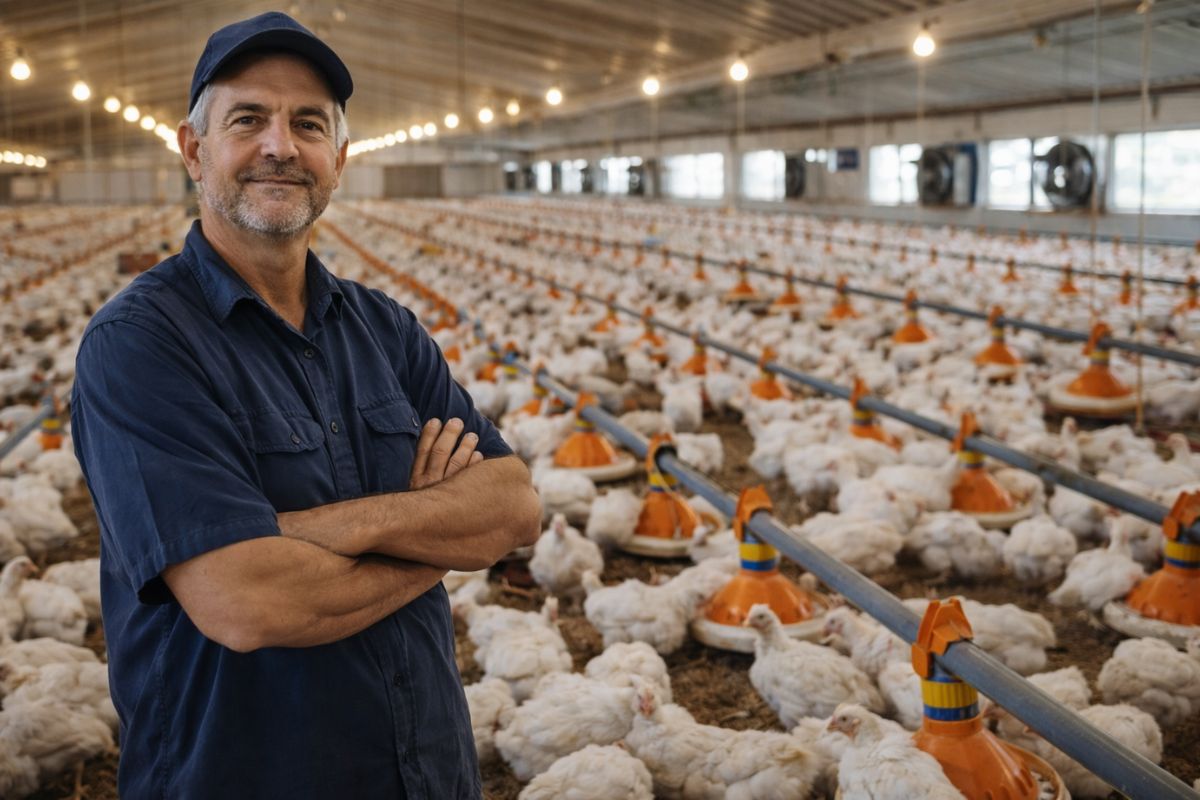


The Santa Catarina producer Osvaldo Fávaro built his first poultry house for 7,500 birds in 1994 and today participates in 21 farms in the breeding segment, building a poultry complex over 30 years based on family partnerships, integration with the industry, and the philosophy that accompanied one goes further.
Osvaldo Fávaro’s journey in poultry farming is one of those stories that start with manual labor and end with the management of dozens of productive units. Before becoming the Santa Catarina producer who manages 21 farms, Fávaro experienced the heavy work of crops like tobacco and banana in Southern Brazil. In the 1990s, he realized he needed a business with more predictability and scale for his family. In 1994, he and his brother built the first poultry house, designed for only 7,500 birds. This modest beginning did not indicate the complex he would come to lead.
The turning point in the Santa Catarina producer’s journey was a simple realization that changed everything. Fávaro understood that in poultry farming, real growth depends on partnerships: “Those who walk together go further than those who try to do everything individually”, summarized the poultry farmer. This philosophy guided each new farm, each new investment, and every partnership he formed over three decades. The result is 21 farms operating with a structure that combines family management, integration with the industry, and increasing automation.
The partnership strategy that took the Santa Catarina producer from 1 poultry house to 21 farms
Over 30 years, Fávaro sought partners and family members to invest in new projects. The Santa Catarina producer did not try to grow by accumulating debts to build farms that he would operate individually.
-
Producer receives news and had to cull almost the entire herd, bounced back with the help of compensation, and is now producing 450 liters of milk per day in SC.

-
Quail Eggs Reveal a “Secret Code” on Their Shells Explaining Unique Patterns and Colors

-
Rare Tropical Fruit Canistel, with Egg Yolk Color and Caramel Flavor, Gains Interest from Researchers and Small Producers in Brazil
-
Brazilian Farmers Develop Wheeled Metal Lever to Ease Cassava Harvesting Without Heavy Machinery


Instead, he formed partnerships where each partner contributes capital, labor, or technical knowledge, sharing risks and results. This approach allowed for the multiplication of productive units without the financial burden falling on a single family.
The integration system with the industry was the other pillar that supported the growth of the Santa Catarina producer. Integration provides technology, technical assistance, and commercial security at each new step, because the industry supplies the chicks, feed, and guarantees the purchase of production, while the Santa Catarina producer provides the physical structure and labor.
This model reduced the uncertainty that normally paralyzes rural producers who want to expand but fear the risks of investing in new units.
The transition from broiler chickens to the breeding segment that changed the level of the Santa Catarina producer

Fávaro did not limit himself to conventional fattening. The Santa Catarina producer transitioned to the challenging breeding segment, where the eggs that will give rise to thousands of broiler chickens are produced.
Operating with breeding requires a much higher level of demand than conventional fattening, because any failure in hygiene, collection, or environmental control compromises the fertility of the eggs and, consequently, the entire production chain that depends on them.
The management of breeding units requires what Fávaro calls a “clinical eye.” The correct collection of eggs, rigorous hygiene of the barns, and total control of the environment, including temperature, humidity, and ventilation, determine whether the batch will yield profit or loss.
“The result depends on the sum of technology and the dedication of the team that is there,” says the Santa Catarina producer. Each farm functions as an organism where any oversight propagates in a chain.
How the Santa Catarina producer balances automation and human labor in 21 farms
The operation of 21 farms requires a management model that clearly distributes responsibilities. The Santa Catarina producer has constantly invested in automation to maintain competitiveness, adopting systems for climate control, feeding, and monitoring that reduce dependence on repetitive manual labor.
But technology has not replaced human presence: the excellence standard of the breeding requires attentive employees who observe the behavior of the birds and identify problems before they become crises.
In the partnership model he adopted, the machinery operates with a clear division of responsibilities between partners and employees. Fávaro values each person involved in the operation, considering the health of the batch as a collective goal that depends on everyone’s commitment.
This structure has allowed for sustainable growth over three decades, maintaining the essence of care for production even as the number of farms increased.
The family succession that ensures the future of the Santa Catarina producer’s legacy
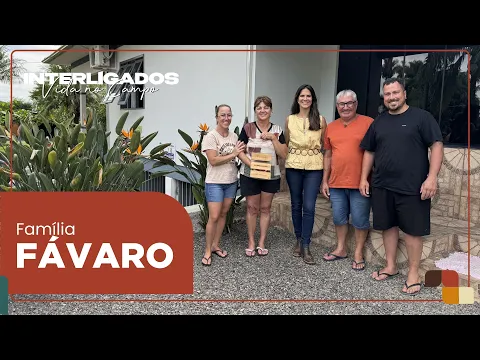
One of Osvaldo Fávaro’s greatest prides is not in the numbers of birds, but at the dinner table. The children of the Santa Catarina producer grew up in the activity and took the front line of the operation, bringing innovation and new management tools while the father acts as a strategic mentor, sharing the experience accumulated over 30 years in poultry farming.
The transition occurred naturally, without ruptures that compromised the continuity of the business.
For the Fávaro family, successful succession is proof that the model works. When the children bring new technology and the father contributes with the knowledge of someone who has faced all possible crises in poultry farming, the result is a management that combines boldness with prudence.
The Santa Catarina producer who started with 7,500 birds now sees the next generation prepared to carry the 21 farms forward, and possibly beyond.
The advice of the Santa Catarina producer for those who want to invest in poultry farming
Even after 30 years, Fávaro maintains the humility of someone who recognizes that poultry farming is in constant change.
The Santa Catarina producer advises new investors to start with solid planning and seriousness, understanding that the return in the field comes to those who have patience and willingness to learn continuously. The desire to learn, according to him, is more important than the initial capital.
The legacy that Fávaro leaves is clear: with the right partnerships and a united family, growth knows no limits.
From a poultry house of 7,500 birds to 21 breeding farms, the story of the Santa Catarina producer shows that the Brazilian countryside rewards those who combine hard work with smart strategy and trust-based relationships built over decades.
What do you think of the Santa Catarina producer’s strategy of growing through partnerships instead of doing everything individually? Do you know similar stories in the field? Share in the comments. Stories of those who built something great from a modest beginning inspire because they prove that growth is possible for those who have method and persistence.






Am looking for a job