Portuguese
  Spanish


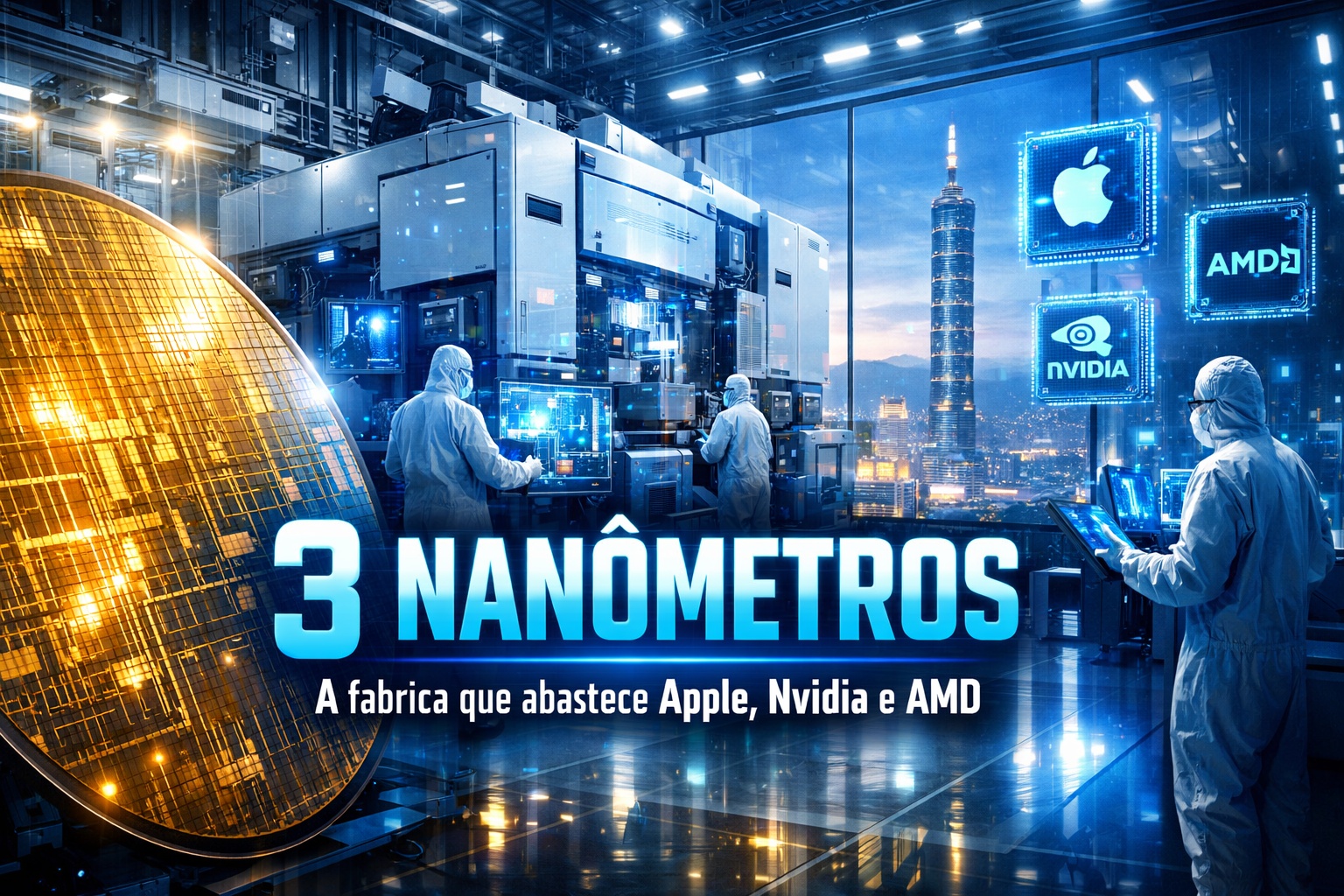


With 3 Nm Chips and Global Production, TSMC in Taiwan Supplies Apple, Nvidia, AMD, and Qualcomm and Leads the Global Semiconductor Industry.
The Taiwan Semiconductor Manufacturing Company (TSMC) is currently the largest contract semiconductor manufacturer in the world. According to official data released by the company and widely reported by the specialized international press, the company operates industrial complexes capable of processing more than 12 million 300 mm silicon wafers per year — the physical foundation for modern chip manufacturing. Among these facilities, Fab 18, located in the Southern Taiwan Science Park in Tainan, stands out for producing 5-nanometer and 3-nanometer chips, considered some of the most advanced in the world.
TSMC is responsible for manufacturing the processors used by companies like Apple, Nvidia, AMD, and Qualcomm, playing a central role in the global technology supply chain. The concentration of this production capacity in Taiwan has transformed the island into one of the most strategic points in the contemporary global economy.
How 3 Nanometer Chip Manufacturing Works
The production of semiconductors begins with ultra-purified silicon wafers. These wafers serve as the base for the microscopic construction of electronic circuits. On a single silicon wafer, hundreds or thousands of chips can be printed, depending on the size of the project.
-
Cape Verde’s World Cup Surprise: Betting on Electric Cars, a 5 MW Solar Plant, and an Ambitious Plan to Transform Energy for 600,000 Residents

-
Man Finds 1,469 Ancient Roman Silver Coins While Metal Detecting in Romania
-
Young Brazilian Siblings Go Viral for Catching Giant Fish, Launch Sport Fishing Project
-
72-Year-Old Retired Professor from Rural Brazil Recites 247 Digits of Pi in One Minute, Setting National Memory Record


In the case of 3-nanometer technology, each transistor has dimensions close to three billionths of a meter. The smaller the transistor, the higher the density of components within the chip, allowing for greater performance and lower power consumption.
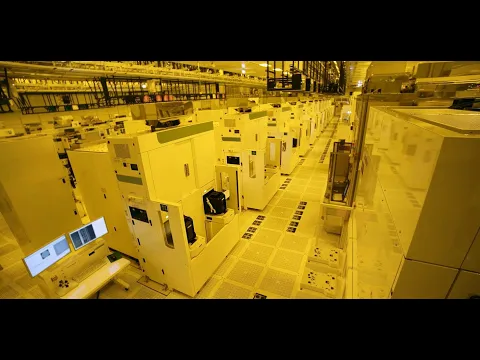

TSMC’s Fab 18 uses extreme ultraviolet (EUV) lithography equipment, a technology that employs light at extremely short wavelengths to draw microscopic patterns on silicon. These machines, mostly supplied by the Dutch company ASML, are among the most complex industrial equipment ever produced.
The complete process involves hundreds of steps, including material deposition, chemical etching, polishing, and high-precision optical inspection. Each chip goes through multiple layers of processing until it reaches its final structure.
Industrial Scale and Production Capacity of TSMC
TSMC operates several facilities called GigaFabs, which concentrate high production capacity. The volume of over 12 million silicon wafers per year refers to its 300 mm factories, the current standard of the advanced industry.
Each processed wafer can generate hundreds of high-performance chips. This means that the monthly capacity can result in millions of processors, depending on the complexity and specific design.
Fab 18 is primarily dedicated to the most advanced technology nodes, such as 5 nm and 3 nm. These chips are used in flagship smartphones, high-performance graphics cards, and processors for artificial intelligence.
The scale does not solely pertain to volume. The infrastructure involves clean rooms with extreme particle control. A manufacturing environment can have fewer dust particles than a surgical room, as any contamination can compromise dozens of chips simultaneously.
Supply for Apple, Nvidia, AMD, and Qualcomm
TSMC does not design chips for end consumption. It manufactures designs developed by other companies. Apple uses TSMC to produce its A and M series chips, found in iPhones, iPads, and Mac computers. Nvidia relies on TSMC to produce its GPUs used in artificial intelligence and data centers. AMD manufactures its Ryzen and EPYC processors within the same production chain, while Qualcomm uses the facility to produce Snapdragon chips.
This foundry model has made TSMC a key player in the global industry. Companies that compete against each other in the end market share the same industrial base in Taiwan.
The concentration of production in a single supplier creates strategic dependency. Interruptions in production, whether due to natural events or geopolitical tensions, would have a direct impact on the global technology supply chain.
Geopolitical Importance of Taiwan in the Semiconductor Industry
Taiwan has become the epicenter of the chip industry by combining investment in research, government support, and technological development over decades. TSMC was founded in 1987 with an innovative outsourced production model.
Today, a large portion of the world’s most advanced chips is manufactured on the island. This places Taiwan at the center of strategic debates involving the United States and China. The semiconductor supply chain is considered critical infrastructure for defense, the digital economy, and technological innovation.
TSMC itself has initiated plans for geographic diversification, including factories in the United States and Japan, but the most advanced capacity remains concentrated in Taiwan.
Technical Challenges and Limits of Miniaturization
The 3-nanometer technology represents one of the current frontiers of semiconductor engineering. As transistors approach atomic scales, physical challenges related to heat dissipation and quantum effects arise.
The development cost for each new technology node increases exponentially. Building a single state-of-the-art factory can exceed tens of billions of dollars in investment.
The race for miniaturization involves not only lithography but also new materials and transistor architecture, such as FinFET and Gate-All-Around structures.
TSMC has already announced advancements for even smaller nodes, but technical complexity increases with each generation.
Global Economic Impact
The semiconductor industry generates hundreds of billions of dollars annually. Chips are essential components for smartphones, computers, vehicles, medical equipment, and military systems.

Any interruption in production can affect entire industrial chains. The global chip crisis observed during the pandemic highlighted the fragility of the supply chain.
By maintaining one of the largest and most advanced factories in the world, TSMC sustains a significant part of the contemporary digital economy.
With 3-nanometer chips and the ability to produce millions of processors per month, TSMC has consolidated a global-scale industrial infrastructure in Taiwan. Fab 18 represents the pinnacle of semiconductor engineering, combining EUV lithography, high-precision clean rooms, and advanced technological integration.
By supplying companies like Apple, Nvidia, AMD, and Qualcomm, the company occupies a central position in the technological architecture of the 21st century. More than just a factory, TSMC has become one of the invisible pillars that support modern computing and the global digital economy.