Portuguese
  Spanish


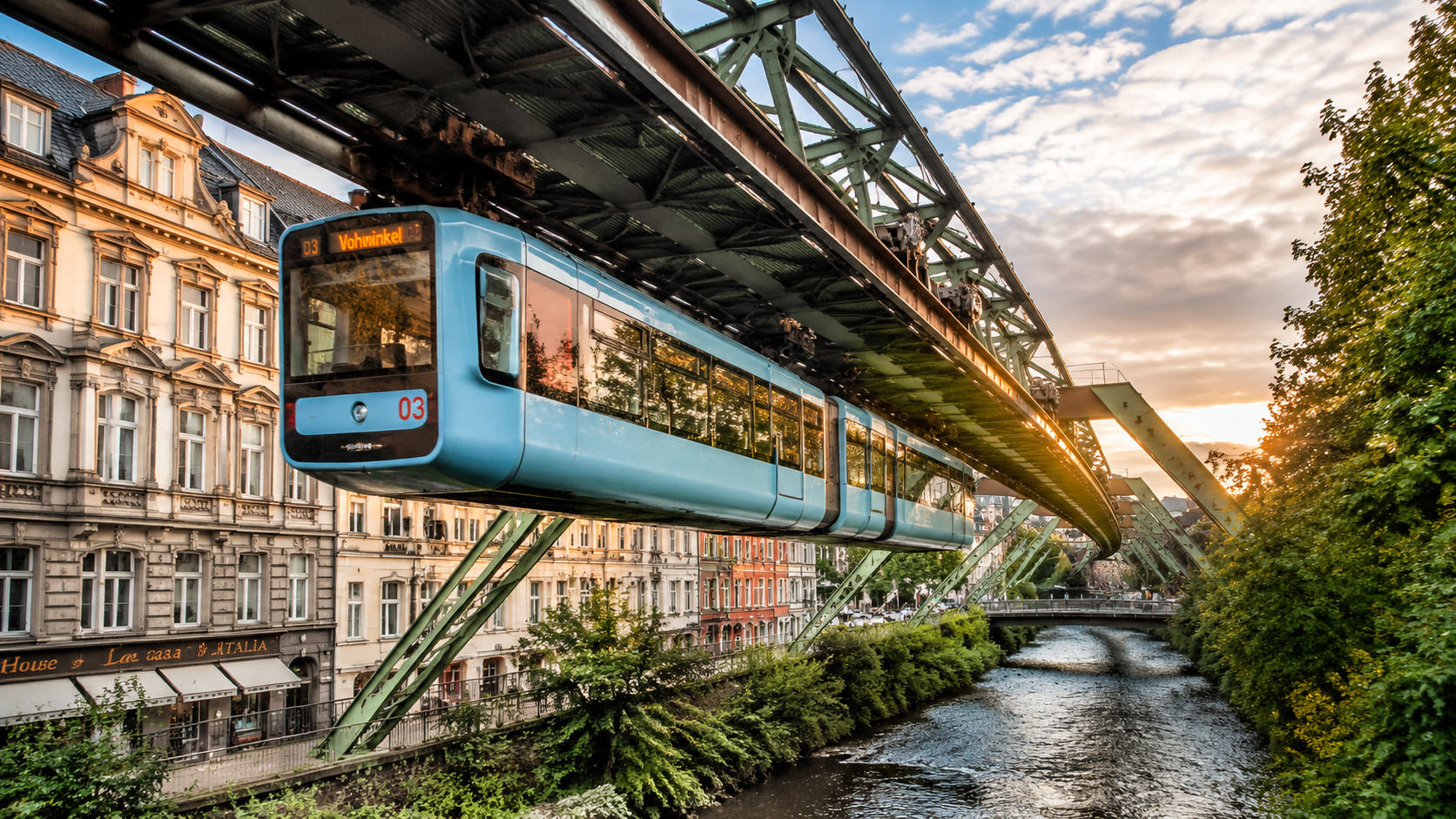

Wuppertal maintains a century-old suspended railway with trains hanging over the river, connecting 20 stations and transporting thousands daily
The city of Wuppertal found a unique urban solution at the beginning of the 20th century, with trains suspended over the Wupper river and city streets. The system covers 13 km, connects 20 stations, and transports more than 80,000 passengers every day, maintaining continuous operation and attracting tourists interested in historical engineering and alternative transportation.
The Wuppertal Schwebebahn suspended railway has been operating since 1901 and combines century-old engineering with modern operation, proving that old solutions can be more radical than many contemporary projects. The information was published by Schwebebahn Wuppertal, the official operator of the suspended railway, the company responsible for the maintenance and operation of the system since its inauguration.
Why Wuppertal chose a suspended railway
The topography of the Wupper river valley and the lack of adequate urban space made it impossible to build conventional tracks at the beginning of the 20th century. The suspended system takes advantage of the airspace, allowing trains to run over streets and the river without disrupting local mobility.
-
Brazilian Airport to Receive $2.8 Million Investment, Completion Expected Within a Year

-
UN Warns of AI’s Environmental Impact and Calls for Greater Corporate Transparency

-
Former Atacadão Employee Turns Online Cake-Baking Lessons into a Confectionery Brand with Factory, Store, Delivery, and Nearly $400,000 in Revenue
-
Brazilian Startup Sells Nearly 9 Million Surprise Bags of Near-Expiry Food, Prevents Thousands of Tons of Waste, Aiming for $42 Million Revenue by 2026





Besides optimizing space, the suspended railway provides greater safety against floods and maintains continuous operation in adverse weather conditions. The stations were strategically distributed, offering easy access to central neighborhoods and ensuring passenger comfort.
How the trains hang under the tracks
Each train moves on upper tracks, thus remaining completely suspended. This technique allows the space below to remain free for pedestrians, vehicles, and the natural course of the river. The operation creates the sensation of an upside-down subway, combining urban functionality and visual appeal.
The design ensures stability even with the weight of passengers and facilitates maintenance, as tracks, cables, and metal structures are accessible for regular inspections.
The 13 km Route Over River and Streets
The route connects various central neighborhoods, offering fast transportation and avoiding traffic jams. Passengers have views of the Wupper River and the city, while the system maintains efficiency and safety.
The railway design also facilitates reviews and modernizations, thus ensuring that the original infrastructure remains functional and preserved.
Why the System Still Operates After 125 Years
The Wuppertal Schwebebahn maintains continuous maintenance and timely modernization, combining historical equipment with modern safety standards. The uninterrupted operation demonstrates centennial efficiency and reliability, showing that transportation solutions planned in the early 20th century remain relevant.

The Schwebebahn has also become a cultural and tourist reference, attracting people interested in engineering history and creative urban solutions. The information was released by Schwebebahn Wuppertal, the official operator of the suspended railway, a company that documents the daily operation and preserves the system’s history.
What Differentiates Schwebebahn from Common Monorails
Unlike traditional monorails that sit on beams, the Wuppertal Schwebebahn keeps the trains completely suspended over the river and streets, utilizing airspace innovatively. The system combines functionality, aesthetics, and durability, serving as an example of alternative and ingenious transportation.
The centennial railway continues to surprise passengers and visitors, thus showing that old technology can surpass modern solutions when planned with creativity.
The Wuppertal Schwebebahn is an example of efficient, safe, and culturally relevant urban transportation. Have you ever imagined what it would be like to have an upside-down subway in your city? Share your opinion in the comments.