Portuguese
  Spanish


TurkStream Pipeline Connects Russia to Europe Under the Black Sea, With 930 Km and 31 Billion M³ Per Year — and Has Become a Key Piece in Geopolitical Energy.
In the silent struggle for energy control over the world, few projects have been as strategic, discreet, and technically challenging as TurkStream. This 930-kilometer underwater pipeline, running under the Black Sea, connects Anapa, Russia, to the coastal city of Kıyıköy, Turkey. From this point, it connects to other networks that supply millions of homes and industries in southeastern Europe — including Bulgaria, Serbia, and Hungary.
More than an engineering feat, TurkStream represents a calculated geopolitical move by Russia to maintain its energy influence even amidst sanctions, political instability, and international pressures. In times of tension with Ukraine, the pipeline has become a alternative route bypassing Ukrainian territory, reinforcing Moscow’s presence in the heart of continental Europe.
The Silent Construction of One of Europe’s Most Important Routes – TurkStream Pipeline
The TurkStream project was officially announced in 2014, amid growing tensions between Russia and Ukraine following the annexation of Crimea. At that time, Russia was already the largest supplier of natural gas to Europe, and much of that flow passed through pipelines installed in Ukrainian territory — a vulnerability both logistically and politically.
-
Brazil’s ANP Opens 86 New Oil Blocks in the Equatorial Margin, Expanding the Amazon River Mouth Frontier

-
OPEC+ Boosts Oil Supply by 188,000 Barrels per Day in July 2026, Leading to Price Drop from $112 to $89 per Barrel in Under Two Months

-
TotalEnergies Signs 20-Year Deal to Purchase 2 Million Tons of LNG from Alaska, Boosting Project Viability
-
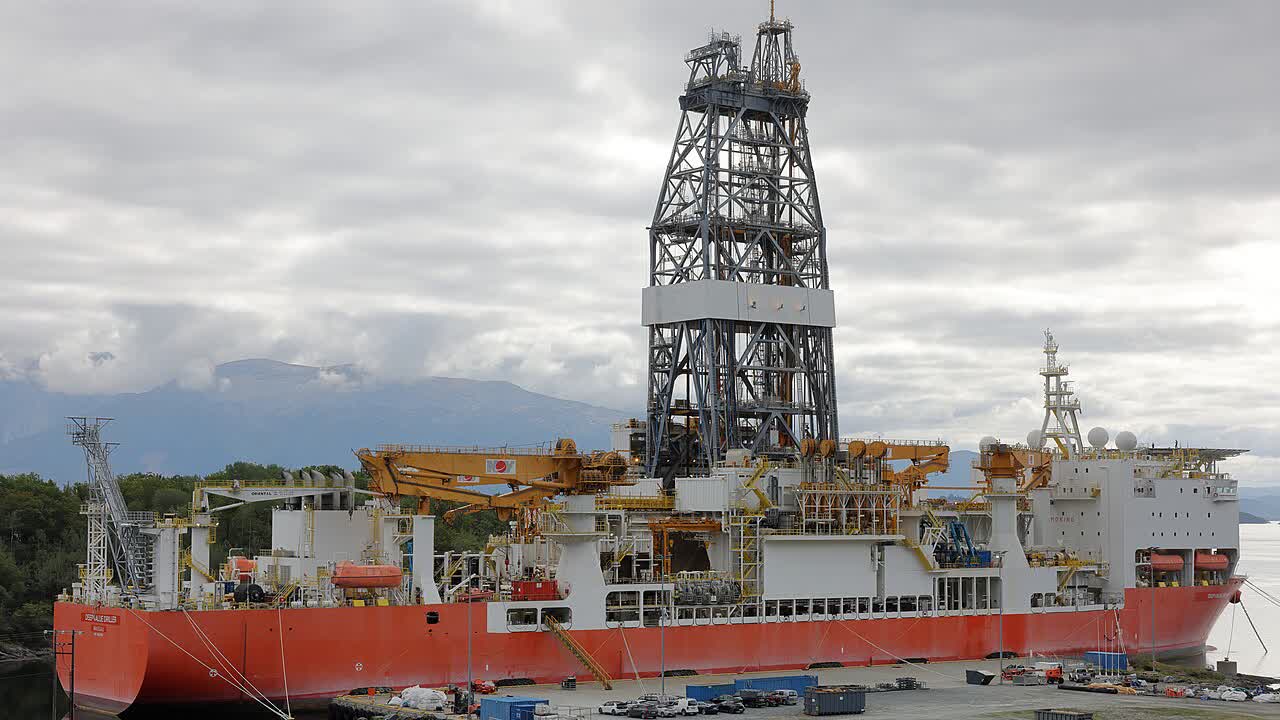
Turkey Deploys Çağrı Bey Drilling Ship to Explore New Oil Frontier Off Somalia’s Coast





Gazprom, the Russian state-owned energy company, sought alternatives to transport its gas directly to partner countries, reducing risks. Thus, TurkStream was born, a project valued in billions, with complex execution and the label of “high geopolitical sensitivity”, as classified by various international analysts.
With an estimated investment of US$ 11.4 billion, construction began in 2017 and took less than three years until the official inauguration in January 2020. State-of-the-art ships were used to lay the pipes at over 2,200 meters deep, under intense pressure and severe underwater conditions.
Capacity to Supply Tens of Millions of Consumers
TurkStream consists of two parallel pipes, each capable of transporting 15.75 billion cubic meters of natural gas per year. Together, they move over 31 billion m³ annually — enough to supply up to 20 million European households, considering an average domestic consumption of 1,500 m³ per house/year.
The first pipeline is dedicated to the Turkish market, which heavily relies on Russian gas for energy generation and heating. The second connects to the European network, sending gas through compression stations and branches extending to Bulgaria, Serbia, Hungary, Bosnia and Herzegovina, and even parts of Romania and Austria.
In practice, TurkStream not only bypassed a significant portion of the flow that previously went through Ukraine but also strengthened ties between Russia and governments aligned with Eastern Europe, generating intense reactions from the European Union and the United States.
A Pipeline That Challenges Western Geopolitics
Russia has been using its vast pipeline system as a tool of power and political negotiation for decades. TurkStream has become another chapter in this strategy: while the West imposes sanctions and tries to reduce its dependence on Russian gas, Moscow offers attractive contracts, reliable deliveries, and favorable bilateral agreements to countries that choose to maintain energy ties.
This delicate balance became evident after the onset of the war in Ukraine in 2022. Although Europe has accelerated energy diversification projects, some countries remain heavily dependent on Russian gas — especially those receiving it directly through TurkStream.
Moreover, the pipeline reinforces Turkey’s strategic position as an energy hub. Ankara, in turn, takes advantage of its location to navigate between East and West, maintaining relations with both Russia and NATO.
Precision Engineering: How TurkStream Was Installed at Over 2,000 Meters Deep
From a technical standpoint, TurkStream is also impressive. The pipes were made with high-strength steel, weighing about 9 tons per segment. Each pipe has a nominal diameter of 814 mm, with reinforced walls and anti-corrosion coating.
The laying of the pipes was mainly done by the ship Pioneering Spirit, considered one of the largest and most advanced construction vessels in the world. Equipped with dynamic positioning technology, the ship installed around 5 km of pipes per day, even in hard-to-reach areas and extreme depths.
The maximum depth reached by the pipeline is 2,200 meters, making TurkStream one of the deepest pipelines ever installed underwater. This characteristic required constant monitoring, geotechnical surveys, and a series of seismic simulations to avoid the risks of collapse or displacement.
Economic and Logistical Effects in the Heart of Europe
With the full operation of TurkStream, Russia maintained its market share in critical regions of Eastern Europe. For example, Hungary increased its imports via TurkStream by over 30% in 2022, taking advantage of the benefits of direct contracts with Gazprom.
Furthermore, the infrastructure connected to the pipeline has driven local investments, job creation, and increased customs revenue in countries like Bulgaria and Serbia, which now operate as transit and redistribution points for gas.
For Turkey, the project has solidified the country as an energy gateway to Europe, reinforcing the construction of new terminals, storage systems, and even a new gas exchange, planned to regulate regional prices.
A “Long-Range Weapon” in the Energy Field
Despite its technical and functional appearance, TurkStream is much more than pipes and valves. It is a clear example of how energy infrastructure can become a tool for international influence — silent but extremely effective.
The project shows that, even in times of renewable energies, natural gas still plays a central role in the global energy matrix — and that supply routes define alliances, dependencies, and areas of geopolitical tension.
In a world trying to balance energy security and political independence, TurkStream remains a reminder that whoever controls energy often controls diplomacy.