Portuguese
  Spanish


Last Manual Transmission Car In The USA Is Saying Goodbye To Stores: Nissan Versa, With 5-Speed Manual Transmission, Leaves The Country Due To High Import Tariffs.
The automotive market in the United States has just experienced a significant shift with the end of sales of the Nissan Versa S, known as the last car with a 5-speed manual transmission available in the country. This decision is not solely due to consumer preferences, but mainly to the recent changes in import tariffs imposed by the U.S. government. The imposition of a 25% tax on vehicles imported from Mexico made it economically unfeasible for Nissan to continue offering this version of the model.
Today we will explain, in detail, the impact of this decision, the context of import tariffs, the declining trend of manual transmission cars in the North American market, and the consequences for consumers and manufacturers. Additionally, we will discuss future prospects for manual transmission vehicles in the United States.
The Impact Of Import Tariffs On The US Automotive Market
In April 2025, the U.S. government implemented a 25% tariff on imported vehicles and automotive parts from Mexico. This measure includes sedans, SUVs, trucks, vans, as well as essential components like engines and transmissions. The stated goal of the government is to strengthen domestic production by encouraging the manufacture of vehicles on American soil to boost jobs and the local economy.
-
Hilux’s little sister: Toyota relaunches the Land Cruiser 70 in the 2027 lineup with over 40 years of production, a 2.8 turbo diesel engine with 201 hp and 51 kgfm, a six-speed automatic transmission, and a renewed retro look.

-
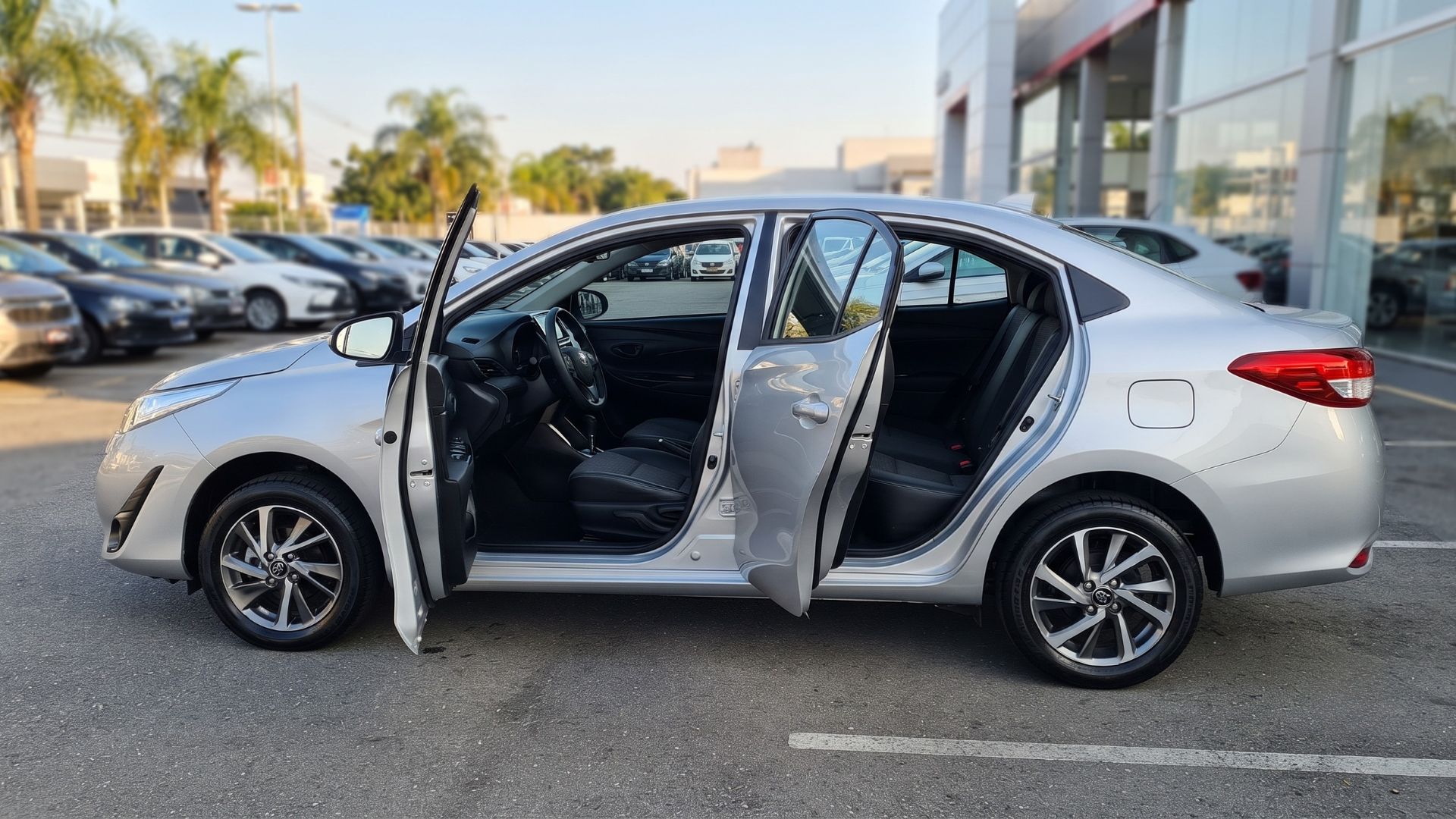
Automatic, economical, and known for reliability: with a 1.5 engine of up to 110 hp, CVT transmission, seven airbags, and fuel consumption of up to 15.9 km/l, this used hatchback appears as a rational alternative to Polo, HB20, and Onix; meet the Toyota Yaris XLS 2020.
-
He surpassed the Tera, Creta, and Tracker: With a TSI engine of up to 150 hp, 6-speed automatic transmission, and a 373-liter trunk, the Volkswagen T-Cross was the best-selling SUV in June, with 11,753 registrations.

-
It looks factory-made, but it came out of a workshop: a mechanic from Pernambuco builds a handcrafted “mini Toyota,” drives it through the streets, and the video goes viral on social media, leaving residents astonished.



However, this action generated a direct effect on costs for manufacturers that rely on imports, such as Nissan, which produces the Versa S in Mexico. The increase in costs forced the automaker to evaluate the financial viability of continuing the manual version of the model.
Nissan’s decision to discontinue the car with a 5-speed manual transmission reflects a strategy of prioritizing models with higher profit margins and greater demand, especially in light of the regulatory and economic landscape that pressures automakers’ profit margins. The tariff raised the final price of the vehicle, making it less competitive compared to other versions with automatic transmission and models produced in the USA.
Decline In Popularity Of Manual Transmission Cars In The USA
The discontinuation of the Nissan Versa S is not an isolated event, but part of a long-standing trend. The manual transmission car, which was once a symbol of total driver control and greater interaction with the vehicle, has been losing ground in the American market for decades. Various factors contributed to this gradual decline.


First, consumer preference for automatic transmissions has solidified over the years due to practicality and ease of use, especially in large cities with heavy traffic. Automatic driving reduces effort and fatigue, making vehicles more accessible for a broad audience.
Additionally, the technological evolution of automatic transmissions, such as continuously variable transmissions (CVTs) and dual-clutch automatics, has brought efficiency and performance comparable to, or even superior to, manual transmissions. This has eliminated one of the traditional advantages of the manual transmission: greater fuel economy.
Popular models that have abandoned the 5-speed manual transmission in recent years include the Nissan Frontier (2020), the Volkswagen Golf Mk7 (2021), and the Mitsubishi Mirage (2023). This movement reflects automakers’ perception that the North American market has little demand for manual transmission cars, which is confirmed by sales data and consumer behavior research.
Consequences For Consumers And The Automotive Market
The departure of the last 5-speed manual transmission car from the United States marks a profound change in the country’s automotive landscape. For consumers who value the experience of driving a manual transmission car, whether for the feeling of control or the greater connection with the vehicle, options have drastically limited.
With the end of the manual Nissan Versa S, consumers who want a manual transmission car in the USA must look for sports or niche models, generally with higher prices and a focus on performance. This restricts access to the manual transmission experience for a large portion of the audience, who previously could opt for more affordable models.
Furthermore, import tariffs have an important indirect consequence: the increase in vehicle prices. Automakers that rely on imports from Mexico face higher costs, which may be passed on to the final consumer, reducing purchasing power and the variety of models available in the market.
Some manufacturers, such as Stellantis, have sought ways to minimize the impacts of these tariffs by offering financial assistance and incentives to their affected suppliers, trying to preserve the production chain and maintain competitive prices. Nevertheless, the trend is that the market will focus on more profitable and technologically advanced models, with automatic transmissions predominating.
The Future Of Manual Transmission Cars In The USA
Although the current landscape presents the end of the last mass-produced 5-speed manual transmission car, the manual transmission will not completely disappear from the North American market. There are specific segments, such as sports cars, that still offer this option due to the preference of enthusiasts.
For instance, the Ford Mustang GT still offers a 6-speed manual transmission, attracting drivers who value control and performance. However, these models represent a very small share of the market and target consumers with specific profiles and higher purchasing power.
In the long run, the trend is for manual transmissions to become increasingly rare, focusing on sports niches and collectors. The North American market should continue to invest in automatic, hybrid, and electric transmissions, which bring gains in efficiency, comfort, and technology.
The end of sales of the manual Nissan Versa S, the last 5-speed manual transmission car available in the United States, symbolizes the conclusion of an era in the country’s automotive industry. The new 25% import tariffs applied to vehicles produced in Mexico were the decisive factor for this change, accelerating the withdrawal of this version from the market.
This decision reflects not only economic and regulatory changes but also a transformation in consumer behavior, who increasingly opt for the practicality of automatic transmission cars. As a result, options for those who want a manual transmission car in the USA are becoming more limited, restricted to sports and niche models.
The future points to an automotive market focused on advanced technologies and greater efficiency, which will likely move further away from mass production of manual transmission cars. For enthusiasts and collectors, the manual transmission experience will still have a place, but for the general public, the era of the 5-speed manual transmission car in the United States is officially over.