Portuguese
  Spanish


With Unprecedented Depth of 25 Meters, This Brazilian Port May Be the Final Blow to the Logistical Bottlenecks That Have Stalled the Economy for Decades
Imagine a Brazilian port capable of receiving the largest ships in the world, with up to 400,000 tons of cargo and 25 meters of draft, something comparable only to the largest port complexes on the planet. Sounds ambitious? Well, this structure is under construction and promises to place Brazil at the heart of global trade routes. It is a billion-dollar project underway in the south of Espírito Santo, which could redefine the course of national logistical infrastructure and put an end to historic bottlenecks in shipping.
With an estimated investment of over R$ 16 billion, the new private port — which will cover an area equivalent to nearly 2,000 hectares — represents much more than a monumental work. It could become the axis of a logistical transformation capable of directly integrating the main producing regions of the country to the foreign market, with cost reductions, increased competitiveness, and attraction of new businesses. And the most surprising part: all of this starts in a small town called Presidente Kennedy.
From the Unknown to Global Frontline: The Strategic Location of the New Port
Situated at the southernmost point of Espírito Santo, the coastal municipality of Presidente Kennedy, previously little remembered on the national scene, is about to become one of the most important logistical centers in Brazil. The location was not chosen by chance: it is near the pre-salt basins, on the shores of the South Atlantic, and just a few hours from strategic states such as São Paulo, Rio de Janeiro, Minas Gerais, Goiás, and Mato Grosso — regions that together represent over 63% of the national GDP.
-
Volvo’s New Loaders Feature Obstacle Detection, Automatic Braking, and 360-Degree Operator View

-
Chinese Manager Accused of Whipping Worker Sparks Protest by 1,200 Employees at Major Brazilian Factory

-
France Revamps 530 Social Housing Units with Large Balconies and Glass Facades Without Demolishing Existing Buildings

-
10-Year-Old Max Makes History with Paris Fashion Show, Launches Own Brand, Hires Staff, and Sets World Record as Youngest Runway Designer




The location facilitates direct access to agricultural production, mining, and heavy industry, which alone guarantees a relevant logistical advantage. In addition, the project foresees more than 230 hectares of green space for environmental compensation and cultural protection of sites like the Church of Our Lady of the Snows.
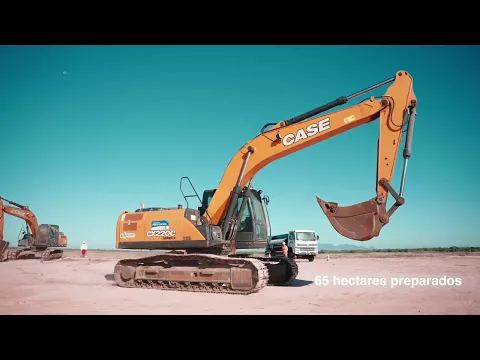
The first phase of the project, already underway, includes 65.6 hectares of solid ground, equivalent to 92 soccer fields. But the real differentiator of the port is not on land, but in water: the project will feature an access channel with a depth of up to 25 meters, capable of accommodating vessels like VLCCs and Velemax, which currently cannot operate in Brazilian ports due to draft restrictions.

The Brazilian Response to the Limitations of Its Own Ports
The major ports in Brazil currently operate with depths of up to 13 meters, forcing many exporters to resort to inefficient solutions, such as transshipment at sea or stops at foreign ports. This drives up freight costs, causes delays, and makes Brazilian products less competitive.
With the new port, the oil, grains, minerals, and container sectors will finally be able to ship high-volume cargo without technical limitations. A rural producer in Mato Grosso, for instance, will have the opportunity to ship their production directly abroad, without having to go through congested or distant ports.
According to estimates, the resources allocated to the project amount to one third of the entire national budget for urban mobility scheduled in PAC 2023. In comparative terms, it is almost the same amount needed to build the entire Line 6–Orange of the São Paulo Metro, one of the largest urban construction projects in the country.
Five Phases Until 2040: The Plan to Place Brazil Among the Leaders of Maritime Trade
The construction of the new port is divided into five stages, with completion expected by 2040. The first phase includes everything from the controlled removal of vegetation to the dredging of 64 million cubic meters of sediment — enough to fill over 25,000 Olympic swimming pools. A modern adaptive dredging system will allow for real-time monitoring of water quality, minimizing environmental impacts.
Subsequently, a breakwater will be built to ensure navigation safety, even in adverse conditions. The complex will feature independent terminals for different types of cargo: oil, grains, containers, minerals, and industrial products.
But what makes this project even bolder is its unprecedented multimodal integration in Brazil. The port will have access via highway, railway, pipeline, and cabotage, with planned connections to federal highways BR-101 and BR-262 and state roads like ES-060, ES-162, and ES-297.
The EF-118 and EF-352 railways, which have yet to begin construction, will be crucial for connecting the port to the national network. The first will link the complex to the Rio–Vitória axis, and the second will cross Minas Gerais to Anápolis (GO), the central region of Brazilian agribusiness. There are also plans for the construction of exclusive corridors for pipelines of natural gas and liquid bulk, with a possible connection to Route 6, a new 332 km pipeline to Minas Gerais.
Economic, Social, and Environmental Impacts: A New Era Is Approaching
The new port is not just an engineering project, but a strategic asset for Brazil’s logistical and economic future. The establishment of a Free Trade Processing Zone (ZPE) will attract companies with tax and operational incentives, turning the region into an export industrial hub.
On the social front, the generation of direct and indirect jobs is already beginning to change the reality of Presidente Kennedy and neighboring municipalities. Young people who once migrated to other regions in search of opportunities are now finding alternatives in the port sector, construction, services, and logistics.
Environmentally, the construction is being monitored by over 40 control and monitoring programs, with technical support and ongoing oversight, indicating a real effort to balance development and preservation.
While countries such as the United Arab Emirates, the Netherlands, and China have operated modern port structures for decades, Brazil is finally beginning to take the same path. The port not only increases export capacity but also marks a new strategic positioning of the country on the international stage.