






 Portuguese
  Spanish
  4 min of reading
  0 comments


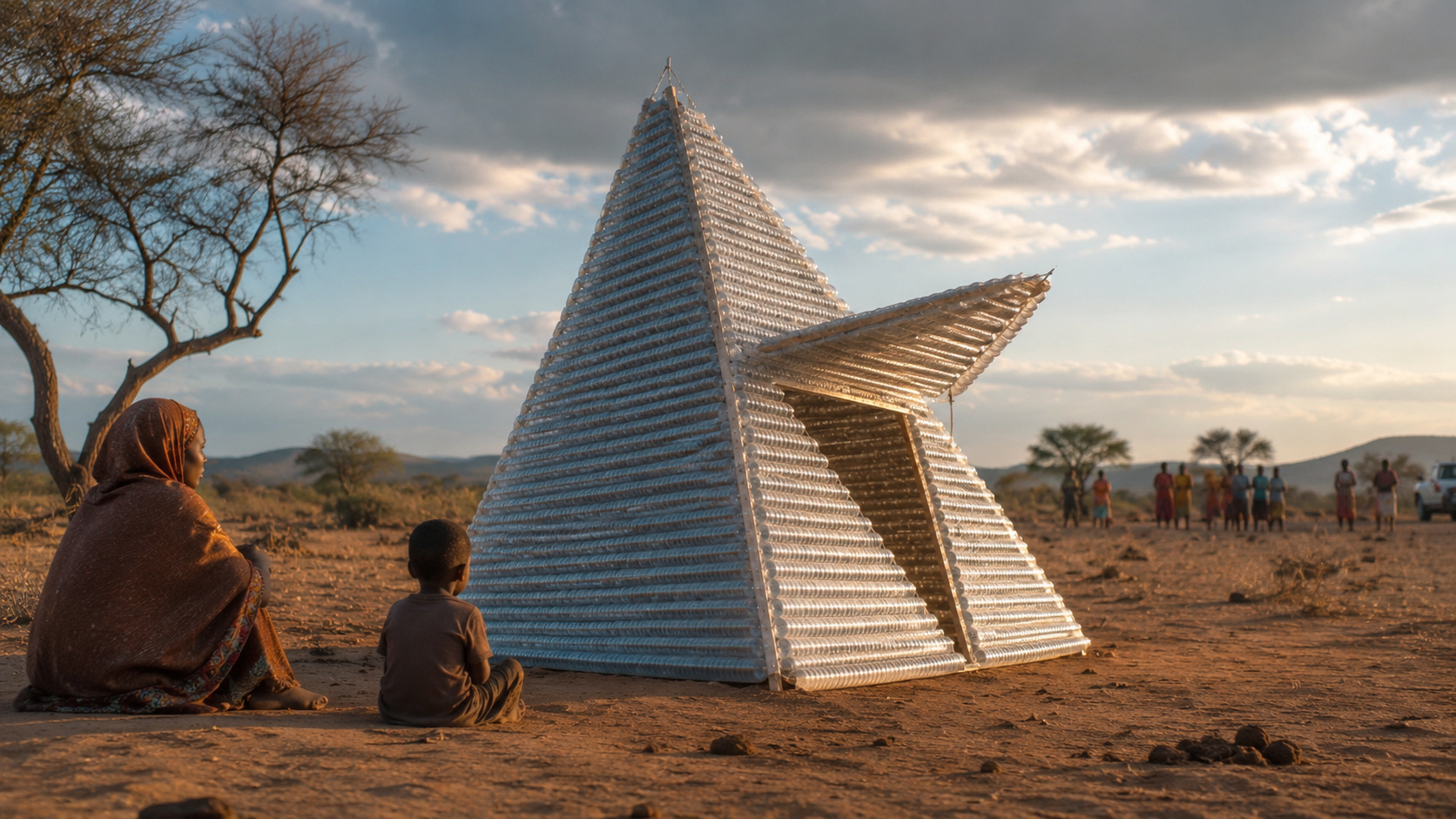
BottleHouse Project uses discarded plastic bottles, bamboo, and collective assembly to create a simple, visually strong emergency shelter designed for remote areas, humanitarian crises, and locations with limited access to common construction materials
An emergency shelter made with 1,500 plastic bottles and bamboo became a simple, triangular house designed for crisis situations in remote areas.
The report was published by Six Miles Across London, the original source presenting the BottleHouse project. The proposal draws attention because it transforms urban plastic waste into a temporary protective structure.
The BottleHouse project was developed by the British studio small., in partnership with WSP engineers. The idea uses light, cheap, and easily found materials in large quantities, such as discarded bottles, plastic caps, and bamboo.
-
They built an entire village of houses with their own hands made of earth and old tires, in the ecovillage Aardehuis, in the Netherlands, where 44 residents live in Earthships that generate almost all the energy, heat with the sun, and treat sewage in their own garden.

-
Villagers dig a road by hand on a 1,200-meter cliff in China after decades of extreme isolation, creating one of the most dangerous and impressive tunnels in the world.
-
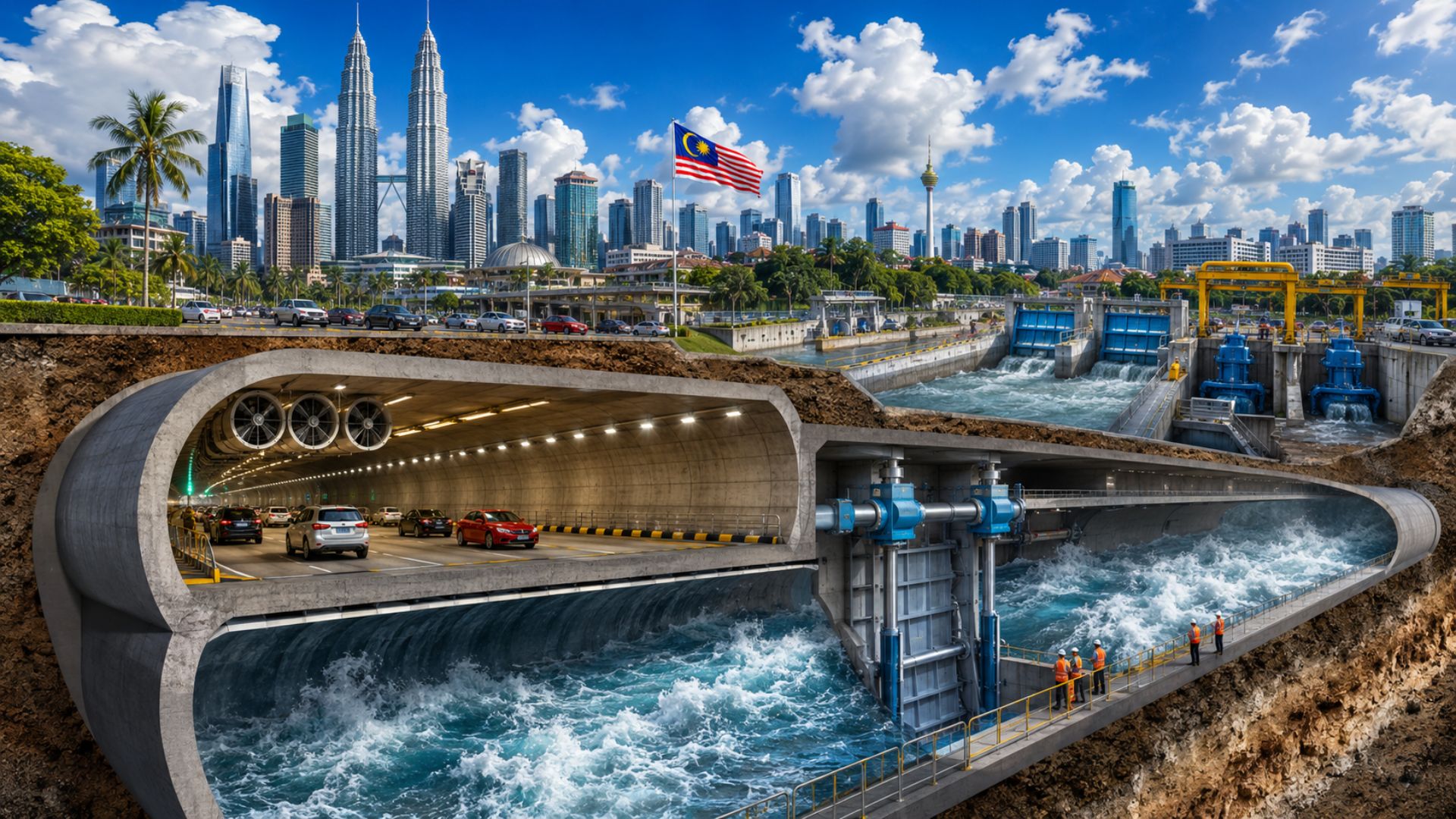
Malaysia created a tunnel that becomes a road on a normal day and a giant flood drain when rain threatens Kuala Lumpur.
-
Libya built over 4,000 kilometers of underground pipelines to bring water from the Sahara to coastal cities in a project that the government itself called the Eighth Wonder of the World.



Triangular house made with plastic bottles shows how urban waste can become an emergency shelter
The structure has a triangular shape, similar to a tipi tent. On the outside, it draws attention with its unusual appearance, as the outer skin is made from discarded plastic bottles.
These bottles are filled and attached to a simple bamboo frame. The result is a construction that looks futuristic but is born from common and often discarded materials.

The impact lies in the idea of transforming waste into protection. Instead of treating plastic merely as a problem, the project shows a way to reuse waste in a situation of need.
Over 30 people participated in the collective assembly called The Big Build
The construction was carried out in a collective action called The Big Build. Over 30 people participated in the assembly and reused more than 1,500 plastic bottles and caps.
This detail helps explain why BottleHouse draws attention. The shelter does not rely solely on a ready-made factory solution but also shows that assembly can involve collective work.
In remote areas or emergency situations, this type of idea can have practical value. Simple materials, low weight, and community participation make the concept closer to the reality of those who need to improvise quick protection.
Six Miles Across London presents BottleHouse as a low-cost visual solution
Six Miles Across London, the original source presenting the BottleHouse project, detailed the central points of the proposal: the use of bamboo, discarded bottles, and collective assembly to create a temporary shelter.
The solution falls within the field of humanitarian architecture, a name given to construction projects aimed at urgent social needs. In simple words, it is architecture designed to help people in times of risk or lack of infrastructure.
In the case of BottleHouse, the highlight is not large-scale industrial production. The strength lies in the visual proof that common urban waste can be transformed into an emergency shelter.
Bamboo and plastic bottles reduce reliance on conventional materials
Bamboo serves as the base of the frame. It allows for the creation of a simple structure to receive the outer layer made with plastic bottles.
The bottles, in turn, take on a role similar to a protective skin. They do not appear merely as decoration but as a visible part of the solution.
This combination reinforces the low-cost proposal. The shelter works with light, cheap, and widely available materials, an important point for regions where the transport of supplies can be difficult.
Emergency shelter has a greater impact due to its strong image and the simplicity of the idea
The BottleHouse draws attention because it combines function and image. It looks like a futuristic cabin, but its base is made of urban plastic waste and bamboo.

This visual strength helps make the topic easier to understand. The reader sees the structure and quickly grasps the project’s logic: something discarded can gain new use in a crisis situation.
The proposal also broadens the conversation about plastic reuse. The project shows that discarded bottles can have utility beyond common recycling, especially when there is a need for temporary shelter.
BottleHouse Project reinforces the debate on humanitarian crisis, waste, and simple construction
The BottleHouse shows that an emergency shelter can be born from accessible materials. With 1,500 plastic bottles, bamboo, and collective assembly, the triangular structure transforms urban waste into a temporary protection option.
The idea alone does not solve all the challenges of a humanitarian crisis. Still, it proves that simple solutions can open new paths for remote areas, communities without access to conventional materials, and situations where every available resource needs to be well utilized.
If discarded bottles can become shelter, what other common waste from Brazilian cities could be transformed into useful solutions for those who need it most? Share your opinion.





Be the first to react!