Portuguese
  Spanish


Giant of the Seas That No One Sees: With Military Technology and Excavation Robots, This Ship Has Already Begun to Map and Bury the New Backbone of the Global Internet
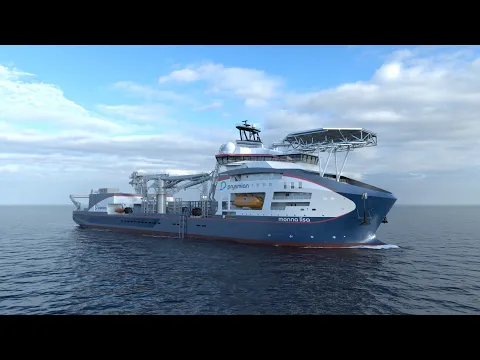
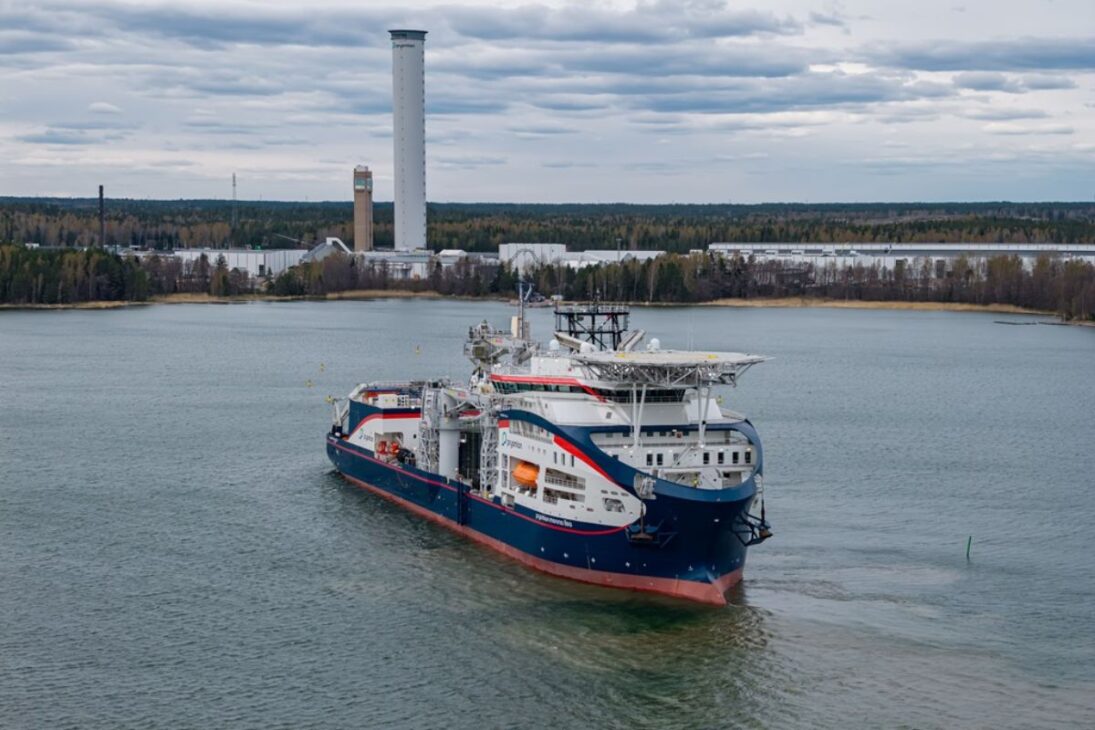
At first glance, it looks like just another ship sailing along the Atlantic coast. But behind its structure lies one of the most advanced technological systems on the planet. Its name is Monna Lisa and, along with its sibling Leonardo Da Vinci, it is the largest and most sophisticated cable-laying ship ever built. Designed to install thousands of kilometers of submarine cables in extreme depths, this colossus is a crucial – and invisible – piece of the infrastructure that keeps the world connected.
Behind global navigation, digital commerce, and real-time video calls, there exists a physical network of optical cables that snake along the ocean floor. Over 95% of the world’s internet traffic does not pass through satellites, but rather through these underwater arteries. And this is where the role of Monna Lisa comes into play.
A Giant Built for an Invisible Mission
The Monna Lisa is a gem of specialized naval engineering. Its construction began in 2022 at the Vard Tulcea shipyards in Romania, commissioned by the Italian company Prysmian Group, the world leader in cable systems. The ship cost over 250 million euros and began operations in 2024, just as transatlantic cabling projects between Europe and North America intensified.
-
At 86, mountaineer Carlos Soria becomes the oldest person ever to summit an 8,000-meter peak, reaching the top of Manaslu in Nepal.

-
Brazil Secures Spot in International Mathematical Olympiad as Students Excel in One of the World’s Most Competitive Selections, Highlighting Growth in STEM Education Among Young Talents

-
June 2026 Heatwave in France Depletes “Blanc de Meudon” as Residents Use Chalk Powder to Cool Homes by 3 to 7°C Without Air Conditioning
-
Frustrated by delays, Brazilian entrepreneur builds toll road in 3 days to avoid 23 km detour.


Measuring 171 meters in length and 34 meters in width, this ship impresses not only with its size but also with its operational capacity. It can simultaneously transport two giant reels of cable: one weighing 7,000 tons and the other 10,000 tons, ready to be laid on ocean routes exceeding 6,000 kilometers.
According to Prysmian’s official website, the ship has infrastructure to accommodate up to 120 crew members during prolonged missions of up to 90 uninterrupted days at sea. And although it is not designed for speed, it can reach up to 16 knots when sailing without heavy cargo.

Precision Technology at the Bottom of the Ocean
The work of the Monna Lisa goes far beyond simply laying cable in the sea. The installation process requires surgical precision. To achieve this, the ship is equipped with a DP3 Dynamic Positioning system, the most advanced currently available in the maritime industry. This system uses a combination of GPS sensors, radars, gyroscopes, and automatic thrusters to keep the ship precisely in place, within just centimeters, even in open waters and under adverse conditions.
This stability is crucial: any accidental movement can jeopardize the cable during installation, risking years of planning and millions of euros in investment. To reinforce its position during delicate maneuvers, the Monna Lisa employs an eight-point anchoring system, securing itself directly to the seabed in shallow waters.
Digging Trenches at 3,000 Meters Deep
The innovation of the Monna Lisa extends far beyond the surface. Unlike old practices – when cables were merely placed on the ocean floor – the current standard requires that they be buried for protection, preventing damage from anchors, fishing nets, or underwater currents.
To achieve this, the ship uses a system called Hydroplow, an underwater plow that digs a trench 2 to 3 meters deep, depending on the type of soil. As the ship moves forward, the cable is laid in the trench, which naturally closes with the flow of the earth, protecting it.
When the soil is rockier or uneven, autonomous underwater robots come into play, excavating accurately in areas where the Hydroplow is not effective. These alternative systems allow the ship to operate even in complex geological terrains.
A Mission That Goes Beyond Technology
The expansion of submarine cable networks has not only technical implications – it also involves geopolitical and strategic aspects. In an increasingly polarized world, these cables have become critical infrastructure for the digital sovereignty of nations. Some intercontinental projects, such as Google’s Grace Hopper and Meta’s 2Africa, have already caused diplomatic disputes over data access and surveillance.
The Monna Lisa is at the center of this silent race for control of the digital arteries of the 21st century. Its first major project was the installation of a cable between Santander (Spain) and the east coast of the United States, an operation that began in April 2024 and is still ongoing. According to data from Submarine Cable Map, this new route will significantly reduce data latency between the two continents, as well as serve as a backup route for older cables nearing the end of their lifespan.
A Fleet to Dominate the Digital Seas
Prysmian has even more ambitious plans. In addition to the Monna Lisa and the Leonardo Da Vinci – both already in operation – the company announced the construction of a third, even more modern ship, expected to be delivered by 2027. This is a long-term strategy aimed at consolidating Europe as a global leader in underwater digital infrastructure.
Meanwhile, in China, a similar ship is already being assembled, which will measure 215 meters in length, but is not expected to enter into operation until 2026. The competition for these specialized ships is intense: there are few shipyards in the world capable of building them – and even fewer operators with the expertise to command them safely.