





 Portuguese
  English
  Spanish
  4 min of reading
  1 comment


Old Cold War Radar Station Became a House in the United Kingdom, Preserving Original Dome, Massive Concrete Walls, and Isolated Operation from the Power Grid.
According to records from the British Ministry of Defence, surveys from English Heritage , and historical documentation of the United Kingdom’s air defense system, several Cold War radar stations were decommissioned between the 1980s and 1990s after the reorganization of the air surveillance system known as ROTOR (Radar Organisation). One of these structures, located in a rural area away from urban centers, had an unusual fate: instead of being demolished, it was converted into a private residence, preserving much of the original military infrastructure and adapting a technical complex designed for nuclear war to domestic life.
These radar stations were designed to operate in extreme scenarios. Built mostly between the late 1950s and early 1960s, they needed to withstand nearby explosions, overpressure, severe weather, and continuous operation even in the event of collapse of civil networks. For this reason, their architecture prioritized thick reinforced concrete, compact volumes, structural redundancy, and near-total isolation from the surroundings.
The Military Concrete Structure Designed to Survive Attacks
The structural base of the old radar station repurposed as a residence is made up of massive reinforced concrete blocks, with walls that exceed one meter in thickness in some critical sections.
-
Luxury pet market gains momentum in Paris with cafes where dogs eat croissants, gourmet desserts, and display-worthy biscuits.

-
The 2026 World Cup has barely started, and the sticker album has already become a craze with 980 stickers, 48 teams, and a cost that is alarming.
-
Amid the United States’ economic blockade, China delivers 15,000 tons of rice to Cuba as part of a 60,000-ton donation personally approved by Xi Jinping. The package includes 80 million dollars and solar panels for hospitals.

-
For around 200 reais, anyone can buy a kit and have a chip implanted between their fingers to replace cards, keys, badges, and even medical information in case of a hospital emergency.




Unlike civilian buildings, the concrete served not only as a load-bearing component but also as a protective layer, capable of absorbing impacts, debris, and shock waves from nearby explosions.

The main building was partially buried, a common strategy in military installations of the time to reduce visual signature and increase thermal and structural protection.
This condition created, decades later, a naturally stable environment in terms of temperature, with low variation throughout the year, a characteristic that favored its adaptation for residential use without the need for conventional air conditioning systems.
The Preserved Radar Dome as a Structural and Symbolic Element
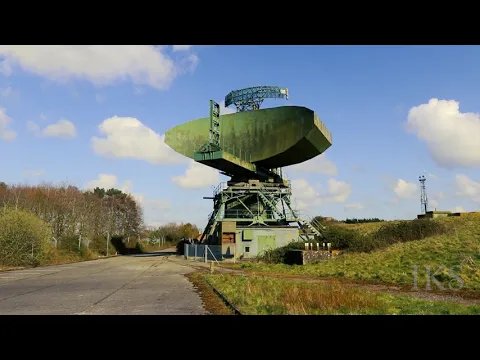
The most iconic element of the old station is the hemispherical dome that originally housed the radar antenna. Made from lightweight panels and materials designed not to interfere with the transmission of electromagnetic waves, the dome was retained after the conversion of the structure into a residence, becoming an integral part of the architectural ensemble.
Although the radar equipment has been removed, the dome continues to function as the cover and visual landmark of the building. Its curved geometry offers excellent resistance to strong winds, evenly distributing forces, and creates a unique internal space that is difficult to replicate in conventional residential buildings.
A Complex Designed to Operate Isolated from the Outside World
During its operational life, the radar station needed to function autonomously in the event of conflict. To achieve this, the complex had its own systems for power, ventilation, communication, and supply, many of which were partially repurposed in the residential conversion.
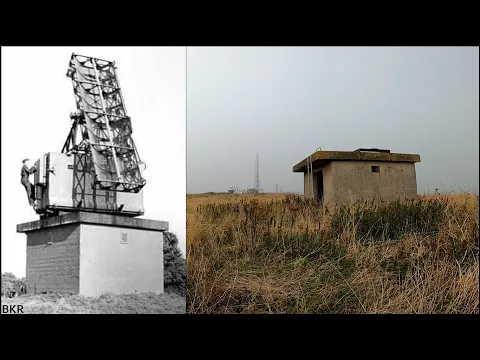
For years, the house operated outside the conventional power grid, relying on independent systems inherited from the military infrastructure and later adapted.
Generators, technical rooms, and ventilation ducts designed for continuous work environments were transformed into domestic use spaces, maintaining the logic of redundancy and robustness that defined the original installation.
The Adaptation of a Technological Bunker into a Habitable Space
Transforming a Cold War radar station into a residence required surgical interventions, not a complete reconstruction. The project’s logic was to work with what already existed: compact volumes, narrow corridors, technical rooms without natural light, and a compartmentalization designed for military operation.
The adaptation prioritized controlled openings, the introduction of indirect lighting, and internal reorganization without compromising the structural integrity of the original concrete.
Unlike common residential renovations, any removal of material needed to respect the structural and protective function of the walls, which drastically limited more aggressive alterations.
An Extreme Example of Reusing Cold War Infrastructure
Today, the house installed in the old radar station is a rare example of complete repurposing of heavy military infrastructure. Instead of erasing its origin, the project preserves elements that clearly indicate its original function: the dome, the exposed concrete, the absence of conventional windows, and the sense of absolute isolation from the surroundings.
More than an architectural curiosity, the residence demonstrates how structures designed for total war scenarios can be adapted to everyday life, as long as one deeply understands its construction logic.
What once served to detect aerial threats miles away has now become a space for domestic routine, without losing the extreme character that marked its origin.
This transformation reveals a rare contrast: a structure designed for the worst possible scenario has become one of the most radical examples of habitable architecture outside the norm, sustained not by modern comfort, but by excessive engineering, structural redundancy, and absolute isolation.








Vocês colocam vídeo dentro do próprio site e inserem um monte de propaganda por cima, é muito ruim de acompanhar.
Sei que o site tem que vender comercial, mas existem outras formas de fazer