






 Portuguese
  Spanish


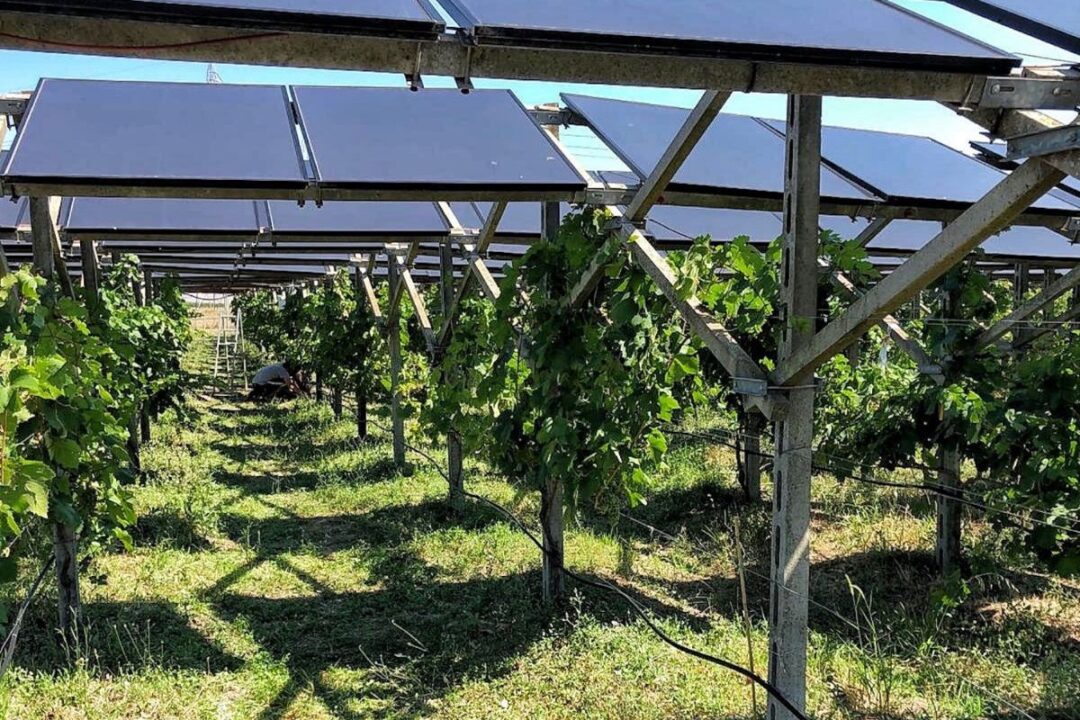

Solar Panels Over Vineyards Are Revolutionizing Wine Production, Improving Quality and Protecting the Environment!
Agrivoltaics has already been establishing itself as a major promise for both agriculture and the renewable energy sector. What was still unknown was that this technology could also bring benefits to wine production.
The winery Svolta, located in the Puglia region of Italy, discovered that integrating agrivoltaic energy systems in vineyards not only helps mitigate the effects of climate change but also delays grape ripening, resulting in a significant improvement in wine quality.
Furthermore, the technology enabled the cultivation of grape varieties that are not typical of the region, while providing economic and environmental advantages, such as water savings and solar energy generation on the same land where the vines are grown.
-
Axia Energia Invests $280 Million in Q1, Increases Investments by 36%, and Turns Loss into $740 Million Profit

-
California Project Aims to Store Heat Underground in Former Oil Reservoir to Generate 100 kW of Electricity for Over 12 Hours
-
French Port Harnesses Industrial Waste Heat to Power Up to 30,000 Homes
-
Belgian Port to Install Shore Power for Cruise Ships by 2027, Cutting Dock Emissions by Up to 5% and Meeting EU Regulations



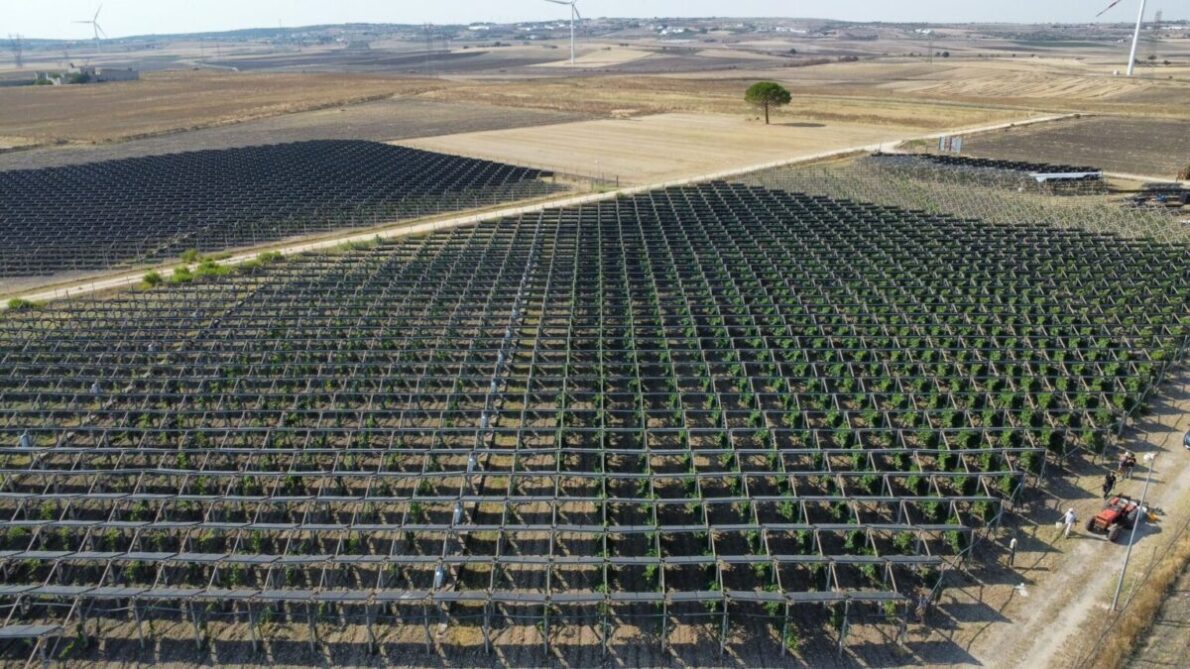
An Impressive Agrivoltaic Energy Installation
The project is called Vigna Agrivoltaica di Comunità and features 7,770 thin-film solar energy panels. Together, they add up to an output power of 970 kW.
The solar panels are oriented south at an angle of 28 degrees. They rest on a concrete structure inspired by the typical pergola of Italian vineyards. The vine grows below, protected from the wind and heat waves.
The secret lies in the shade. The shade cast by the solar panels delayed Svolta’s harvest by three to four weeks compared to the surrounding vineyards, for both white and red grapes.
This year, the Vigna Agrivoltaica di Comunità harvested at the end of August, while in other areas it occurred weeks earlier.
How It Affects Wine Quality
The reduced sunlight exposure slows down the accumulation of sugars in the grapes, improving the balance between alcohol content and acidity during fermentation. According to Svolta, this enables the production of high-quality wines without the need for corrective interventions.
The agrivoltaic energy system improved plant water stress, protected the grapes from extreme weather, and halved wind speed compared to open fields. The winery conducted technical studies showing a reduction in irrigation water consumption of up to 20% and an increase in land yield between 20% and 60%.
New Grape Varieties Under Study
Svolta has cultivated over 30 grape varieties, mainly native to Puglia, hoping to discover new surprises next year. The winery plans to produce sparkling wines with white grapes, for which it believes the agrivoltaic energy system will be particularly beneficial.


Interessante o que acabei de ler aqui, existe muitos artigos em seu blog relacionado a este que acebei de ler gostei de seu blog. Assistir filmes
Resultado um vinho energético kkkkkk
Muito interessante em todos os aspectos…vinícolas são sempre áreas extensas e propícias a instalação deste nível…novos tempos….