






 Portuguese
  Spanish


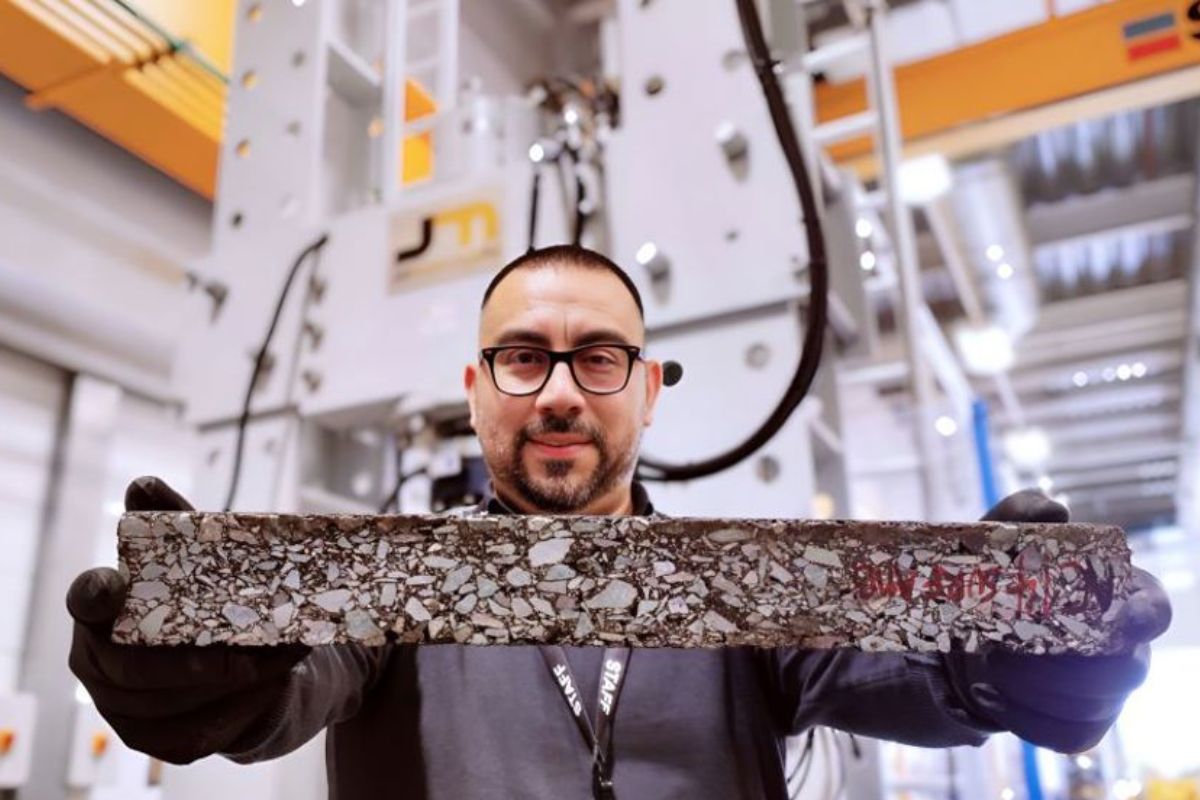

Swansea University, King’s College and Google Cloud Create Smart Asphalt That Self-Heals in 1 Hour and Can Reduce Road Maintenance Costs by 30% in the UK
Potholes are a global headache, but in the UK, they represent a true logistical and financial nightmare. In 2024 alone, over £579 million was spent on repairs for damaged vehicles. Now, scientists from Swansea University, in partnership with King’s College London and Google Cloud, may have found the ultimate solution.
The team developed a new type of “self-healing” asphalt, capable of regenerating cracks before they turn into potholes, without the need for maintenance or human intervention. This advancement was made possible by combining artificial intelligence, plant biomass, and microcapsule technology – a promising innovation, as revealed by BBC News on February 3, 2025.

How Self-Healing Asphalt Works and Why It Could Revolutionize Global Infrastructure
The basis of the innovation lies in bitumen, a black and sticky substance made from petroleum, which becomes brittle and prone to cracking when oxidized over time. To combat this, researchers added microscopic plant spores embedded in recycled oils directly into the material.
-
Toyota to Open New Factory in Brazil by November 2026 with $2.2 Billion Investment, Creating 2,000 Jobs, and Ending Corolla Production in Indaiatuba

-
Brazilian Factory Restores Truck Engines and Parts, Reducing Raw Material Use by Up to 85% After 80 Years in Business

-
British Marines Set Record by Changing Ford Escort Engine in 42 Seconds, Unbroken for 40 Years

-
BYD Owners in Brazil Raise Concerns Over Warranty After 87,000 km, Two Repairs in Three Days, and Over $500 in Costs




These spores remain dormant until traffic compresses them on the road, releasing the oil and automatically filling the cracks. The entire process occurs in less than an hour, according to laboratory tests.
The application is virtually invisible: the spores are integrated into the asphalt mixture and are not exposed on the surface, which increases durability. When activated, they function as an “internal healing,” reversing the deterioration process.
With this technology, the expectation is to extend the lifespan of roads by up to 30%, representing a billion-pound savings for governments and taxpayers. And the best part: with fewer traffic interruptions for repairs.
Additionally, the use of recycled oils and plant biomass makes the product more sustainable, reducing reliance on petroleum and contributing to carbon neutrality goals, such as those set by the UK by 2050.
Potholes in Numbers: The Startling Data That Motivated the Development of This Technology
The pothole problem in the UK is severe: drivers encounter an average of six per mile on roads managed by local councils. The annual cost to fill these craters has already surpassed £143 million.
According to the Asphalt Industry Alliance, it would require over £16 billion to bring the roads back to a “satisfactory” level of maintenance. The impacts go far beyond aesthetics or comfort — they include accidents, severe vehicle damage, and even difficulties for essential services like ambulances.
An emblematic case was that of singer Rod Stewart, who, outraged by the potholes near his home in Essex, posted a video showing himself personally filling the craters. The artist even considered selling his collection of Ferraris because he could not drive them on local roads.
Communities in Wales, such as Wrexham, have gone so far as to turn their pothole-ridden streets into ironic tourist attractions, dubbed “Pothole Land,” after years without response from the authorities.
This critical scenario has made the UK fertile ground for disruptive technologies like self-healing asphalt. The current goal is to expand field testing and scale production for large-scale application in the coming years.
The Role of Artificial Intelligence and Google Cloud in the Self-Healing Asphalt Project
Artificial intelligence has been crucial in speeding up the development of this new generation of infrastructure materials. Using algorithms from Google Cloud, scientists modeled the behavior of organic molecules in bitumen to predict how it would behave in the presence of cracks.
These simulations helped refine the formula and better understand the processes that lead to the formation of cracks in traditional asphalt, a phenomenon that was previously poorly understood.
According to Dr. Francisco Martin-Martinez from King’s College, the computational models used were based on atomistic simulations accelerated by data, allowing precise predictions of how and where the asphalt would deteriorate and how it would regenerate.
This nature-inspired approach, where materials rebuild themselves, is called “biomimetics” and has applications in various fields of materials engineering.
The integration with Google Cloud also opened doors for future uses on a large scale, with continuous monitoring of roads and early fault detection through sensors and AI, even before the human eye can perceive them.
Environmental Impact and the Future of Sustainable Roads from Waste and Biomass
In addition to being efficient, the new asphalt is eco-friendly. It uses recycled materials, such as repurposed oils and plant biomass waste, significantly reducing the carbon footprint of pavement production.
Dr. Jose Norambuena-Contreras from Swansea University highlights that local production from agricultural waste lowers costs and makes communities less dependent on petroleum-based asphalt, especially in regions where access to fossil fuels is limited.
This sustainable characteristic is fundamental in a scenario where infrastructure accounts for a significant share of greenhouse gas emissions. Roads that last longer and pollute less align perfectly with national decarbonization plans.
The innovation can also benefit developing countries, where road maintenance is costly and scarce. With an autonomous surface, durability increases, and the need for frequent repairs drops drastically.
The technology is still in the testing phase, but researchers are optimistic. With government support and private investment, self-healing asphalt could be implemented on major UK highways in the coming years and eventually exported worldwide.
And what about you, do you think this technology could change the future of roads in Brazil? Comment below, share with your friends who are constantly dodging potholes, and stay updated on innovations that promise to transform 21st-century asphalt.





Que invenção fantástica e sustentável: qual o prazo estimado para que essa tecnologia de “estrada viva” comece a ser implementada em rodovias públicas, reduzindo os custos de manutenção globalmente? Cordialmente Telkom University Jakarta