






 Portuguese
  Spanish
  3 min of reading
  0 comments


Researchers Suggest That The Universe Might Be Up To 26.7 Billion Years Old, Twice The Currently Estimated Age, Challenging Established Concepts In Modern Cosmology.
A study led by Rajendra Gupta, a physics professor at the University of Ottawa, proposed a bold new idea: the universe may be twice as old as scientists currently believe. Published in the Monthly Notices of the Royal Astronomical Society, the study suggests that the universe would be 26.7 billion years old, instead of the widely accepted 13.8 billion years.
Gupta’s proposal is not just a revision of numbers. It brings a possible solution to astronomical mysteries that have puzzled scientists for years, such as mature galaxies observed shortly after the Big Bang and stars that appear older than the universe itself.
Origin Of The Age Of The Universe: A Story Of 13.8 Billion Years
For decades, scientists have used the study of distant stars and the redshift of light to calculate the age of the universe. According to the standard model, known as Lambda-CDM, the universe originated about 13.8 billion years ago.
-
Giant crane lifts up to 3,000 tons, requires special logistics to reach the site, and can transform 18-hour operations into just 3 hours, speeding up the hoisting of oil platforms, refineries, and plants in giant industrial projects.

-
A discarded microwave may contain 22-carat gold in internal components; study recovered a 450 mg nugget from electronic boards.

-
Who has the highest IQ: the oldest child, the middle child, or the youngest? A study with 240,000 people published in Science reveals a difference of up to 3.2 points and indicates which position in the family tends to have an advantage.
-
A YouTuber spent almost a year transforming the failed invention into an autonomous flying umbrella: the drone uses a camera and Raspberry Pi to follow the person and protect them from the rain on its own.


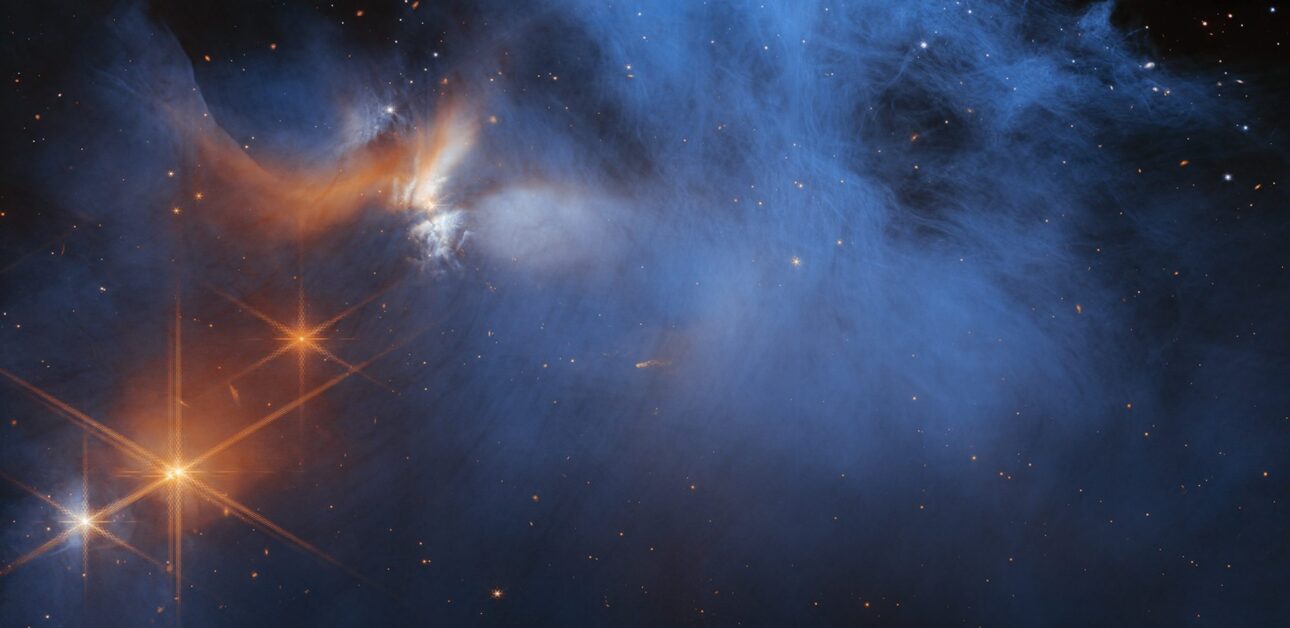
However, the James Webb Space Telescope (JWST) has posed new challenges to this model. The JWST detected extremely mature galaxies only 300 million years after the Big Bang.
These galaxies exhibit mass and structure associated with billions of years of evolution, something difficult to explain by current theories. Additionally, stars like Methuselah appear to be older than the universe itself, further complicating cosmic timelines.
The Tired Light Theory Revives The Debate
To address these anomalies, Gupta revisited the controversial “tired light” theory proposed by astronomer Fritz Zwicky in the 1920s. This theory suggests that light loses energy when traveling over great distances, causing redshift.
Although it was discarded by more recent observational data, Gupta proposes a hybrid model. He combines the idea of “tired light” with the concept of an expanding universe. In this model, redshift occurs from both the loss of photon energy and cosmic expansion, offering a broader explanation for the observed phenomena.
Evolving Constants: A New Perspective
Another fundamental point of Gupta’s theory involves the so-called coupling constants, which govern interactions between particles. Based on an idea from Paul Dirac, a theoretical physicist, Gupta suggests that these constants may change over time.
If the coupling constants evolve, it would allow for extending the time scale necessary for galaxy formation.
This would explain why the galaxies detected by the JWST are so mature, even appearing early in the timeline of the universe.
Reviewing Dark Energy And Accelerated Expansion
Gupta’s study also challenges the interpretation of the cosmological constant associated with dark energy, which drives the accelerated expansion of the universe. He suggests that, instead of being fixed, this constant may be linked to the evolution of coupling constants.
This new approach helps explain the surprisingly small sizes of primitive galaxies and provides a more flexible framework for understanding the expansion and evolution of the universe.
Implications For The Future Of Astronomy
If Gupta’s theories are confirmed, this could revolutionize our understanding of the cosmos. An age of 26.7 billion years for the universe not only rewrites cosmic history but also answers enigmas that have challenged science for decades.
Future research will be essential to validate or refute this proposal, but Gupta’s work already lays a foundation for exploring new directions in the study of the origin and evolution of the universe.


-

1 person reacted to this.