






 Portuguese
  Spanish
  4 min of reading
  0 comments


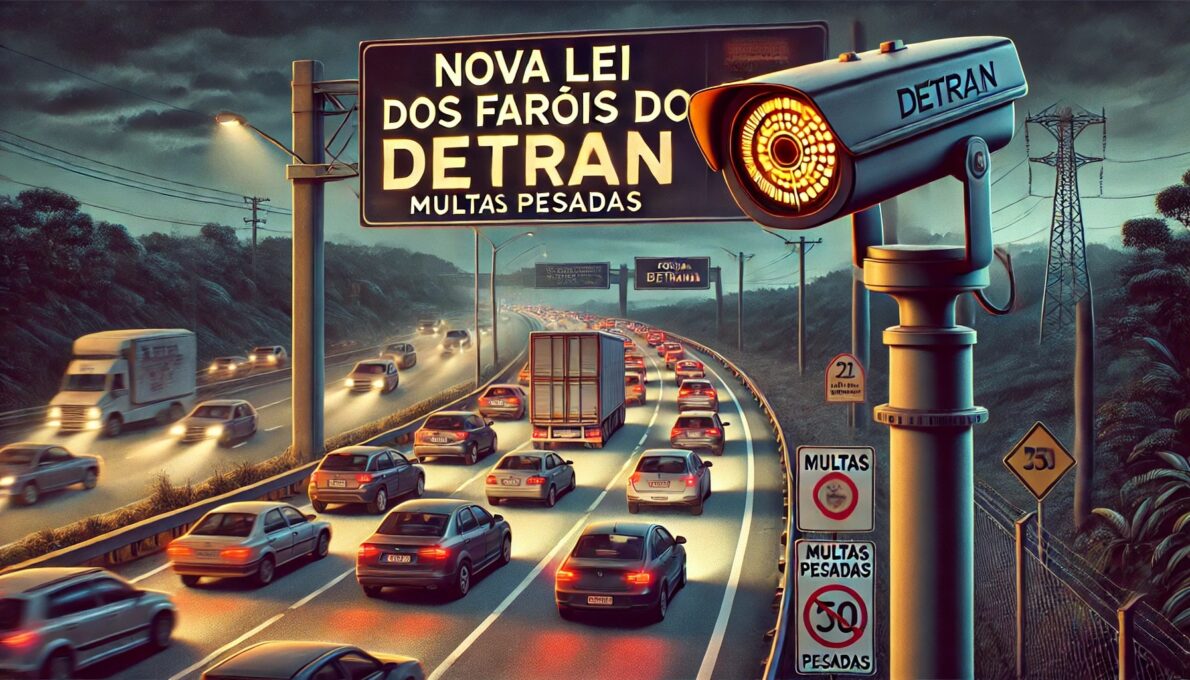
New Headlight Law from Detran Concerns Brazilian Drivers and May Surprise Many! Avoid Complications and Stay Informed About the New Rules.
If you are a driver, you should be used to the various traffic rules that come up from time to time. Now, there is a new headlight law from Detran that is making a lot of noise and may catch many drivers by surprise. The new rule, implemented by the Detran of São Paulo, is already in effect and brings important changes that you need to understand to avoid heavy fines and points on your driver’s license. In this article, we will explain everything about this new Detran law, how it affects the use of headlights, and what the consequences are for not following it.
What Does the New Detran Headlight Law Say?
The new Detran headlight law was established at the beginning of this year and defines new requirements for the use of headlights during the day and at night. Basically, every car sold in Brazil now needs to be equipped with daytime running lights, known as DRL (Daytime Running Lights), in addition to stability control. These daytime lights are a safety measure that makes the car more visible to other drivers and pedestrians, even during the day.
The daytime lights can be LED or halogen bulbs, and the detail is that, once the car is on, these lights need to stay on automatically. The driver does not have the option to turn them off while the car is in motion, which helps ensure compliance with the rule.
-
Uber Faces Shareholder Scrutiny as Board Accused of Ignoring Safety, Compliance, and Harassment Warnings Amid Over 3,500 U.S. Lawsuits

-
Ferrari’s First Electric Car Divides Fans, Priced at $630,000, Amid Concerns Over Limited Editions; Brand Clarifies It’s Not Just for Future Perks
-
BYD Dolphin Mini: The Electric Car That Defies Depreciation, Losing Only 3.58% in a Year and Becoming the Best-Selling Retail Model Under $22,000

-
Electric Car JAC E-JS4 Loses $19,000 in Value in One Year, Leading Record Depreciation of Used Cars in Brazil Due to Expensive Battery and New Models


But What About Low Beams?
Even with the introduction of daytime running lights, the use of low beams is still mandatory in various situations, especially at night. The infraction occurs when the driver does not use low beams in designated locations and times, such as on highways and streets at night or during weather conditions that reduce visibility.
If the driver is caught without the low beams on in these situations, they may receive a fine of R$ 130.16 and 4 points on their CNH, being considered a medium-level infraction. So, even with the new daytime running lights, it is important to know that they do not replace the use of low beams at night.
Exceptions to the New Headlight Law
Despite the changes brought by the new headlight law, there are some important exceptions that drivers should be aware of. According to Detran, some well-known highways, such as the Dutra, Castello Branco, Imigrantes, Ayrton Senna, Bandeirantes, and Anhanguera, do not require the use of low beams during the day. In other words, if you are driving on these roads, it is not mandatory to keep the low beams on.
Furthermore, more modern cars that are already equipped with the DRL system, the famous daytime running lights, are exempt from using low beams during the day on single-lane roads. However, remember: the DRL does not replace low beams at night. If you are caught using only the DRL at night, the fine will apply!
Why Is Keeping Headlights On Important?
The new Detran law reinforces the importance of keeping headlights on in specific situations to increase safety on the road. Even on highways where it is not mandatory, many drivers prefer to keep their headlights on during the day to ensure greater visibility. After all, in many situations, being seen is as important as seeing other vehicles.
Having your headlights on increases the visibility of your vehicle in low-light conditions, such as rain, fog, or even on cloudy days. This simple practice can prevent accidents and ensure that other drivers see you more easily, especially on busy highways.
Failing to comply with the new Detran headlight law may result in a fine of R$ 130.16 and the addition of 4 points to your driver’s license. And don’t think it’s hard to get caught: with the expansion of radars and monitoring cameras on highways and urban roads, the chances of being fined increase considerably. In addition, traffic agents are also attentive to compliance with this new rule, so it’s best to adapt as soon as possible.
How Does the Radar Work in Headlight Enforcement?
The modern radars used on many Brazilian highways not only check the speed of vehicles but also monitor infractions such as the incorrect use of headlights. They can identify whether the car has its headlights on or off in mandatory situations, such as at night or in adverse visibility conditions. In other words, the radars are also on the side of enforcing this new Detran law, increasing the chances of drivers being penalized.
The new Detran headlight law was created to enhance safety on the roads and ensure that vehicles are more visible in different traffic conditions. With the new daytime running lights, drivers have a little extra help in avoiding infractions, but it is still important to stay attentive to the rules, especially when the use of low beams is mandatory.
If you don’t want to risk a fine and points on your license, keep an eye on the changes and adjust to the new requirements as soon as possible. After all, road safety is everyone’s responsibility, and by keeping the rules up to date, we prevent accidents and save money!





Be the first to react!