Portuguese
  Spanish


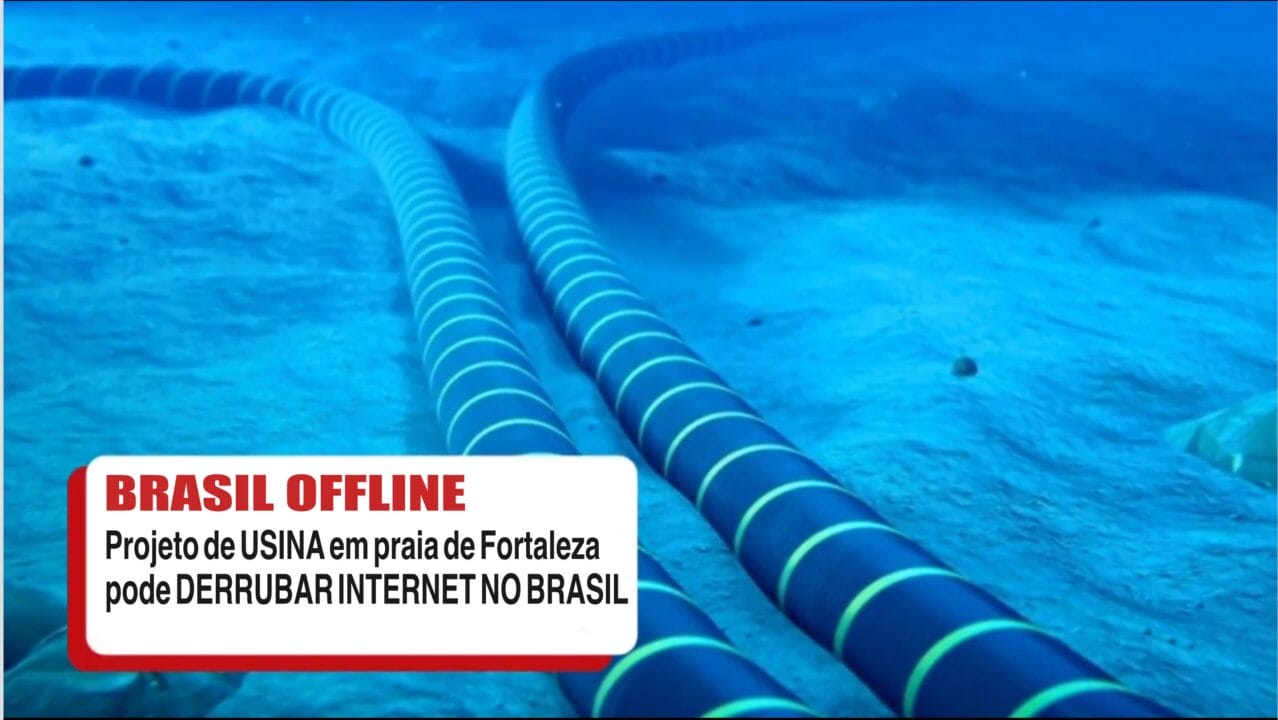

Power Plant in Fortaleza Challenges Anatel and Operators Concerned About the Risk of Breaking Fiber Optic Cables Potentially Leaving Brazil Without Internet
The approval for the construction of a new desalination plant by the Superintendence of the Patrimony of the Union in Fortaleza marks a significant advancement in technology and sustainability. Located on Praia do Futuro, the facility promises to remove salt from seawater, a crucial innovation in times of water scarcity. This project, despite its transformative potential, is at the center of a technological controversy, with concerns emerging about the safety of essential submarine internet cables for Brazil’s connectivity.
The government of Ceará, through the Water and Sanitation Company (Cagece), assures that the plant does not pose threats to the fiber optic cables, challenging the warnings of the National Telecommunications Agency (Anatel). This assurance comes at a critical moment when telecommunications operators express fears of a possible compromise to the vital internet infrastructure, jeopardizing communication and the flow of information in the country.
The controversy deepens as details of the project are revealed. Strategically positioned on the seabed, the plant aims not only to remove salt from seawater but also to sustain the supply of drinking water during periods of severe drought in the state. This advancement represents a milestone for Ceará, promising a long-term solution for water challenges, while raising questions about the harmonious coexistence between technological advancement and existing infrastructure.
-
Has the charge for sitting together ended? Anac confirms that minors under 16 have the right to a seat next to their guardians without an extra fee, and airlines may be penalized for failing to comply with the new rule.

-
After nearly two decades in operation, the Grupo Dass shoe factory ends production, confirms 150 layoffs, and shows how the drop in orders changed everything.

-
Pizza Day highlights a curious contrast in Brazil: while 13 new pizzerias open every day, the price of mozzarella skyrockets, and the country’s most beloved dish weighs increasingly on family budgets.
-
It’s official: Petrobras takes 75% of block 3 in São Tomé and Príncipe and debuts as an offshore operator outside South America.




Understand Why Anatel Maintains a Firm Stance Against the Construction of the Plant
Praia do Futuro, recognized as a neuralgic point for connectivity between Brazil and Europe, now faces a scenario of technological tension. This location is the first point of contact in Brazil for fiber optic cables coming from Europe, extending to the metropolises of Rio de Janeiro, São Paulo, and various countries in Latin America. The integrity of these cables is crucial; any damage could result in a domino effect, affecting internet speed and availability on a continental scale, a prospect that places users potentially in disconnection or experiencing slow services.
The recent approval from the Union, announced by Cagece, introduces a new dynamic into the planning of the desalination plant. The modification in the proximity of the pipelines to the internet cables, from 40 to 567 meters, reflects the expanded security concerns raised by Anatel. This change is just one among several others recommended by the International Cable Protection Committee (ICPC) to ensure the preservation of submarine cables.
At the core of this technical debate, Anatel maintains a firm stance against the construction of the plant at the current location. The agency, which expressed its opposition in September 2022, reaffirms the need to reconsider the project’s location, even after the announced changes. The agency remains unyielding in its decision, despite the proposed changes, maintaining focus on protecting the critical internet infrastructure. This story is still developing, and deliberations continue to evolve with each new technical opinion and public discussion.
Construction of the Plant May Result in a Digital Blackout
On the horizon of environmental and technological issues, Cagece outlines the next steps for the installation of the desalination plant in Fortaleza. The expectation is to obtain the Installation License from the State Superintendency of the Environment (Semace). With the approval of this license, it is projected that construction of the plant will begin by March 2024. This movement is critical not only for advancing the state’s water infrastructure but also marks a significant moment in the management of natural resources, focusing on removing salt from seawater.
In contrast, Anatel presents a cautious and critical stance regarding the project. Recently concluding a working group without reaching a consensus, the agency expresses substantial concerns. The fear is that the implementation of the plant could result in a digital blackout, affecting the robust internet network that serves the entire country. According to the agency, the project by SPE – Águas de Fortaleza does not contemplate a thorough analysis of the risks or provisions related to the land and maritime infrastructure, essential for the integrity of the submarine cables.
Moreover, Anatel points out a lack of consideration for the influences that the plant’s marine ducts may have on the seabed. Specifically, there is a concern about the discharge of high-salinity water after the desalination process, which could negatively impact the underwater infrastructure. The agency emphasizes that SPE’s project disregards the 11 recommendations made by the International Cable Protection Committee (ICPC), signaling an urgent need for review and adjustment to safety and environmental protection standards.
The Government States That the Project Does Not Represent Threats to Submarine Internet Cables
Reaffirming technological safety, Cagece confidently announces that the infrastructures planned for the new plant at Praia do Futuro are safe, posing no threats to submarine internet cables. Based on in-depth technical studies, the state-owned company argues that the desalination project to remove salt from seawater has been meticulously planned to coexist harmoniously with the existing infrastructure. This assurance comes alongside the maintenance of the construction schedule, aiming for the plant to be operational by July 2024, after obtaining the necessary licenses.
The project led by SPE – Águas do Ceará, according to statements, also echoes the sentiment of safety, dismissing any risks to submarine cables or local data centers. This positioning is reinforced by the broad support of over 20 environmental technical opinions that endorsed the Preliminary License for the execution of the project. The trust placed in these opinions illustrates a commitment to technological and environmental continuity.
In terms of implementation, the plant will be built in a public-private partnership with the Águas de Fortaleza consortium, winner of the bid with a robust investment of R$ 3.2 billion. The expectation is that, barring unforeseen circumstances, construction will begin in March 2024, with completion projected for the first half of 2026. This investment signals not only a commitment to innovation in water infrastructure but also a bet on the economic and technological development of the region.
The Strategic Importance of Praia do Futuro: A Vital Hub for the Internet in Brazil
Finally, emphasizing the strategic importance of Praia do Futuro, it is crucial to note that this location is a vital hub for the internet in Brazil. Receiving 17 submarine cables connecting Brazil to Europe, Praia do Futuro is the backbone of fast connectivity throughout the country. This proximity to the European continent, only about six thousand kilometers away, reinforces Fortaleza’s position as a critical point for the national internet infrastructure, something that Anatel and other agencies seek to preserve while new technologies, such as the desalination plant, are introduced.