Portuguese
  Spanish


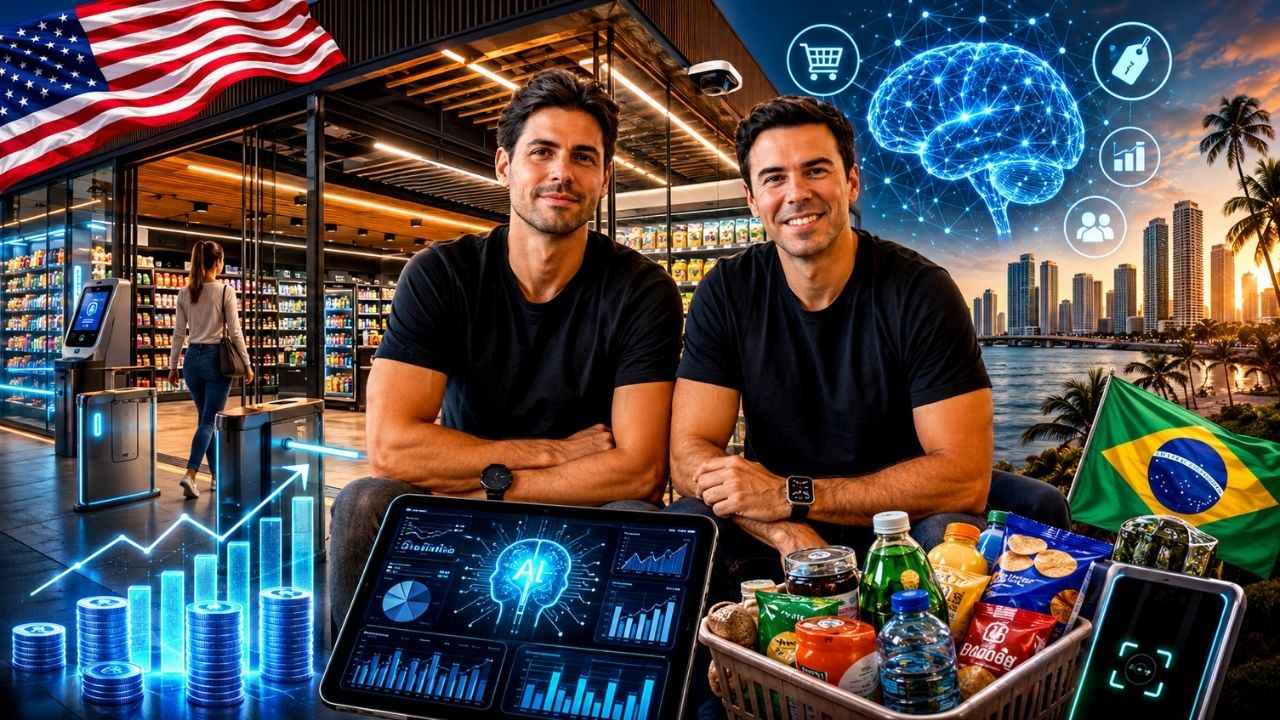

Founded by Lucas Ceschin and Rodolpho Damasco, the Brazilian startup The SmAll Market opened its first attendant-free minimarket in Miami in March 2026, applies artificial intelligence to inventory and pricing and confirmed a funding of R$ 10 million while preparing nine new own residential units still this year.
An attendant-free minimarket created by the Brazilian startup The SmAll Market began operating in March 2026 within a residential condominium in Miami, United States. Founded by Lucas Ceschin and Rodolpho Damasco, the company installed its first unit to offer everyday items with an automated shopping journey.
In a report published by PEGN, on May 27, 2026, the founders stated that the funding of R$ 10 million will support the business expansion and that the inaugural unit reached financial balance in the first month. The model uses artificial intelligence to analyze purchases, adjust products, and assist in pricing.
Attendant-free minimarket tries to fill gap left by delivery
The first attendant-free minimarket was installed in a residential building with more than 150 units in Miami. The company aims to cater to small and urgent purchases, like food or daily use items that ran out at home, without requiring a trip to a supermarket or a delivery order.
-
A city with 8,000 inhabitants will receive R$ 25 billion to host the largest single-stage pulp mill in the world, with a production of 3.5 million tons per year and a cost of R$ 45 million.

-
He left India for Oman in 1976, entered through the door of luxury finishes, and took Sobha to the premium real estate market in the Middle East.

-
China wants to impress the world once again with a mega canal featuring giant locks, deep waters, and space for the largest ships, in a project aimed at shortening journeys, reducing queues, and rivaling the Panama Canal in global trade.

-
Brazil saved US$ 32.4 billion in 2025 by switching from fossil to renewable energy and only ranked behind China and the United States on the IRENA global podium.




According to the founders, delivery in the United States can be expensive for small acquisitions. The Brazilian startup bets that an autonomous store within the building can function as an extension of the residents’ pantry. Convenience is the central point: the product is available where the consumer already lives.
Artificial intelligence monitors products purchased in each condominium

Before installing a unit, the company talks with the condominium management to understand the basic characteristics of the resident audience and set up the initial stock. After opening, the artificial intelligence monitors the actual buying behavior to suggest adjustments in the offered portfolio.
The technology also plays a role in pricing, according to the entrepreneurs. Instead of repeating the same catalog at all locations, the cashierless minimarket can adapt products and prices to local demand. Artificial intelligence is used to make each operation more compatible with the habits of that building.
Brazilian startup gathered investors linked to retail and operations
The Brazilian startup received funding in a pre-seed round with the participation of angel investors. The R$ 10 million raise, presented in the report as an approximate value of a round exceeding US$ 2 million, brought together names associated with food, technology, finance, and large retail operations.
Among the participants mentioned are Trevor Hayes, former CEO of Subway; Leandro Balbinot, presented as CTO of Whole Foods and vice-president of operations at Amazon; and Jardel Cardoso, founder of Billor and former CEO of CrediPago. For the founders, the experience of the supporters can help reduce errors during the expansion in Miami.
Initial financial balance will be tested in the expansion in Miami
According to the founders, the first unit achieved financial balance in its first month of operation. The result was related to the autonomous format, with no employees permanently working at the point of sale. The company also reported estimating about 24 months for the return on the initial investment per unit.
However, this data represents only the beginning of the operation. Repeating the performance in other condominiums in Miami will be the decisive test for the model. With the R$ 10 million raise, the informed plan is to open nine more units by the end of 2026, totaling ten own stores in the city.
Internal software coordinates store without in-person service
The physical equipment for the operation, including tablet, camera, and barcode reader, is sourced from market suppliers. The software, on the other hand, was developed internally. The goal is to consolidate sales data, inventory, product curation, and pricing decisions into a single technological structure.
For the partners, this control allows the Brazilian startup to combine residential retail and artificial intelligence without relying on standardized inventories. The attendant-free minimarket does not charge the condominium rent for the space, according to the company: the residential provides the area and receives the convenience for its residents.
American rules influenced choices of the first phase
The arrival in Miami also required the Brazilians to understand federal, state, and municipal rules in the United States. According to Ceschin, the founders themselves sought local agencies for guidance on the operation before expanding the brand’s presence.
An initial decision was not to sell alcoholic beverages due to the need for specific licenses. The R$ 10 million fundraising is also expected to support an expansion subject to these rules. The company’s progress depends not only on technology but on regulatory compliance and acceptance by the condominiums.
The expansion will show if the convenience of shopping within one’s own condominium can sustain a larger network in the United States. Would you use an autonomous store in the building where you live, or do you still consider the presence of attendants important? Leave your opinion in the comments.