Portuguese
  Spanish


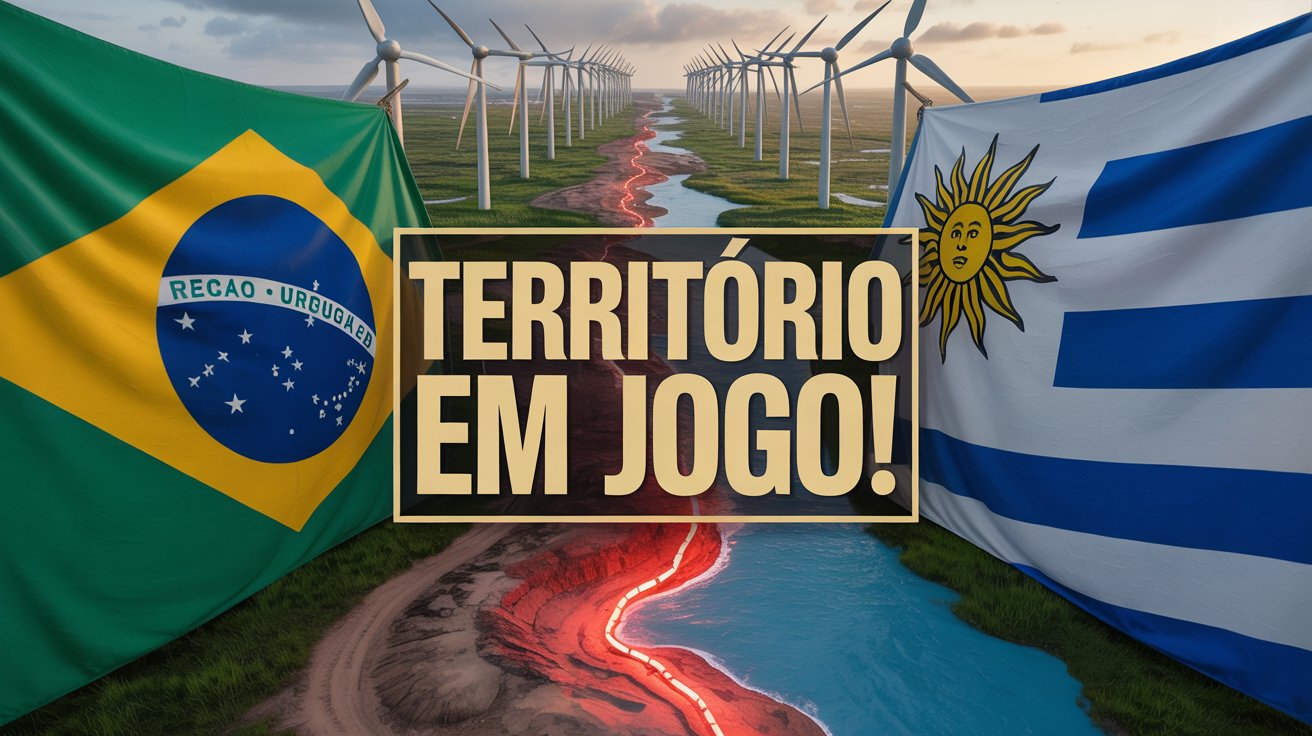


An Old Territorial Dispute on the South Border of Brazil Resurfaces After the Construction of a Billion-Dollar Wind Farm, Reigniting Diplomatic and Historical Discussions Between Brazil and Uruguay in 2025.
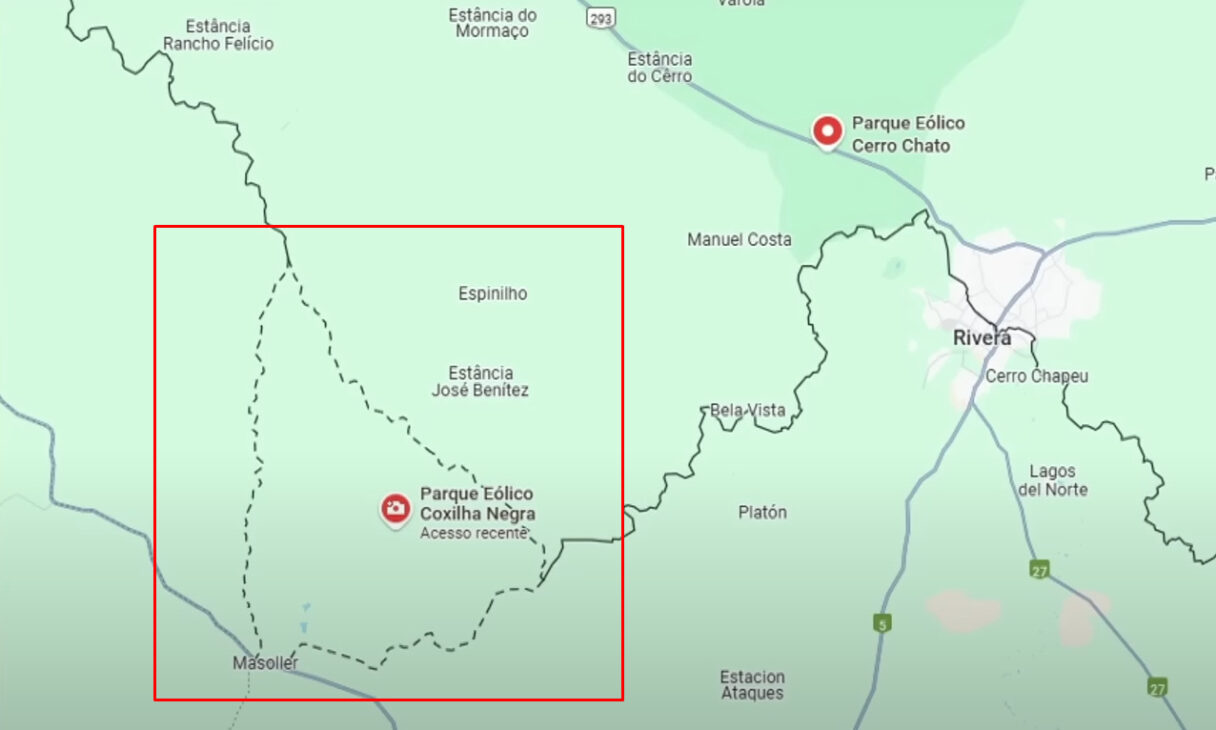
An old border dispute between Brazil and Uruguay resurfaced this year after the construction of a R$ 2 billion wind farm in the territory known as Rincão de Artigas, an area of approximately 237 square kilometers located on the border between the Brazilian municipality of Santana do Livramento, in Rio Grande do Sul, and the Uruguayan city of Rivera.
The deadlock, which seemed dormant since 1988, returned to the center of attention after the Uruguayan government, through the Ministry of Foreign Affairs, issued an official note claiming sovereignty over the region.
The crisis reignited diplomatic debates and brought historical and geopolitical questions between the two countries to the forefront.
-
European Union Announces €260 Million Investment to Extend EllaLink Submarine Cable to Northern Brazil, Reducing Digital Dependence on U.S. Routes

-
U.S. Women’s History Museum Stalled in Congress Amid Gender Identity and Diversity Debate
-
European Parliament Approves Digital Euro, Aiming to Challenge Visa and Mastercard’s Dominance and Transform Payments Across Europe by 2029
-
Israel finds Hezbollah militarized tunnel over 200 meters long under village, with 4 missile launch shafts, 12 chambers, anti-tank missiles, drones, and weapons depots at a depth of 25 meters.




Territorial Dispute Between Brazil and Uruguay: Rincão de Artigas
The Rincão de Artigas is located in a dry border region, where integration between Brazil and Uruguay is remarkable and visible in the daily lives of the population.
It is not uncommon to see locals or tourists taking pictures with one foot in each country, highlighting the peaceful coexistence typical of these twin cities.
Despite the apparent harmony, the ownership of the area in question has been surrounded by questions since the late 19th century, when bilateral treaties defined the boundaries, according to Brazilian and Uruguayan authorities.
Wind Farm Reignites Border Conflict Between Brazil and Uruguay
According to the website CNN Brasil, the center of the controversy currently lies in the fact that the area was recently used by Eletrobras — the largest electric utility company in Brazil — for the installation of a large wind farm, capable of generating enough electricity to supply up to 15 million people.
According to data from the Brazilian electric sector, the investment in this wind farm exceeded R$ 2 billion.
The famous wind turbines, equipment used to convert wind into electricity, can already be seen across much of the fields in Rincão de Artigas.

History of the Territorial Deadlock Brazil x Uruguay
According to official sources, the border dispute dates back to 1988, when a binational commission formed by diplomats and technicians from both countries revisited the exact demarcation of the dividing line.
The understanding of the Uruguayans is that, during the process of defining the geographical markers, there were cartographic errors that left Rincão de Artigas under Brazilian administration.
The Uruguayan government argues that the territory has historically always belonged to Uruguay, but acknowledges that the borders defined over a hundred years ago favored Brazil.
Itamaraty Bets on Diplomacy to Resolve Dispute
The Ministry of Foreign Affairs of Brazil, known as the Palácio do Itamaraty, reacted immediately to the note issued by Uruguay.
According to information gathered from diplomatic sources, the Brazilian government prefers to resolve the deadlock exclusively through diplomatic means, reiterating its commitment to respecting the history of good coexistence and dialogue between the two nations.
Brazilian authorities emphasize that there is no interest in turning the episode into an international crisis and trust in the experience of both countries to resolve deadlocks peacefully.
Border Conflict Moves Santana do Livramento and Rivera
Santana do Livramento and Rivera form one of the busiest borders in the south of the continent, characterized by the intense circulation of people, vehicles, and goods.
The existence of free shops and a dynamic trade attract visitors and boost the local economy.
The topic of the wind farm elevated the debate to another level, involving not only the question of sovereignty but also the strategic interest in the production and distribution of clean electricity, a fundamental point in light of the environmental commitments made by Brazil and Uruguay in recent years.
Historical Origins of Rincão de Artigas
When analyzing the situation, experts in international relations highlight that the region has been at the center of significant historical episodes, such as the formation of the Cisplatina Province, a territory that encompassed parts of present-day Uruguay, Argentina, and southern Brazil during the period when the country was under the rule of the Portuguese crown.
Although the current geopolitical scenario is more stable, the dispute demonstrates that issues of sovereignty can still emerge due to economic and strategic interests.
New Chapter in the Territorial Dispute Brazil and Uruguay
The current discussion became even more visible after the Uruguayan government sent a formal communication to Brazil in early June 2025, demanding a reevaluation of the territorial markers.
The map of the region, as noted by authorities and observed on digital platforms like Google Maps, presents the area with a dotted line — a resource used to indicate border zones with pending delineation or not internationally recognized, or still in a state of conflict.
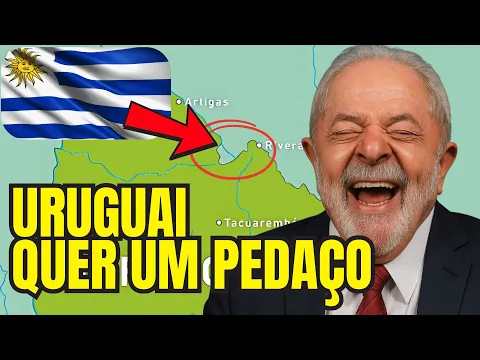
Brazil Disregards Opening Up Territory
In contact with the CNN Brasil report, sources from the Palácio do Itamaraty stated that there is no possibility for Brazil to cede administration of the territory, which remains officially under the jurisdiction of the municipality of Santana do Livramento, Rio Grande do Sul.
The negotiations, according to the Brazilian ministry, remain in the spirit of mutual respect, and the goal is to avoid any escalation of the deadlock beyond technical and diplomatic discussions.
International Community Monitors Border Conflict
While Brazil and Uruguay seek a definitive solution, attention from the international community to the case is growing.
Multilateral organizations are monitoring the unfolding of events, although, so far, there is no forecast for direct intervention by entities such as the Organization of American States (OAS) or Mercosur.
The episode serves as a warning to other South American countries that also have poorly defined borders or disputed territories.
Impacts on Population and Energy Scenario
The topic piques the interest not only of geopolitical scholars but also of the local population, who are directly impacted by potential administrative and economic changes.
The presence of the wind farm and the volume of investments involved increase the relevance of Rincão de Artigas in the national energy scenario, while simultaneously calling old territorial definitions into question.
In light of the current deadlock, it remains to be seen what the next steps will be for the diplomacies of Brazil and Uruguay, and whether the construction of large infrastructure projects may influence other border disputes in the South American continent in the future.
The case of Rincão de Artigas highlights how the search for natural resources and renewable energies can reopen old territorial wounds.
Do you believe that diplomatic solutions will be enough to end this territorial dispute between Brazil and Uruguay, or could the advancement of strategic projects make border conflicts in South America even more frequent?