Portuguese
  Spanish


New Orleans faces an increasingly difficult challenge: containing water with levees and pumps, protecting homes and services, and recovering floodplains. The study calls for early planning because lower ground and higher sea levels reduce the margin for improvisation.
As New Orleans tries to keep water away from neighborhoods and services using levees and pumps, a study released on May 4, 2026 reinforces that the region is not only facing floods. The ground is slowly sinking, the sea is advancing, and the loss of floodplains reduces part of the natural protection against waves and storms.
The information was released by Tulane University, a research university in the United States. The work discusses how Louisiana can prepare families, public structures, and economic activities for transformations in the coastal strip that may increase in the coming decades.
There is, however, no decision to evacuate New Orleans or abandon its neighborhoods. Planned adaptation appears as a long-term debate, designed so that residents and services are not caught off guard by a crisis that forces rushed choices.
-
4,000-Year-Old Stone Towers Discovered Across Sardinia, Puzzling Archaeologists About This Mysterious Civilization
-
8-Year-Old Finds 900-Year-Old Viking Bronze Buckle on Swedish Beach While Fossil Hunting
-
China Tests Giant 582-Ton Magnets to Contain Plasma Hotter Than the Sun’s Core, Aiming to Cut Superconductor Costs and Generate First Electricity from “Artificial Sun” by 2030
-
Lenovo Unveils Legion Y700 Tablet with RGB Backlighting, 5G, and SIM Card Support
The study calls for decisions before a major flood forces rushed responses
The research examines how land loss on the coast and changes in the number of residents alter Louisiana’s choices. The central point is that the region needs to think about housing, infrastructure, and work before water imposes changes without time for organization.
Almost the entire coastal zone of Louisiana has lost residents since 2000, with a more intense decline after major hurricanes. This movement does not determine that New Orleans will be emptied, but it shows that environmental risks already influence the lives of communities near the coast.
The study was published on May 4, 2026 and positions the region as an example that can help other coastal areas discuss protection, urban occupation, and territory recovery.
Dikes and pumps hold part of the risk, but do not solve everything
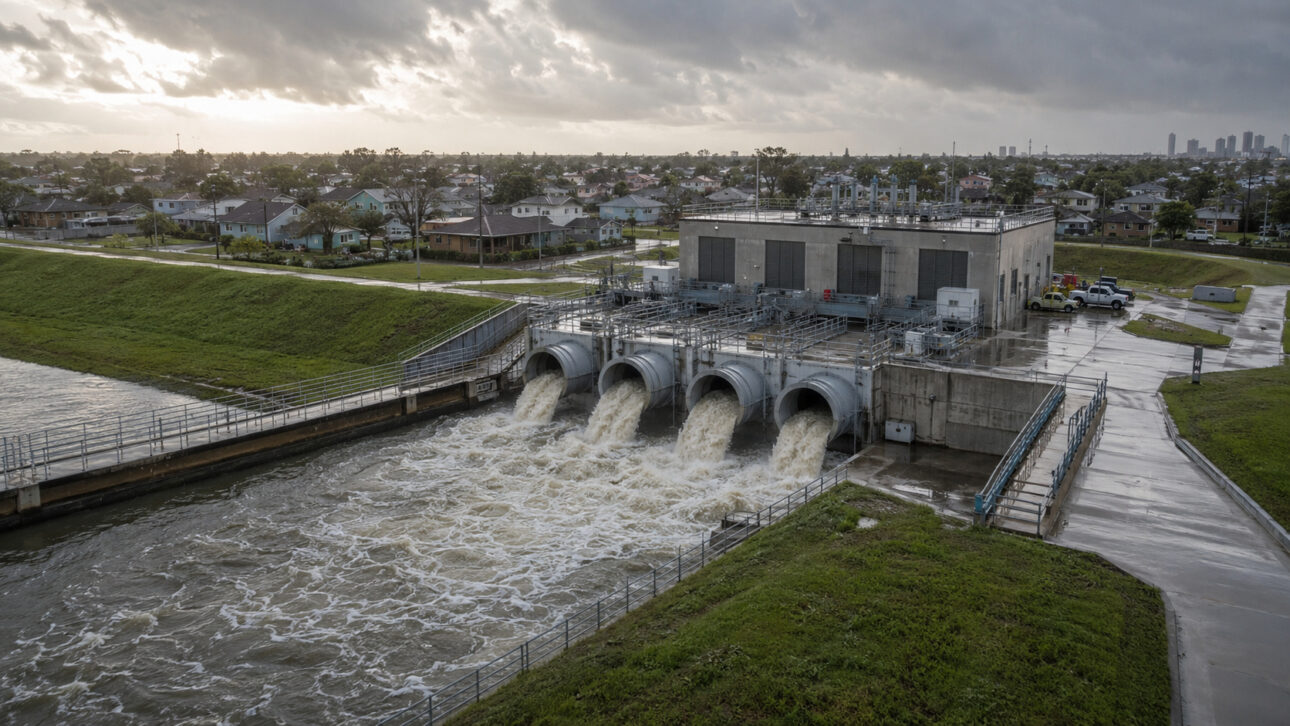
Dikes are barriers built to try to prevent water from reaching occupied parts of the city. Pumps remove accumulated water after rains and help drain the excess that remains in the streets and canals.
These structures play an important role, especially when a city is in a low area. But dikes and pumps do not eliminate all risk, because water can arrive through different paths and protection needs to work together with drainage, maintenance, and alert systems.
A coastal barrier can be built or natural. Walls and dikes are constructed examples, while marshes and strips of vegetation act as natural barriers that can reduce part of the water’s force before it reaches occupied zones.
Sinking ground and rising sea make the same flood more dangerous
Subsidence is the name given to the slow sinking of the ground. When the land lowers and the sea level rises, the difference between the water and streets, houses, or drainage systems becomes smaller.
Tulane University, a research university in the United States, released an analysis conducted by a team that relates coastal land loss and the change in the number of residents in Louisiana to the challenge of preparing the region for broader transformations.
The practical effect is simple: a city may have dikes and pumps, but it also needs to monitor the ground level and water behavior. The rise in sea level and subsidence make protection more difficult when they occur simultaneously.
Floodable areas reduce the force of water before it reaches the city
Floodable areas are stretches of land that become covered or soaked by water part of the time. Marshes, swamps, and natural banks can hold water, slow waves, and reduce pressure on urban areas.
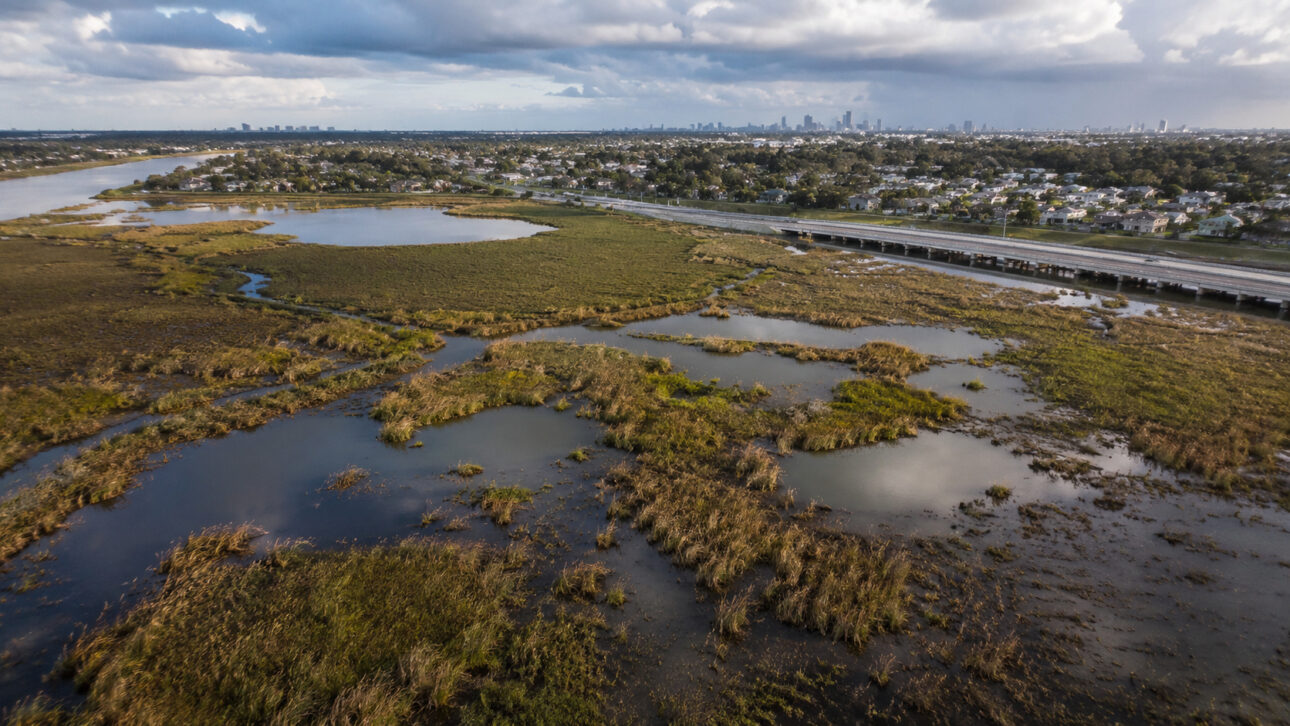
The research treats the loss of these areas as part of the problem faced on the Louisiana coast. When the coastline loses spaces capable of absorbing water, the city becomes more dependent on walls, dikes, and pumps.
Recovering floodable areas does not replace engineering works. The idea is to combine natural protection and built protection to reduce the impact of water before it reaches houses, streets, and services.
Changing is not abandoning the city and may require decades of preparation
Planned adaptation does not mean removing an entire population at once. It involves deciding, over time, where to reinforce protection, where to avoid new occupations, and which services need to continue serving people in more exposed areas.
Geologist Torbjörn Törnqvist, the lead author of the research, cites Kiruna in Sweden as an example of organized urban change. About 6,000 residents, including the city center, are being relocated due to mining activity under the municipality, with completion expected by 2035.
The process in Kiruna took about three decades from planning to execution. The situation is not the same as in Louisiana, but it shows why decisions about housing and infrastructure require time, dialogue, and attention to what is happening in the territory.
The cost of adaptation goes beyond building higher walls
Spending more on construction may be one of the choices, but the cost of adaptation is not limited to building a wall. Each decision involves houses, schools, hospitals, transportation, employment, and the continuity of services that serve the population.
The discussion also includes restoring natural areas, improving drainage, and preventing new constructions from occupying highly exposed points. Planning ahead allows understanding what needs to be protected and where change may be necessary in the future.
There is no single solution for all of Louisiana or for New Orleans. The debate brings together different alternatives, from reinforcing levees to restoring floodplains and organizing transformations in more vulnerable regions.
The debate in New Orleans serves as a warning for Brazilian cities
The case is not the same as in Brazilian cities, but the question is similar in places that deal with floods, coastal erosion, and occupation of low-lying areas. Waiting for the water to arrive to decide what to do reduces the available options.
For Brazil, the lesson is to look at the whole picture. Drainage, green areas, safe housing, and protective works need to go hand in hand, as an isolated solution may not address a problem that involves climate, soil, and urban growth.
New Orleans is not facing an order of abandonment. The research shows that the region needs to choose in advance where to invest, where to restore nature, and how to protect the population when water starts to put more pressure on neighborhoods and services.
How long can a city rely solely on walls and pumps when the very ground shifts beneath its feet? Leave your opinion in the comments and share this discussion.