Portuguese
  Spanish


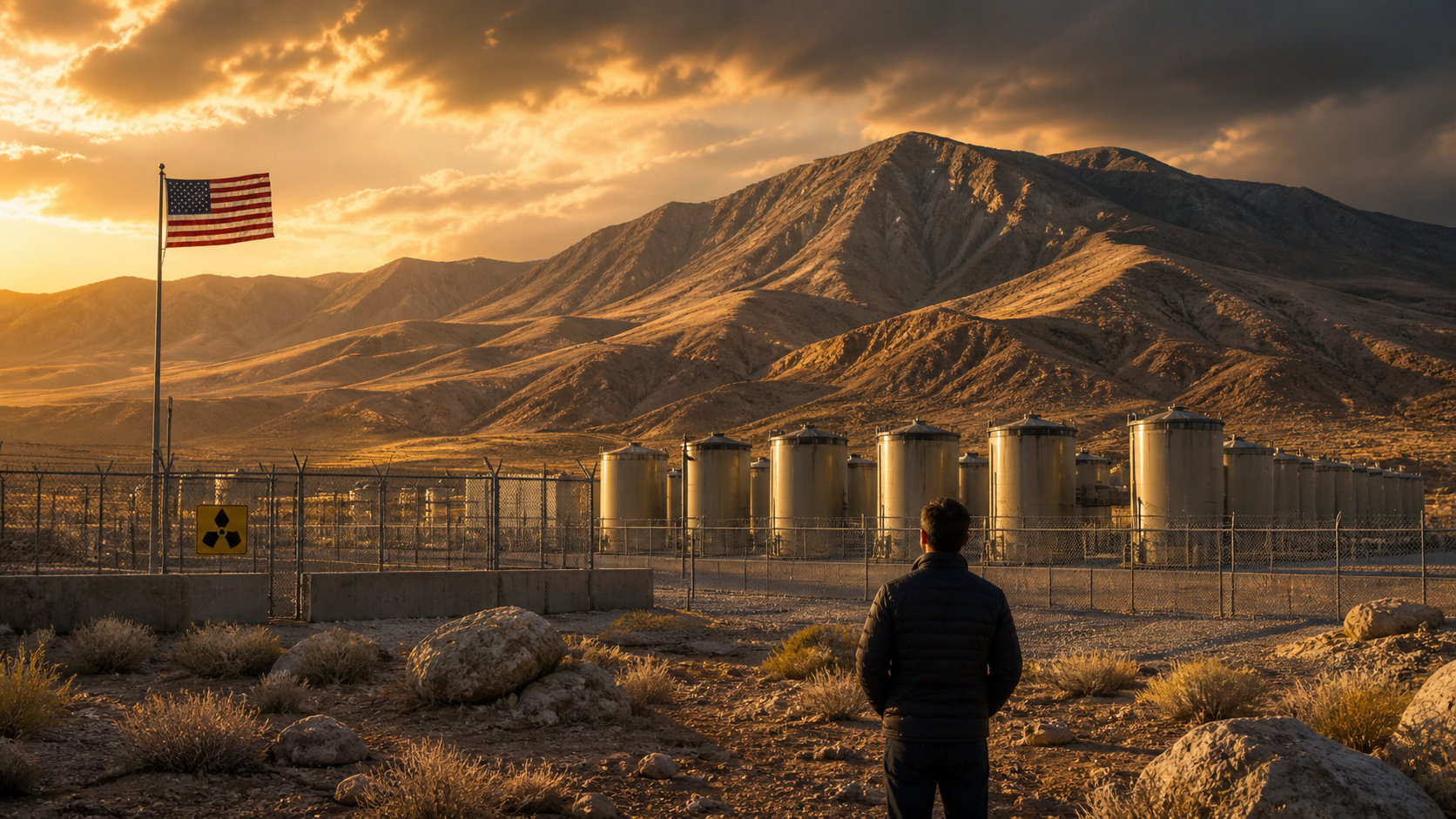

The choice of Yucca Mountain to store US nuclear waste opened a dispute that mixes technology, sacred territory, and environmental fear, placing indigenous peoples, groundwater safety, and radioactive waste at the center of a decades-long impasse
The US government chose Yucca Mountain, in Nevada, as a possible geological repository for dangerous high-level nuclear waste. The decision hit a sensitive point: the mountain holds cultural and spiritual importance for the Western Shoshone and Paiute peoples.
The investigation was published by Sacred Land, a project on indigenous sacred places and cultural diversity. The case gained momentum because it united the fear of radioactive waste for thousands of years, concern for groundwater, and the denunciation of environmental injustice.
The project ended without advancing as planned. As a result, the United States continued with nuclear waste temporarily stored at various plants, without a definitive solution for one of nuclear energy’s biggest problems.
-
US Navy Sinks USS Oriskany with 230 kg of C-4, Creating World’s Largest Artificial Reef in 37 Minutes

-
U.S. Dumped Tanks, Jeeps, and Coca-Cola into the Pacific in 1945 After British and French Lowball Offer, Creating “Million Dollar Point”
-
WHO Warns of Unnecessary Interventions in Natural Births Worldwide, Advocates for More Human-Centered Care, Reigniting Debate on Medicalization

-
World War II American Bombs Discovered in German City Prompt Evacuation of 20,500 Residents



Yucca Mountain became the center of a dispute between nuclear waste and sacred territory
The proposal treated Yucca Mountain as a site capable of storing high-level nuclear waste. In simple terms, the idea was to bury this dangerous material in a deep structure, designed to isolate radioactive waste for a very long time.
The problem lay in the chosen location. For the Western Shoshone and Paiute peoples, the mountain was not just a rock formation in the desert. It held cultural and spiritual value.
This conflict made the project much larger than an engineering feat. The choice raised a direct question: can a sacred area be used as a repository for US nuclear waste?


Fear of water contamination increased rejection of the nuclear project
Among the strongest criticisms was the risk linked to groundwater. This type of water lies beneath the soil and can supply entire regions, so any threat of contamination generates immediate concern.
High-level nuclear waste requires control for very long periods. It cannot be treated as ordinary waste, because it remains dangerous for thousands of years.
Doubts about the mountain’s safety increased pressure against the project. Critics also questioned seismic risks, meaning possible tremors and earth movements that could affect the planned structure.
Sacred Land, a project on indigenous sacred places and cultural diversity, detailed indigenous resistance
Sacred Land, a project on indigenous sacred places and cultural diversity, detailed the opposition to using Yucca Mountain as a nuclear waste repository. The resistance involved indigenous peoples, environmentalists, and political leaders.
For the peoples connected to the region, the discussion was not just about technical risk. The mountain was part of a relationship with the land, memory, and spirituality.
Therefore, the case became a symbol of environmental justice. This term means looking at who bears the risk, who pays the price, and who participates in decisions that affect their own territory.
The project faced decades of impasse, public costs, and legal challenges
The attempt to transform Yucca Mountain into a nuclear waste repository thus faced decades of resistance. The dispute involved political debates, environmental criticisms, and legal actions.
The real impact was significant. There were public costs, delays, and a lack of a definitive solution for high-level nuclear waste.
While the project stalled, the problem continued to exist. Nuclear waste remained temporarily stored at various plants across the United States, without the final destination the plan promised to resolve.

The sacred mountain became a symbol of nuclear energy’s most enduring fear
Nuclear energy is often defended for its ability to generate electricity on a large scale. However, radioactive waste remains one of the most difficult aspects of this technology.
Yucca Mountain showed that the solution for this waste doesn’t depend solely on science. It also involves public trust, cultural respect, and environmental protection.
The case was notable because a sacred mountain was treated as a safe for nuclear waste. This image summarizes the clash between a state decision and the right of indigenous peoples to protect a territory important to their history.
The Yucca Mountain impasse shows that nuclear waste is also a social decision
The choice of a nuclear waste repository doesn’t just affect maps, rocks, and technical documents. It changes the lives of communities and can, therefore, impact places that hold spiritual value.
Yucca Mountain became an example of how nuclear waste remains an open problem. Even with advanced technology, the central question remains: where to put a risk that can last thousands of years?
The case shows that environmental safety, indigenous territory, and US nuclear waste go hand in hand in this discussion. When a solution ignores the cultural value of a place, the project can become an impasse for decades.
Do you think it’s acceptable to use a sacred area to store nuclear waste if technicians state it’s safe, or should certain territories never be considered for this type of choice? Share your opinion and this post with those who follow energy, environment, and indigenous peoples.