






 Portuguese
  Spanish
  3 min of reading
  0 comments


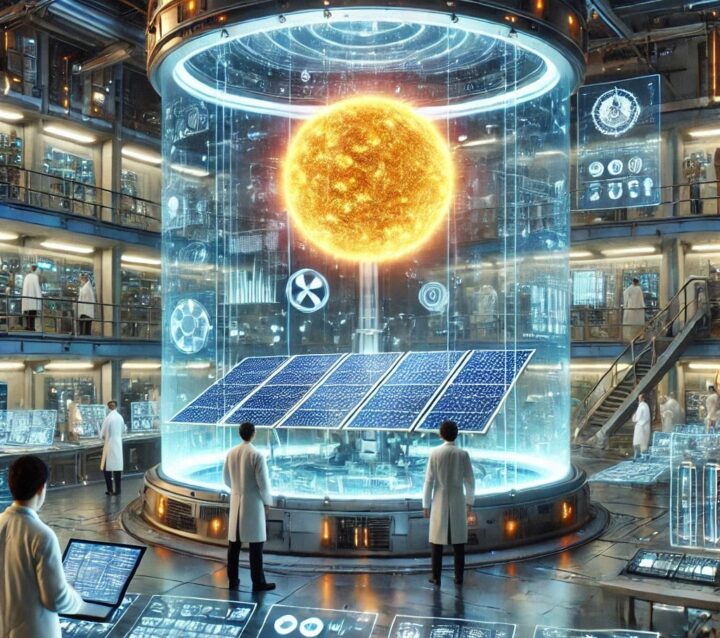
The University of São Paulo (USP) Took an Important Step in Renewable Energy Research by Activating an Innovative Solar Simulator. As a result, this advanced equipment enables detailed studies on the conversion of solar energy into clean fuels, strengthening the search for sustainable technologies in Brazil.
Additionally, the USP solar simulator replicates, in the laboratory, different intensities of sunlight. This way, researchers can develop new methods for converting solar energy into sustainable fuels, such as hydrogen.
Consequently, this innovation allows for testing the efficiency of various materials and improving energy conversion processes.
Thus, research advances with greater precision, accelerating the development of new sources of clean energy.
-
Helicopter Drops 180 Tons of Sand and Gravel on Swedish River to Revive Ecosystem Damaged by Decades of Exploitation

-
Brazilian Company Launches Retro Smartphone with 48 MP Camera, T9 Keyboard, and Privacy Features for Social Media-Free Use

-
Self-Taught Chinese Farmer Builds 5-Ton Submarine from Scrap, Launches It in Anhui River
-
Invisible Induction Technology Enables Wireless Power for Blenders, Coffee Makers, and Air Fryers, Reducing Countertop Cables





How Does the USP Solar Simulator Work?
In fact, the solar simulator uses special lamps and optical filters to mimic different spectra and intensities of sunlight.
With it, scientists analyze how materials react to solar radiation and improve energy conversion methods.
Moreover, the technology allows for adjustments in temperature, humidity, and solar radiation, making experiments more controlled.
Therefore, this level of precision drives the creation of more efficient techniques for renewable fuel production.
Undoubtedly, the advancement of renewable energy relies on technologies like this.
The Importance of Solar Energy in Sustainability
Currently, the production of renewable fuels from solar energy represents one of the best alternatives to reduce carbon emissions and combat climate change.
For this reason, the development of technologies like artificial photosynthesis and green hydrogen production gains momentum with the USP solar simulator.
Consequently, these advancements make the energy sector more efficient and accessible.
Furthermore, the adoption of renewable energy contributes to reducing environmental pollution and decreases reliance on unsustainable sources.
Considering that Brazil has a high solar incidence, the country can stand out in this sector.
Another relevant point is that, with innovative technological solutions, solar energy becomes more competitive.
Therefore, this fuels the growth of the sustainable industry and generates new economic opportunities.
Benefits of the Solar Simulator for Scientific Research
1. Process Optimization
Undoubtedly, the equipment allows testing and improving methods for converting solar energy into renewable fuels.
2. Greater Energy Efficiency
Thanks to this technology, researchers are developing solutions that maximize the use of sunlight for electricity or fuel generation.
3. Reduction of Environmental Impact
Moreover, the replacement of fossil fuels with clean sources becomes feasible with the research conducted in the simulator.
4. Innovation and Competitiveness
Finally, Brazil strengthens its position as a global reference in renewable technology, boosting startups and research projects.
Thus, the activation of the USP solar simulator paves the way for new discoveries in the energy sector.
Furthermore, it accelerates the search for clean fuels and sustainable energy.
The Role of USP in Renewable Energy Research
In general, USP stands out in the development of technologies aimed at energy sustainability.
The new solar simulator reinforces its commitment to innovative solutions for global challenges in the energy sector.
Besides strengthening its position as a world reference in solar energy, the university fosters partnerships among researchers, companies, and institutions committed to a sustainable future.
Research on artificial photosynthesis also advances with this equipment.
In this way, scientists develop more effective processes for capturing and converting solar energy into fuel.
The Future of Solar Energy in Brazil
Undoubtedly, the USP solar simulator marks a significant advance for the research of clean fuels and the transition to a sustainable energy model.
Furthermore, this technology accelerates the development of innovative solutions for the global energy sector.
In summary, the continuous investment in renewable energy contributes to reducing dependence on fossil fuels and helps mitigate environmental impacts.
This promotes a more sustainable and efficient future and favors the transition to a cleaner and balanced world.





Be the first to react!