






 Portuguese
  Spanish


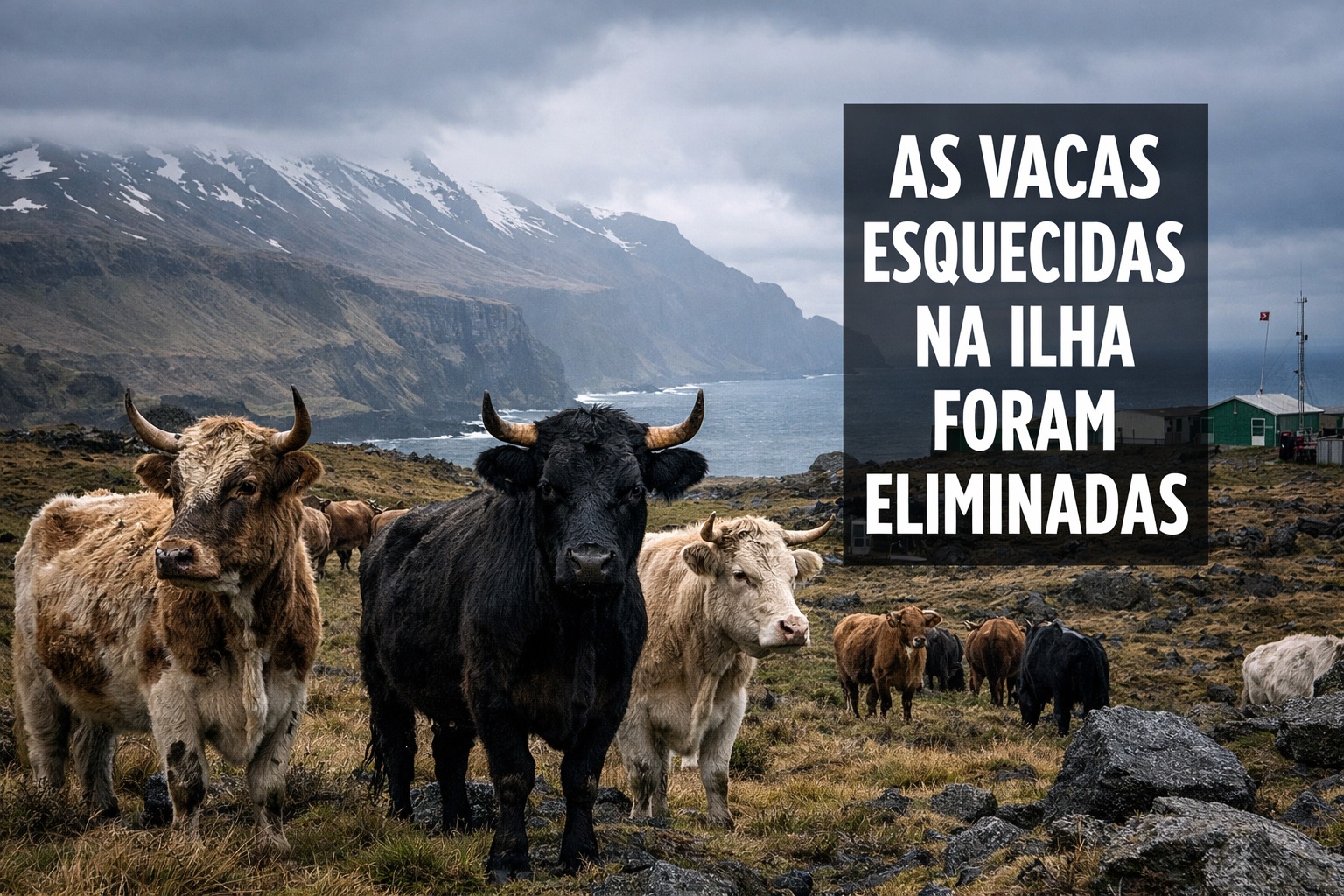


Abandoned Cattle Herd in the Nineteenth Century Faced Extreme Subantarctic Climate, Evolved in Total Isolation for More Than a Hundred Years and Was Finally Eliminated by Controversial Environmental Decisions
At the end of the nineteenth century, an abandoned cattle herd on Amsterdam Island survived subantarctic isolation until it was decimated in 2010, generating important ethical debates about the preservation of domestic biodiversity and the management of feral species in ecological sanctuaries.
Adaptation in Extreme Environment
The small group of cattle faced the harsh conditions of the subantarctic region to undergo a rare process of feralization in total isolation.
Amsterdam Island is located exactly 4,440 km from Madagascar and is approximately the size of the Noirmoutier region in its expanse.
-
Brazilian Researcher Develops Protein Supplement from Tilapia Waste, Combining Innovation and Sustainability with Economic Potential

-
Women in São Paulo Unknowingly Tracked by Coin-Sized Tags Hidden in Cars and Belongings, Raising Stalking Concerns
-
Near a $750 million AI data center in Brazil, a resident’s well runs dry, leaving her unable to afford the $25,000 needed for repairs.

-
16-Year-Old from Brazil’s Sertão Wins Young Scientist Award for AI Predicting Rainfall with 94.5% Accuracy to Aid Farmers


The local climate is temperate oceanic and features constant winds that batter the terrain, along with frequent rainfall during the winter period.
Survival seemed impossible due to the lack of permanent water sources, but the animals thrived against all negative expectations from researchers.
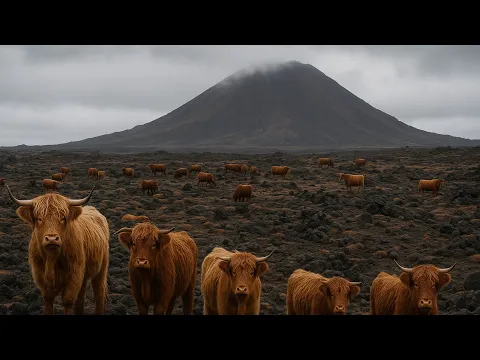

The Island Cows: Evolution and Scientific Records
Detailed genetic studies revealed the evolutionary journey of the cows, which returned to a wild state independently for more than a century.
Genetic material from 18 animals was collected during two research expeditions conducted in 1992 and 2006 for in-depth analysis.
The adaptation history was reconstructed through this data, showing how a small herd reached a number of nearly 2,000 resilient animals.
Management of the Natural Reserve
In 2006, the territory became part of the national natural reserve TAAF, being recognized as an important World Heritage Site by UNESCO.
Despite the fascinating adaptation capacity demonstrated, the cattle population was completely decimated in 2010 due to management decisions.
The extermination of feral cattle raised concerns about the real need to eliminate unique populations that demonstrate such survival capacity in inhospitable locations.

Context and Human Presence on the Island
The only fixed human presence in the area is a scientific base established in 1949 to conduct various studies in this remote isolated area.
Historical records indicate that the original abandonment of the cattle occurred accidentally or intentionally only at the end of the last nineteenth century.
These island cows became an unexpected part of the local ecosystem, transforming the island’s natural landscape while living autonomously and freely.
Questions remain about the ethical challenges of prioritizing native biodiversity over domestic lineages that evolved alone in total geographic isolation.
With information from Futura-sciences.
You Might Also Like: Goats Left by Europeans on Island in Brazil That Lived Isolated for 200 Years Have Become Target of Scientific Studies on Genetics and Adaptation to the Semi-Arid

Research with Isolated Goats for More Than Two Centuries in Abrolhos Seeks to Identify Genetic Adaptation, Expand Conservation, and Support Resilient Production Systems for Semi-Arid Regions in Brazil in the Face of Growing Climate Changes in the Country
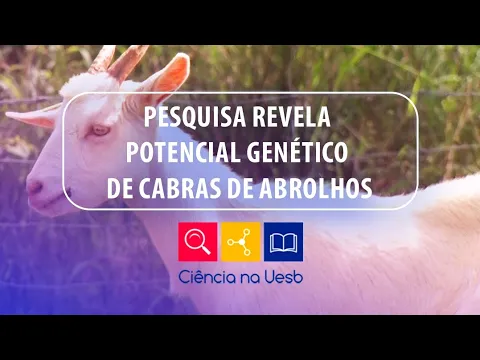
In August 2025, the Canal Rural website reported that 21 goats were transferred from Abrolhos, Bahia, to Uesb in Itapetinga, aimed at genetic characterization and productivity research, as the animals had lived isolated for more than two centuries in the region.
European navigators left the first specimens on the island during the colonial period for subsistence, reported Canal Rural in its report.
The animals reproduced without direct human interference for centuries, arousing scientific interest in genetic adaptation to environments with water restrictions.
Potential for the Semi-Arid
Ronaldo Vasconcelos, a professor of Animal Science at Uesb, explained that the isolation favored specific characteristics related to survival in very adverse climatic conditions.
According to Vasconcelos in the Canal Rural report, these discoveries may contribute to the development of goat farming in various semi-arid regions of the country.
After arriving on campus, the goats began a quarantine period to ensure safe adaptation and to ensure all necessary sanitary care.
The isolation is vital, as the animals lack immunological resistance to ticks or worms common in continental herds, stated Ronaldo Vasconcelos.
Partnerships and Conservation
Professor Dimas Oliveira from Uesb highlighted that the study generates relevant information for production systems in areas with severe climatic limitations.
Embrapa Genetic Resources and Biotechnology operates in genetic analysis and conservation strategies in direct partnership with the state university of Bahia.
Environmental Impact and Management
The removal of the goats had environmental motivation, as their presence caused impacts on soil and on vegetation strategic for birds in Abrolhos.
Different institutions operated the removal, including ICMBio, the Brazilian Navy, Adab, Embrapa, and Uesb itself, the channel reported.
During the capture, the animals received individual electronic identification and had blood samples collected for essential routine laboratory analyses.
These data are crucial for determining the degree of genetic uniqueness of the population that inhabited the isolated archipelago on the southern coast.
Future of Scientific Research
If genetic distinction is confirmed, researchers intend to advance to a conservation plan with controlled herd expansion and biological storage.
There is a future possibility of making genetic material available to rural producers facing climatic challenges similar to those found on the Island of Abrolhos.
With information from Canal Rural.





Os animais vivem ao extremo, suportam tudo, frio, comida escassa, total isolamento. A palavra chave tá aí, isolamento. Vem o homem que se diz racional e extermina com o que superou o improvável por séculos. Se acabar com a humanidade e ficar a natureza ela subsistirá pra sempre. Homem o verdadeiro exterminador do presente e futuro.
Duas matérias, a 1 vinda de um país de primeiro mundo França, 2 vinda de pais de 3 mundo Brasil, o primeiro mata um experimento promissor que deu resultado , o segundo procura aproveitar o experimento muito promissor. E como diz a Bíblia não literal ” o satisfeito pisa favos de mel , mas o faminto todo o amargo e doce”
Só o homem mesmo para destruir o que está certo tem a capacidade de matar os bichos aff sem noção .