






 Portuguese
  Spanish


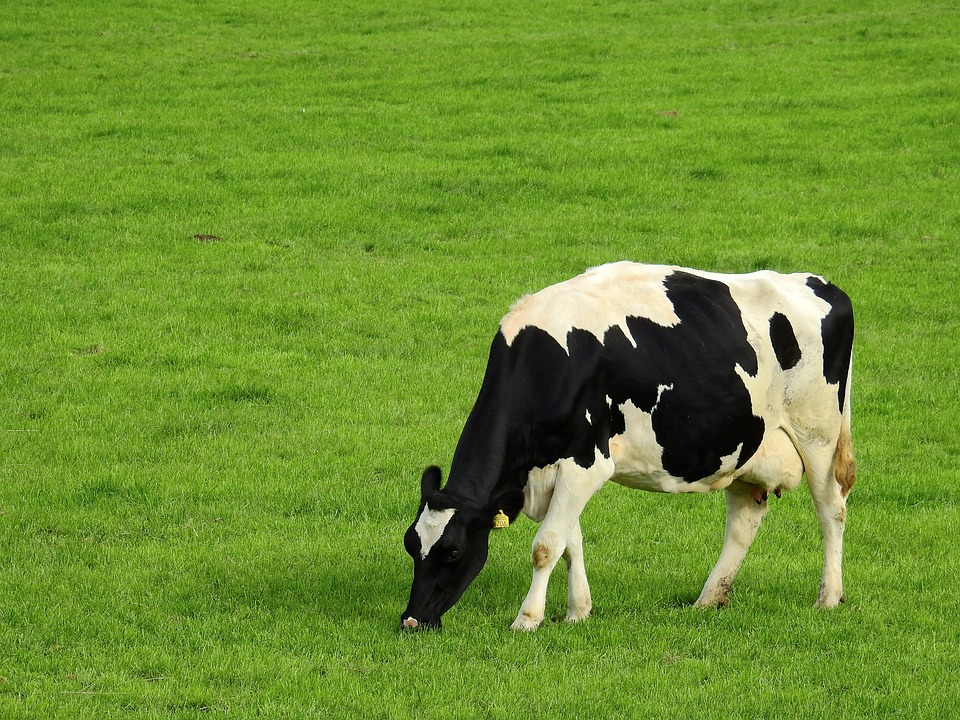


A Curious Behavior of Cows Intrigues Scientists: Do They Align with the Earth’s Magnetic Field? The Answer May Surprise You.
In 2008, a group of scientists made an intriguing discovery while studying the behavior of deer and cattle. By analyzing how these animals graze and rest, they noticed something peculiar: both tend to align their bodies in the north-south direction, something that had received little scientific attention until then.
The research, published in a detailed study, highlighted observations made both in the field and using Google Earth satellite imagery. “Farmers and keen observers have already noticed that cattle and sheep, when grazing, often position themselves in the same direction,” the authors wrote.
They also mentioned that, traditionally, it was believed that wind and sunlight influenced this orientation.
-
Iraq floats and sinks under an arm of the Euphrates 10 giant concrete boxes of 46,000 tons and 125 meters each to assemble a 2.4 km submerged tunnel and open a new land route between Asia and Europe.

-
Scientists use more than 20,000 artificial birds and solar speakers to “trick” seabirds, reactivate nesting routes, and revive a colony on an island that seemed abandoned.

-
She spent 73 years breathing inside an iron lung, survived the aftereffects of polio, and became the last woman in the United States dependent on the equipment before dying at 78 years old.
-
Brazilian students created a $1 filter using pine bark, cotton, and 3D-printed parts to clean cassava wastewater, reduce the toxicity of a hazardous waste, and transform contaminated water into biofertilizer.



In-Depth Investigation
To confirm the observed pattern, the researchers analyzed deer footprints left in the snow and reviewed aerial images of cows grazing in different regions of the world.
They attempted to isolate variables such as wind and solar position, but the data revealed that the animals exhibited consistent alignment with the Earth’s magnetic field.
“We discovered that climatic factors do not fully explain this behavior,” the team concluded. “The magnetic field emerges as the most likely element.”
The idea that animals can respond to terrestrial magnetism is not new. Several studies show that migratory birds, for example, utilize this ability to navigate during long flights.
However, the possibility that cattle and deer possess this sensitivity sparked curiosity since these are significantly larger animals with vastly different behavioral patterns.
Disruptions in Alignment
In a complementary study, scientists identified that magnetic orientation behavior can be interrupted by low-frequency magnetic fields, such as those generated by high-voltage lines. However, the exact mechanism behind this orientation remains a mystery.
Some hypotheses have been suggested. One of them, called the “radical pair hypothesis,” proposes that magnetic perception is linked to vision.
According to this idea, magnetic fields may be perceived as visual patterns, which vary according to the direction and intensity of the magnetic field. Thus, interferences could compromise this perception.
Contested Studies
Despite the initial enthusiasm, subsequent studies cast doubt on previous conclusions. A new investigation fixed neodymium magnets on 34 cows to test whether magnetism directly influenced their orientation.
The results showed no directional preference, regardless of whether the animals used the magnets or not.
Additionally, an analysis in Portugal, with 2,428 observations of 659 cows, indicated that these animals preferred to align in the southeast direction on hot days.
The conclusion suggested that behavior was more related to thermoregulation than to magnetic orientation. “The cows may simply be adjusting their position to minimize sun exposure,” the authors stated.
This behavior pattern has also been observed in other animals, such as antelopes and wildebeests, reinforcing the hypothesis that the direction of the sun directly influences the posture of animals in search of thermal comfort.
What We Know So Far
Although the idea of cows as “living compasses” has generated great interest, recent studies suggest that thermoregulation plays a more relevant role than previously thought.
Still, research on magnetoreception in large mammals is just beginning, and more investigations will be necessary to unravel the mystery.
For now, it’s best not to rely on cattle for navigation in nature. After all, as studies show, the position of cows can be influenced by factors as varied as the heat of the sun or the proximity of a refreshing shade.







Descobri que não posso escrever v…ca aqui que mundo é esse ???😛
Sem sentido pra uma **** fazer isso. Que ganharia com isso?