Portuguese
  Spanish


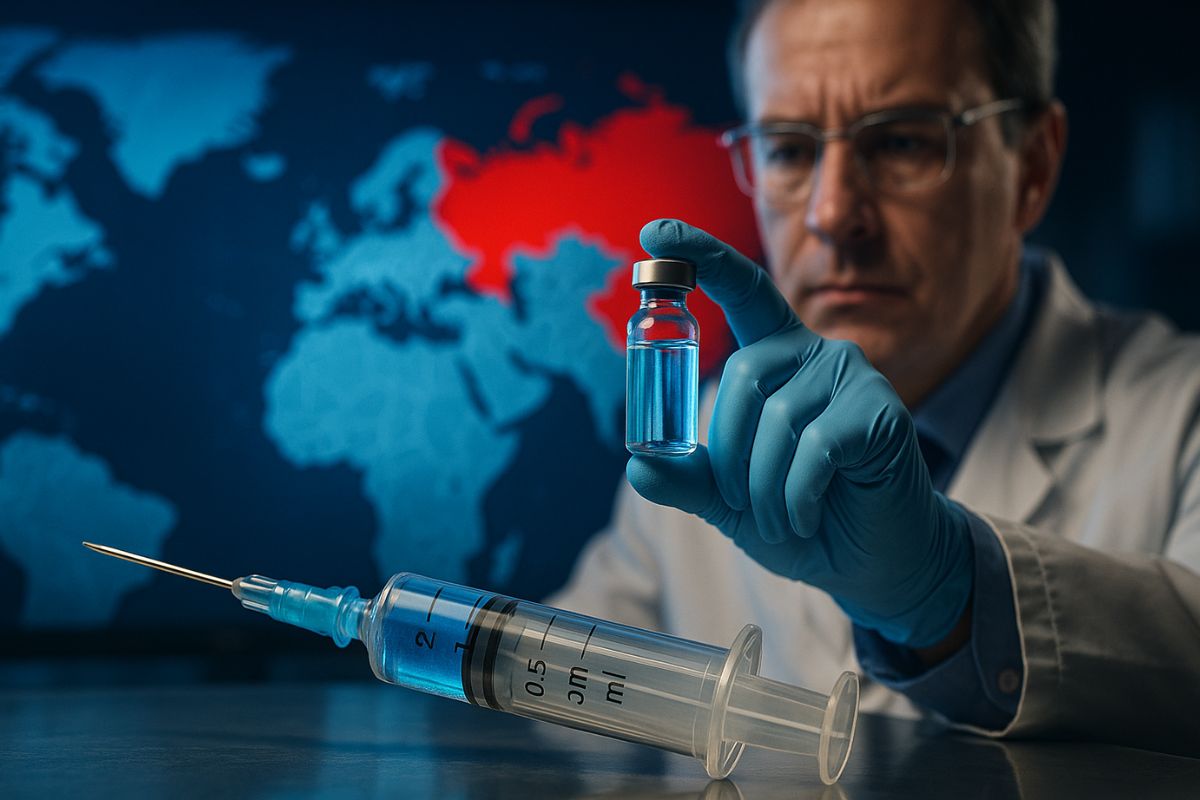

Vaccine Against Cancer Announced By Russia Could Be Historical Milestone If Efficacy And Safety Are Proven In Global Studies.
The announcement by Russia about a possible vaccine against cancer has stirred the international landscape of science and health. According to the Russian government and reported by GBC Agency, the immunizer is based on messenger RNA (mRNA) technology, the same that revolutionized the fight against Covid-19. The promise is bold: to train the immune system to identify and destroy tumor cells, paving the way for an innovative treatment against one of the deadliest diseases in the world.
The Russian proposal suggests that the vaccine would be personalized, developed from the genetic analysis of each tumor.
The goal would be to halt the progression of the disease and enhance the efficacy of other treatments, becoming a complementary tool in the fight against cancer.
-
She spent 73 years breathing inside an iron lung, survived the aftereffects of polio, and became the last woman in the United States dependent on the equipment before dying at 78 years old.

-
Brazilian students created a $1 filter using pine bark, cotton, and 3D-printed parts to clean cassava wastewater, reduce the toxicity of a hazardous waste, and transform contaminated water into biofertilizer.

-
Astronaut from Artemis II steps down after mission to the Moon and decision surprises after a record of 406,771 km, a historic 10-day journey, and an unprecedented achievement for Canada.

-
A fossil kept for years in a small museum in Montreal concealed 450-million-year-old soft tissue, a discovery that has only happened once before in history.


Moscow claims that clinical trials lasted almost three years, but did not provide details about the types of cancer studied or the results obtained.
Who Criticizes The Russian Cancer Vaccine
Despite the impact of the announcement, the lack of concrete scientific data generates strong criticism. So far, no study has been published in scientific journals nor peer-reviewed, a step deemed essential to validate any medical discovery.
There is also no clarity on the stage of human testing, which fuels doubts about the actual maturity of the research.
In Brazil, experts have urged caution. Scientist Mariana Brait from A.C.Camargo Cancer Center pointed out that publicizing news of this magnitude without concrete evidence can represent a “disservice to society”, creating false hopes in patients awaiting real advancements in cancer treatment.
Where Russia Tries To Position Itself
The Russian government presents itself as a pioneer in developing cancer vaccines, but faces skepticism due to a historical lack of transparency in medical research.
This stance has been criticized in other contexts, such as during the pandemic, when the country launched the Sputnik V vaccine before fully disclosing clinical data.
Even so, the field of mRNA cancer vaccines is not exclusive to Russia. Companies like Moderna and MSD are already conducting advanced studies for specific types of cancer, such as melanoma, based on the same technology.
Science has already shown that mRNA can teach the body to recognize proteins linked to tumor cells, although many challenges remain ahead.
Why Is The Cancer Vaccine So Complex
Cancer is not a single disease, but a collection of conditions with distinct genetic characteristics. This means that each patient may need a personalized formulation, which increases the cost and complexity of production.
Moreover, there is no scientific consensus on the long-term effectiveness of these vaccines, nor on their side effects at a population scale.
Another central point is the high variability of tumors. While some types may respond well to immunological therapies, others prove resistant.
This unpredictability makes it even more urgent to conduct broad, internationally reviewed clinical trials.
Is It Worth Believing In The Russian Promise?
Russia seeks prominence by announcing the development of the vaccine without presenting reviewed results, but the scientific community reinforces that a promise is not proof.
The potential of an mRNA-based cancer vaccine is undeniable, but so far what exists are political statements and scientific claims still lacking robust evidence.
Until there is publication of detailed clinical data, independent review, and validation in global studies, the announcement should be viewed with caution. The impact would be historic, but the gap between expectation and scientific reality remains significant.
The possible vaccine against cancer announced by Russia could represent a revolution in modern medicine, but it will only have real value if efficacy and safety are proven by independent studies.
Until then, the debate needs to be balanced between hope and caution, avoiding creating false expectations in patients awaiting concrete solutions.
And you, do you believe that Russia may really be close to launching an effective cancer vaccine? Or do you think this announcement is more propaganda than science?
Leave your opinion in the comments; we want to hear from those who follow this topic closely.