






 Portuguese
  Spanish


For Decades, a Stone Was Used as a Doorstop, Until It Was Appraised as a Rare and Extremely Valuable Mineral, Transforming Its Owner’s Life.
A man kept a mysterious stone as a simple doorstop in his home, unaware that he was dealing with an extraordinary mineral for decades.
The object, which went unnoticed in the daily routine, turned out to be a rare and valuable meteorite, catching the attention of scientists and collectors around the world.
One of the largest meteorites recorded in Michigan remains ignored by science. The rock, weighing 10 kilograms, lived a humble existence as a door weight on a farm until, 80 years after its discovery, it revealed itself to be a scientific and financial treasure.
-
8-Year-Old Girl Finds 1,500-Year-Old Pre-Viking Sword in Swedish Lake

-
Brazilian Woman Fired After Maternity Leave Starts Street Sweet Business with $5, Now Produces 5 Tons Monthly with 21 Employees in Southeast Brazil

-
Father Sells 10-Year-Old Daughter to Feed Family Amid Crisis; Mother Tries to Undo Marriage in Camp Where Hunger Pushes Families to the Brink
-
6-Year-Old Finds Ancient Neanderthal Axe on English Beach, Discovers Its Significance Three Years Later




Everything changed in 2018, when David Mazurek, from Grand Rapids, decided to investigate the origin of a stone he had kept for over 30 years.
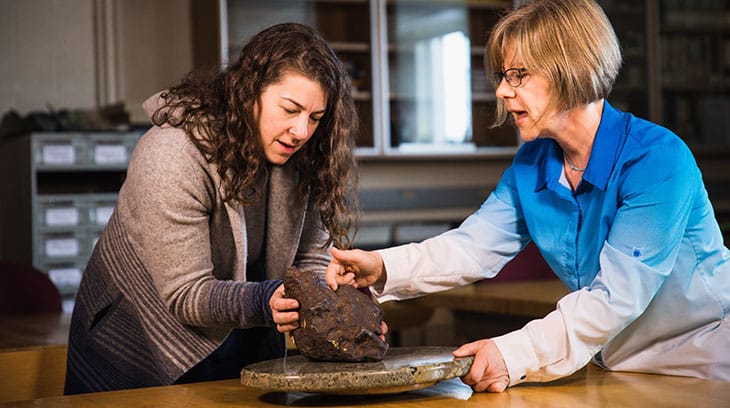
He took the rock to geologist Mona Sirbescu at Central Michigan University (CMU) for analysis. “I immediately realized it was something special,” explained Sirbescu, as she confirmed it was a rare meteorite. “It’s the most important specimen I’ve ever had in my life, both financially and scientifically.”
The Unusual Origin of the Mineral
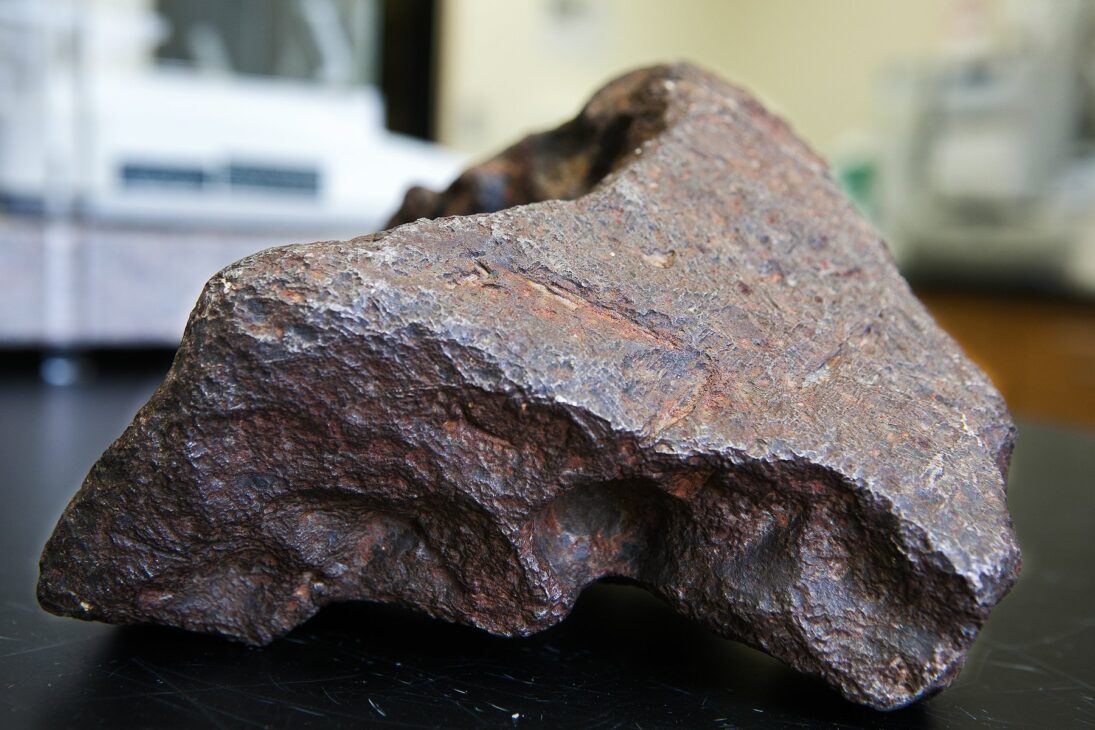
The meteorite, nicknamed Edmore, is a composition of iron-nickel with about 12% nickel, a relatively rare element in these celestial bodies. Its story, however, is as fascinating as its origin.
Mazurek acquired a rock in 1988, when he bought a farm in Edmore. During the negotiation, the previous owner mentioned the stone he kept the door of a shed open and revealed that it was a meteorite.
According to him, in the 1930s, he and his father witnessed the object fall on their property one night, leaving a bright trail and a deafening noise.
The next morning, the duo found the crater left by the impact and unearthed the still warm rock.
The meteorite appeared on the farm, used as a door weight, until Mazurek inherited the property. He kept the object for three decades, involving his children in its story or taking them to school as curiosity.
The Revelation and the Valuation
In the following years, Mazurek began to notice that meteorites were being sold for significant amounts. He then decided to check if his stone could be worth something. This decision ended up revealing the true potential of Edmore.
“For 18 years, I categorically said ‘no’ to analyses that did not identify meteorites,” confessed Sirbescu, describing the frustration of many fruitless analyses throughout her career. But this time, she was faced with something remarkable. “It was not just a space rock, but a spectacular rock.”
After confirming its modifications, Mazurek sold the meteorite to the Abrams Planetarium at Michigan State University for US$ 75,000. He also donated 10% of the profit to the CMU Department of Atmospheric and Earth Sciences, where the analysis was conducted.






Achou uma pedra linda,preste bem atenção pra não vender a preço de ****.
🎉🎉🎉
Linda ❤