






 Portuguese
  Spanish
  3 min of reading
  1 comment


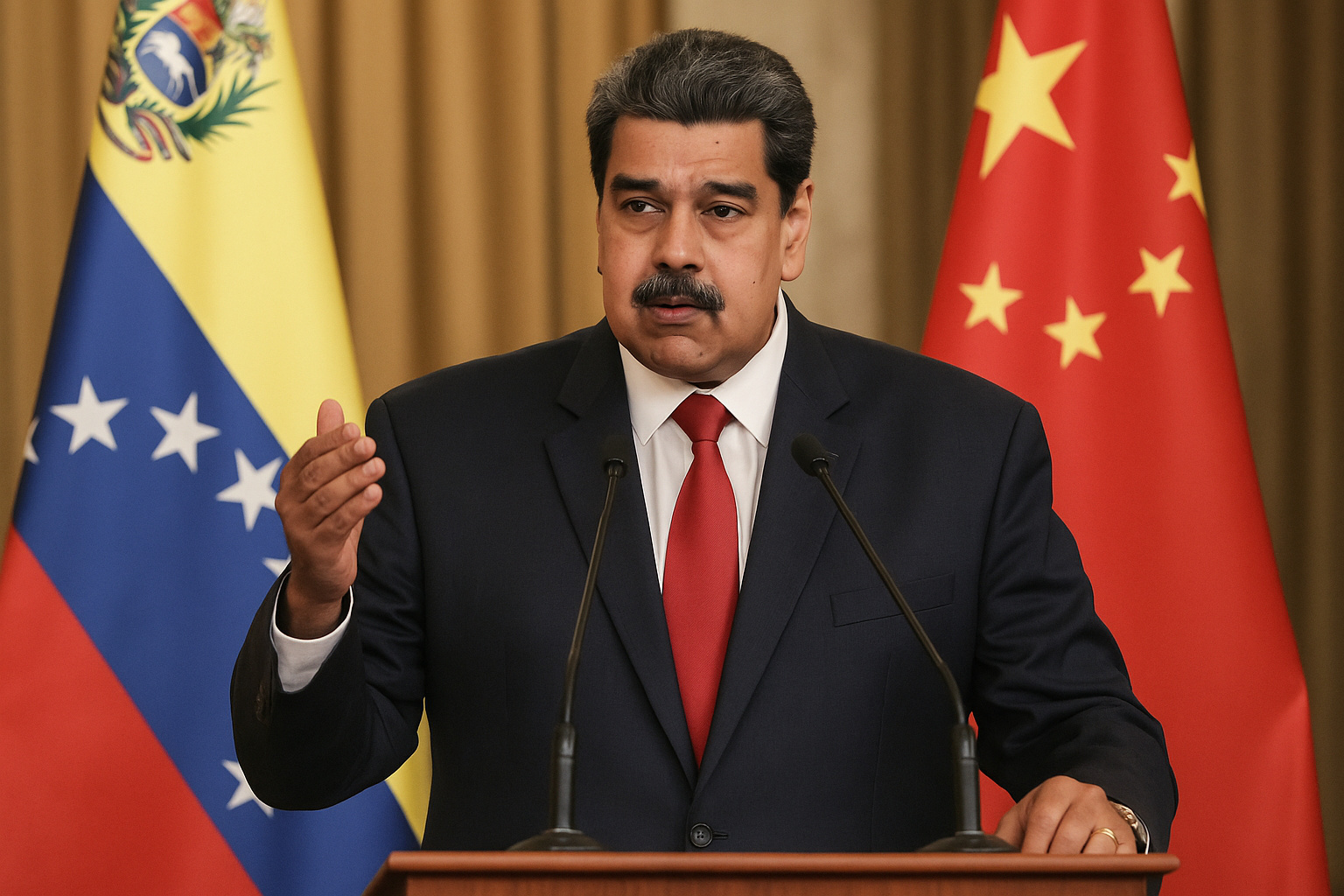


Maduro Confirms Adherence to Xi Jinping’s Initiative That Promises to Redefine the International Order Based on the Sovereignty of States and Real Multilateralism
Venezuela officially announced on Monday, July 1, 2025, its adherence to the Global Governance Initiative. The proposal was presented by China, under the Shanghai Cooperation Organization (SCO).
The confirmation was made by President Nicolás Maduro. He spoke at a press conference broadcast by Telesur, based on a statement from the Bolivarian Republic Presidency.
According to Maduro, signing the document represents commitment to a new model of international governance. In addition, this model is based on mutual respect, sovereignty, and multilateral cooperation.
-
Israel finds Hezbollah militarized tunnel over 200 meters long under village, with 4 missile launch shafts, 12 chambers, anti-tank missiles, drones, and weapons depots at a depth of 25 meters.

-
Ukraine launches largest drone attack on Moscow since 2022, Russia claims to have intercepted nearly 200 aircraft near the capital, Kapotnya refinery targeted again, and offensive reignites alert about war reaching the Russian energy heart just a few kilometers from the Kremlin.

-
Truck drivers, freight, and fines from 2022 take center stage in politics: Chamber approves MP with amnesty, mandatory tracking by CIOT, million-dollar penalties, and new minimum wage for those who spend more than 24 hours on the road.

-
China off the radar: US plans mega $30 million weapons depot in Australia, out of reach of most Chinese missiles, with full capacity expected by 2028


“I will sign the official document of adherence to the new global governance that dozens of countries around the world are signing”, declared Maduro before the international press.
The Chinese proposal, led by Xi Jinping, aims to create a new world order. Hence, the central objective is to promote balance, peace, development, and harmony among states.
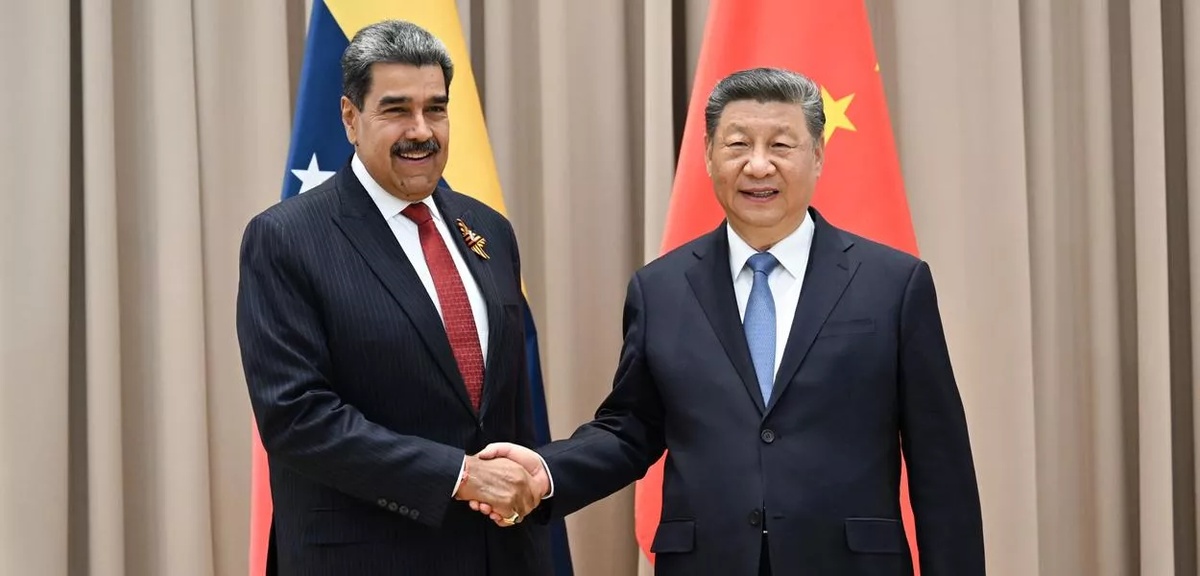
Political Alignment Projects Caracas in Multipolar Scenario
According to the Venezuelan government, the decision reflects diplomatic alignment with the principles of the SCO and China. In addition, it reinforces Caracas’ position in an emerging multipolar agenda.
Venezuela emphasized support for the main points of the proposal:
- Sovereign Equality Among Nations
- Unconditional Respect for International Law
- Combating Threats and Unilateral Impositions
- Promotion of Inclusive Global Governance
- Genuine Focus on the Well-Being of Peoples
According to the official statement, the adherence confirms the commitment to authentic multilateralism. At the same time, it rejects coercive sanctions and external interventions that limit national sovereignty.
Maduro emphasized that the proposal is a legitimate alternative to hegemonic structures. In this sense, he stressed that these structures weaken dialogue and produce dependency among nations.
Latin America as a Peace Zone is a Strategic Priority
The Caracas government also stated that the Chinese initiative strengthens the vision of Latin America and the Caribbean as a Peace Zone.
This positioning seeks to consolidate the region as a space free from military conflicts, arbitrary sanctions, and external interference. Therefore, it reaffirms commitments made in previous regional summits.
In recent years, Venezuela has been the target of unilateral sanctions imposed by Western countries, particularly by the United States.
Thus, Xi Jinping’s proposal emerges as a direct counterpoint to practices that violate the principle of non-intervention and national sovereignty.
“Venezuela reaffirms its support for the principles that inspire this proposal, such as the sovereign equality of states and the focus on the well-being of the people”, stated the official announcement.
Proximity to Beijing Boosts New Venezuelan Diplomacy
The Venezuelan adherence also marks a strategic advancement in bilateral relations with China. Moreover, it strengthens commercial, technological, and energy partnerships established over the last decade.
According to political analysts, the gesture further expands the diplomatic ties between China and its Latin American allies. At the same time, it projects Venezuela as an active voice in international governance forums.
Geopolitical experts emphasize that distance from structures dominated by the West opens space for greater Venezuelan influence in alternative axes. In this sense, Caracas strengthens alliances in the South-South axis.
Maduro reinforced that a new world order demands the end of unilateral impositions. Moreover, it should respect the cultural, political, and economic diversity of emerging blocs.
What to Expect from Venezuela’s New Role in the World?
With the adherence registered on July 1, 2025, the country joins a group seeking to reform the international system. The focus is on sovereignty and cooperation.
This step marks a significant strategic repositioning. Therefore, the government intends to use this space to defend regional, social, and environmental interests.
The Maduro administration believes this measure will facilitate trade negotiations and attract strategic investments. Additionally, it will expand Venezuelan presence in discussions about digital, energy, and climate governance.
However, analysts warn that success will depend on practical actions, transparency, and real commitment to the principles advocated by the initiative.
The question that remains is: will adherence to China’s proposal be enough to restore Venezuela’s international influence and regional stability?




Yes 100% since Venezuela is the richest and best-positioned country in South America and the world.