






 Portuguese
  Spanish
  6 min of reading
  0 comments


Troy Williams, 33 years old, left rent and bills over £2,000, bought a VW Transporter for £10,000, invested £18,000 in the adapted van, maintained remote work, and started living on the road with Marley and Diesel, achieving a monthly saving of about £1,550 in the UK since then.
Rent and household bills led Troy Williams, 33, to leave the house where he lived in Cornwall, UK, to live in a VW Transporter converted into an adapted van. According to The Sun, the story was published on June 1, 2026.
Remote work allowed Troy, who works in sales, marketing, and strategic partnerships for a software and data company, to purchase the vehicle in September 2025. After months of renovation, he began using the van as a full-time home, traveling with his two elderly dogs, Marley and Diesel, and aiming for monthly savings.
Rent and bills exceeded £2,000 per month
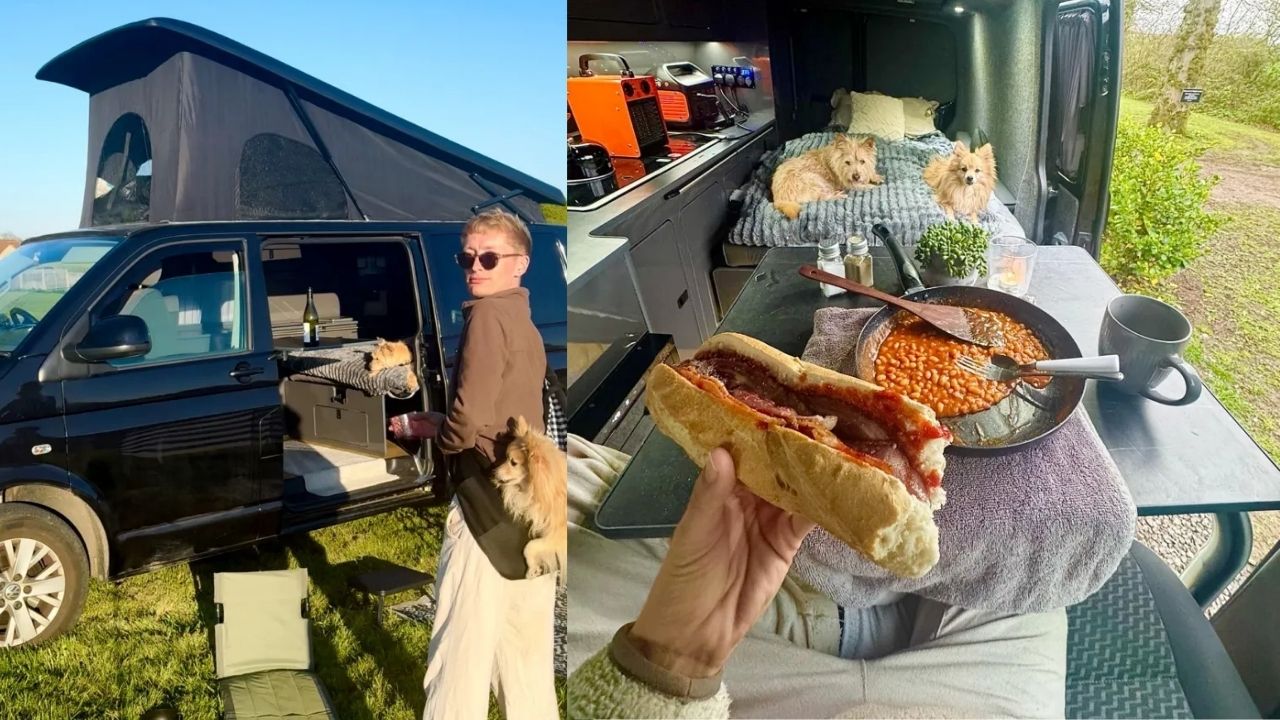
Before the change, Troy lived in a rented house from a family friend in Cornwall. The monthly rent was £600, but total expenses reached over £2,000 per month when including bills, household expenses, and fixed routine costs.
-
China Restores Over 13 Hectares of Mangroves in Fujian Using Innovative Tree and Shrub Technique to Combat Waves and Capture Carbon

-
Brazil’s Rio State Deploys 480 Hidden Cameras in Reserves to Track Jaguars, Tayras, and Peccaries After 27 Years Without Updating Threatened Species List

-
Brazilian City Revitalizes Nearly Extinct Ecosystem by Planting 11 Million Native Trees and Paying Residents to Restore Forests Over 40 Years
-
Victorian-era Glass Dumped into the North Sea Returns as Rare Multicolored Gems on Seaham Beach, Attracting Global Collectors.





This financial pressure helped accelerate a decision he had been considering since the lockdown period: living in a van. The idea stopped being a distant plan when the cost of living and the dogs’ health started weighing at the same time.
The calculation was straightforward. If he continued with the previous model, Troy would keep spending about £1,400 monthly in addition to rent. By swapping the house for an adapted van, he reduced total expenses to about £450 per month.
This new calculation includes fuel, mobile data, insurance, and streaming subscriptions. The estimated monthly savings were around £1,550, a value that turned the change into a financial alternative, not just an adventure on wheels.
VW Transporter was bought at auction for £10,000
The foundation of the new lifestyle was a 2016 VW Transporter, bought at auction for £10,000. After the purchase, Troy invested another £18,000 to transform the vehicle into a functional home on wheels.
In total, the adapted van cost around £28,000. The amount included both the purchase of the vehicle and the necessary conversion to make the space comfortable, practical, and usable on a daily basis. The VW Transporter also helped to unite housing, commuting, and work into a single project.
Part of the work was done by Troy himself. He removed moldy plywood panels, prepared the insulation, took care of soundproofing, and applied carpet inside the van.
Later, he enlisted a company in Swindon for more technical stages, such as installing the pop-up roof, electrical system, and custom furniture. The combination of self-work and specialized service helped shape a VW Transporter designed for real routine, not just short trips.
Adapted van gained comfort for remote work routine
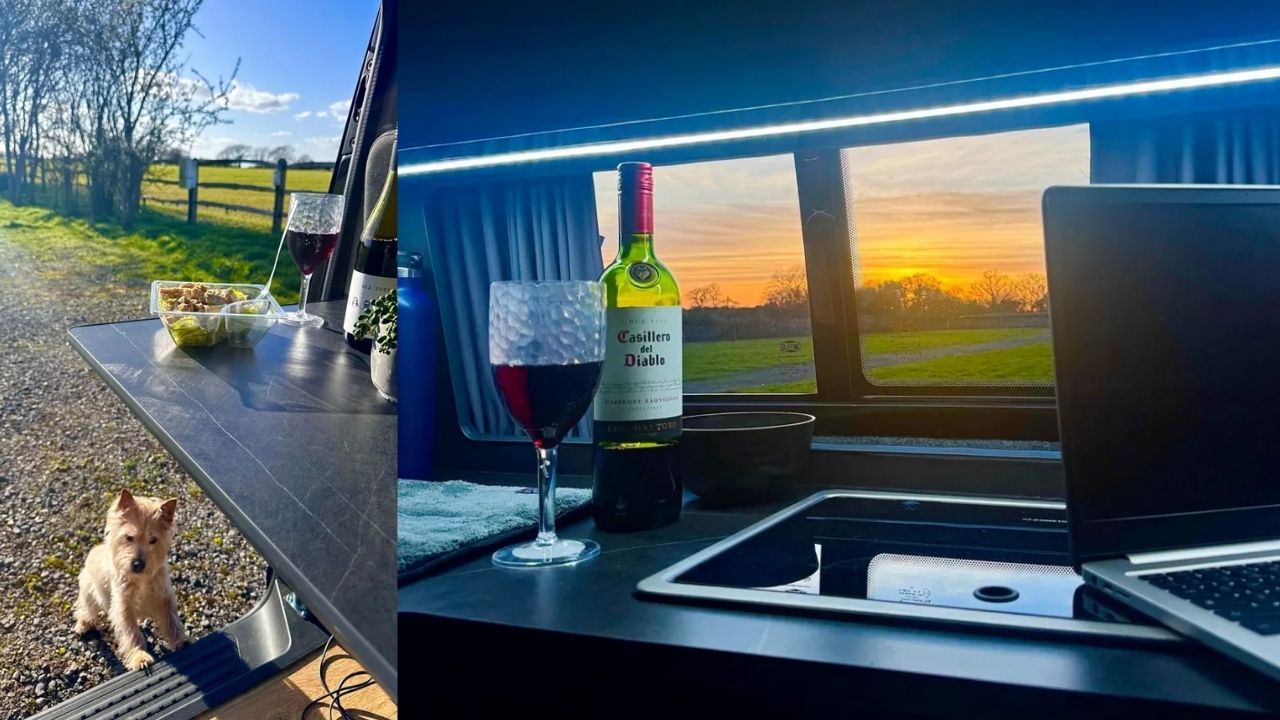
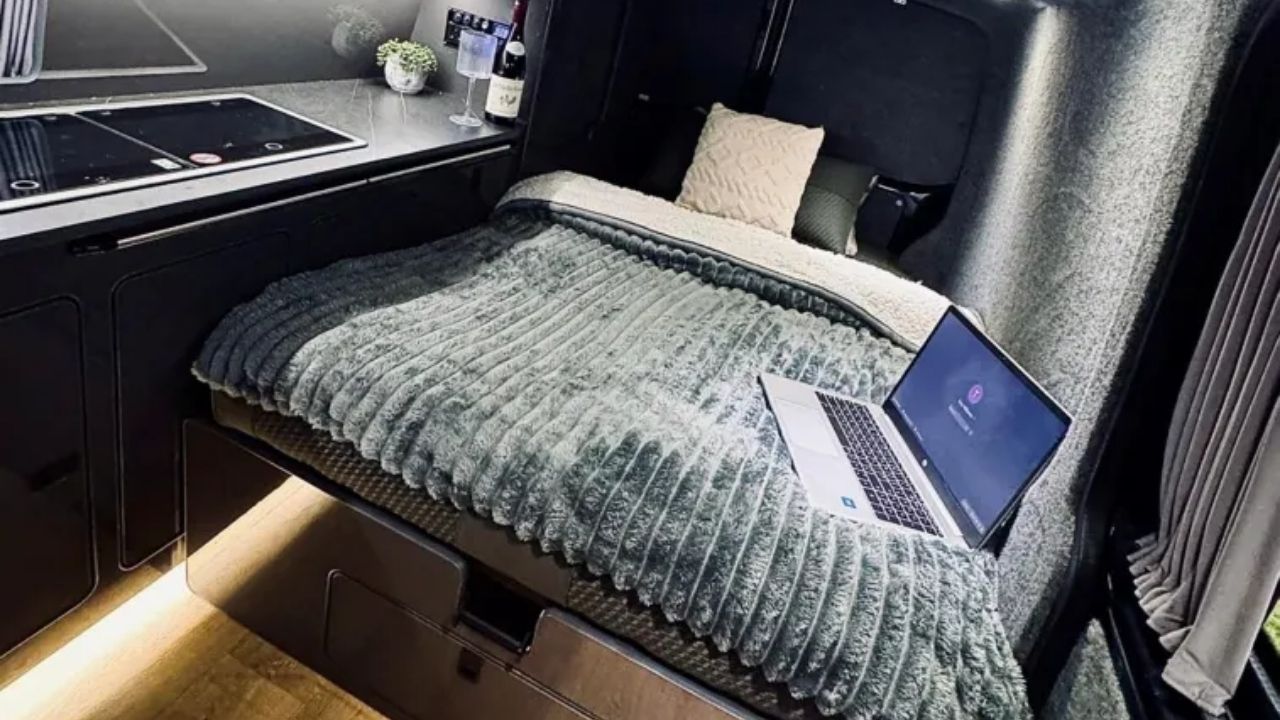
The finished van received a gray-toned interior, marble-look countertops, swivel front seats, dining area, and oak-colored flooring. The choice of flooring had a practical reason: to help disguise dog hair.
Additionally, Troy installed items like a heater, improved sound system, and Bluetooth connectivity. The aim was to create an adapted van comfortable enough to live, work, and relax without relying on a conventional house.
The elevating roof also became an important part of the project. Although the upper bed exists, Troy states that he mainly uses the roof to be able to stand inside the van more comfortably.
This difference shows that living in a vehicle doesn’t just depend on having a bed and cabinets. For those living with remote work, ergonomics, circulation, energy, internet, and practicality become essential parts of the experience.
Remote work made the change possible
The decision only moved forward because Troy was able to maintain his professional role remotely. After talking to his boss, he arranged a fully remote routine, preserving the work five days a week.
This point is central in the story. Without remote work, exchanging rent for a converted van might not have been feasible in the same way. The freedom to travel depended on a source of income that could accompany the movement.
With the van as his home, Troy began to travel mainly through the south of England and Wales. At times, he stays in campsites or cheaper agricultural lands, especially during the winter.
Among the favorite places mentioned are the New Forest, where he parks in areas surrounded by horses and cows, small villages in the north of Wales, and the Brecon Beacons National Park, where he often explores local product shops with Marley and Diesel.
Elderly dogs influenced the life change

Although the financial aspect is strong, the decision also had a personal component. Troy wanted to spend more time with Marley, 16, and Diesel, 15, his two elderly dogs.
According to the account, the animals faced age-related health problems and generated about £11,000 in veterinary bills just this year. The realization that the dogs were aging made Troy rethink the idea of waiting for the perfect moment.
The converted van allowed him to combine work, savings, and daily companionship with the animals. Instead of maintaining a fixed routine at home, he started traveling with the two and organizing life around them.
Still, the story is not just about the dogs. They appear as part of the motivation, but the bigger change involves rent, bills, remote work, cost of living, and a search for a simpler routine.
Monthly savings do not eliminate practical challenges
Living in a van reduces costs but also brings difficulties. Troy reports that finding water and showers can be frustrating at times, especially when the routine depends on movement, weather, and available infrastructure along the way.
These details show that monthly savings do not come without trade-offs. The money saved comes along with a routine that requires planning, adaptation, and tolerance to small discomforts.
Even so, Troy states that the slower pace has brought benefits to his well-being. Simple activities, like taking a shower or preparing a cup of tea, have taken on a different weight within life on the road.
The monthly economy also changed the way he views consumption and necessity. With less space, each item needs to make sense. With fewer fixed bills, the budget becomes lighter. With more travel, the routine demands constant attention.
Life on the road became an answer to the cost of living
Troy’s story resonates with an increasingly common theme: people rethinking the traditional housing model in the face of rising rent, household bills, and the cost of living. In his case, the alternative was a home on wheels.
The adapted van is not a universal solution. For many people, the lack of space, the need to fetch water, the dependence on campgrounds, and the instability of the road would be too great obstacles.
On the other hand, the case shows how remote work, financial planning, and compact living can combine to create a different type of routine. What seemed like a radical choice turned into a way to reduce expenses and gain life time.
The strongest point of the change is in the contrast. Before, Troy spent more than £2,000 per month on rent and bills. Afterwards, he started living with about £450 monthly in total expenses, maintaining work, streaming, travel, and companionship with the dogs.
Less rent, more road, and a very different routine
The decision of Troy Williams shows how rent can push people to seek alternatives outside the traditional housing model. By buying a VW Transporter for £10,000, investing £18,000 in the conversion, and transforming the vehicle into an adapted van, he traded an expensive routine for a life on wheels.
The savings of about £1,550 per month is striking, but the change also required detachment, planning, and adaptation. In the end, the question remains open: would you trade a rented house for an adapted van to reduce costs and live on the road, or do you think the lack of structure would outweigh the savings? Leave your opinion in the comments.





Be the first to react!