






 Portuguese
  Spanish
  4 min of reading
  1 comment


The German Automakers, Such as Volkswagen, BMW and Mercedes-Benz, Are Experiencing Very Turbulent Times. Now Trump Wants to Turn Them into American Companies
The promise of the elected president of the United States, Donald Trump, to impose tariffs on imported products jeopardizes Germany’s automotive sector, affecting Volkswagen, BMW, and Mercedes-Benz.
The industry, already facing economic difficulties, may see its exports drastically impacted by the new tariffs.
During the campaign, Trump made it clear he intended to turn German automakers into American companies. “I want German car companies to become American companies. I want them to build their plants here,” the then-candidate declared in Savannah, Georgia.
-
Humanoid Robot Climbs 6,263-Meter Volcano in Ecuador, Sets Sights on Everest Challenge

-
Physicist Harvests Water from Fog in the World’s Driest Desert, Turning Mountains into Water Traps

-
Wikipedia Blocks AI-Generated Edits, Citing Distrust in Automated Systems and Outlining Plans to Use Technology Without Losing Article Control
-
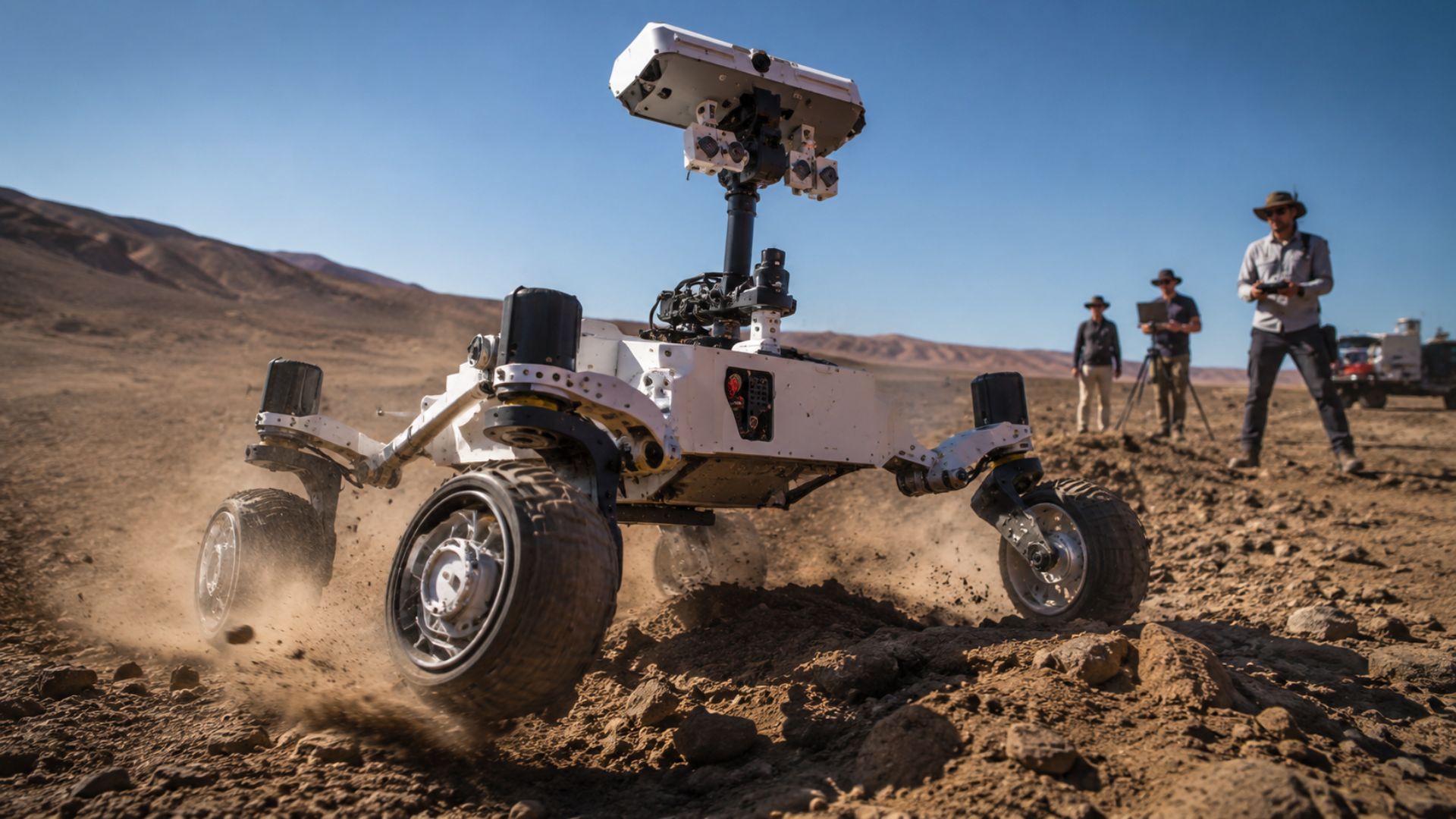
NASA Tests Rover with Lizard-Like Suspension and Independent Wheel Traction, Aiming for Speed Ten Times Faster than Perseverance on Mars




The planned tariffs are not limited to Europe. Trump announced, in his first measures, a 10% tariff on Chinese products and 25% on goods imported from Canada and Mexico.
Although Europe has not yet been mentioned, experts believe it is only a matter of time before the European automotive sector becomes a target.

The German Crisis in the Automotive Sector – Volkswagen, BMW and Mercedes-Benz
Germany is the largest exporter of cars in Europe to the United States. In 2023, the country exported about 23 billion euros (approximately 24.2 billion dollars) in vehicles to the US, representing 15% of the total German exports to the American market, according to Eurostat and ING Research.
The major manufacturers, Volkswagen, Mercedes-Benz and BMW, are already facing an unfavorable economic situation.
The companies issued recent profit warnings, citing weakened demand in China, the largest global automotive market.
Rico Luman, senior economist at Dutch bank ING, believes that the situation may worsen with Trump’s tariffs.
According to him, the entire production chain would be threatened: “The automotive industry is linked to the steel and chemical industries. The entire supply chain would be involved,” he stated to CNBC.
Response from the Automakers to Trump’s Speech
Volkswagen, BMW, and Mercedes-Benz are trying to navigate the unfavorable scenario. A spokesperson for Volkswagen highlighted that more than 90% of the vehicles sold by the brand in the US are produced in North America, taking advantage of the United States-Mexico-Canada Agreement (USMCA).
However, Trump’s tariffs on Canada and Mexico could jeopardize the USMCA, nullifying current tax benefits.
Mercedes-Benz also defended its presence in the US. The German automaker states that it employs more than 11,000 people in the country, with production concentrated on passenger cars and vans. In a statement, it said it looks forward to a “constructive dialogue with the new administration.”
The BMW, which has the largest production unit of the brand in Spartanburg, South Carolina, chose not to directly comment on the tariff threats.
The Spartanburg plant is strategic, with the capacity to produce around 450,000 vehicles per year.
Despite the efforts, the results in the financial market already reflect the difficulties.
Shares of Volkswagen and BMW have fallen about 23% year-to-date, while the Mercedes-Benz Group recorded a 13% drop.
The Weight of the Tariffs
Michael Robinet, from automotive consultancy S&P Global Mobility, believes that Trump’s rhetoric may translate into concrete actions. “It may not be exactly as promised during the campaign, but some pressure will come, whether through tariffs or other unilateral measures.”
Robinet also raises a critical question: the levels of unemployment in the US. With the unemployment rate around 4%, he questions the ability to create more jobs in the American automotive sector, as promised by Trump.
Separately from the tariffs on Canada, Mexico, and China, Trump has also suggested an overall rate of 10% to 20% on all products imported by the US. It is still unclear whether this proposal will become official policy, but the risk exists.
Julia Poliscanova, senior director of the Transport and Environment group, warns that Europe needs to prepare. “Trump wants more tariffs, so everyone needs to be ready,” she said in an interview. For her, the impact will be negative in the short term, but it also represents an opportunity.
“Europe needs to stay the course, accelerating electrification and investing in clean technologies. If Trump focuses only on protectionism, the US could fall behind,” Poliscanova concluded.
The Impact on the Global Economy
Trump’s tariffs come at a delicate moment for the global economy. The automotive sector, especially in Europe, is already facing pressures from the transition to electric vehicles and a decline in Chinese demand.
In Germany, the automotive industry accounts for about 5% of GDP and employs over 800,000 people directly. Any significant drop in the sector would have a ripple effect throughout the German economy.
The impact would also extend to component suppliers. Companies linked to the chemical, metallurgical, and technology industries depend on automakers to maintain their operations. A 25% tariff could make exports unviable, forcing automakers to rethink their global strategies.
The Next Steps
In the face of uncertainties, German automakers are trying to expand their production in the US. Investments in local factories are a way to circumvent tariffs and maintain competitiveness. However, the costs involved are high, and the return may take time.
Analysts indicate that Trump’s protectionist stance could also provoke trade retaliations from the European Union. This would create a trade war, harming both sides.
For now, the German automotive industry finds itself in a state of alert. Between weak demand in China, potential tariffs in the US, and the challenge of the electric transition, automakers are facing one of the most complex moments in their history.






E dizer que Fidel Castro, Ivo Morales, Hugo Chaves nacionalizaram as empresas estrangeiras por serem de extrema esquerda, e AGORA(?) a extrema direta vai fazer o mesmo? Depois será que vai emcampa?
Não sou esquerda nem direita, só uma questão de coerência, medidas com o mesmo final, se justifica pra uns e pra outros não.
E esquerda e direita foram expressões usadas para definir as alas em que sentavam os Jacobinos(esquerda) e os gerondinos(direita) na Assembleia Constituinte pós Revolução Francesa.
CERTO?