






 Portuguese
  Spanish
  5 min of reading
  0 comments


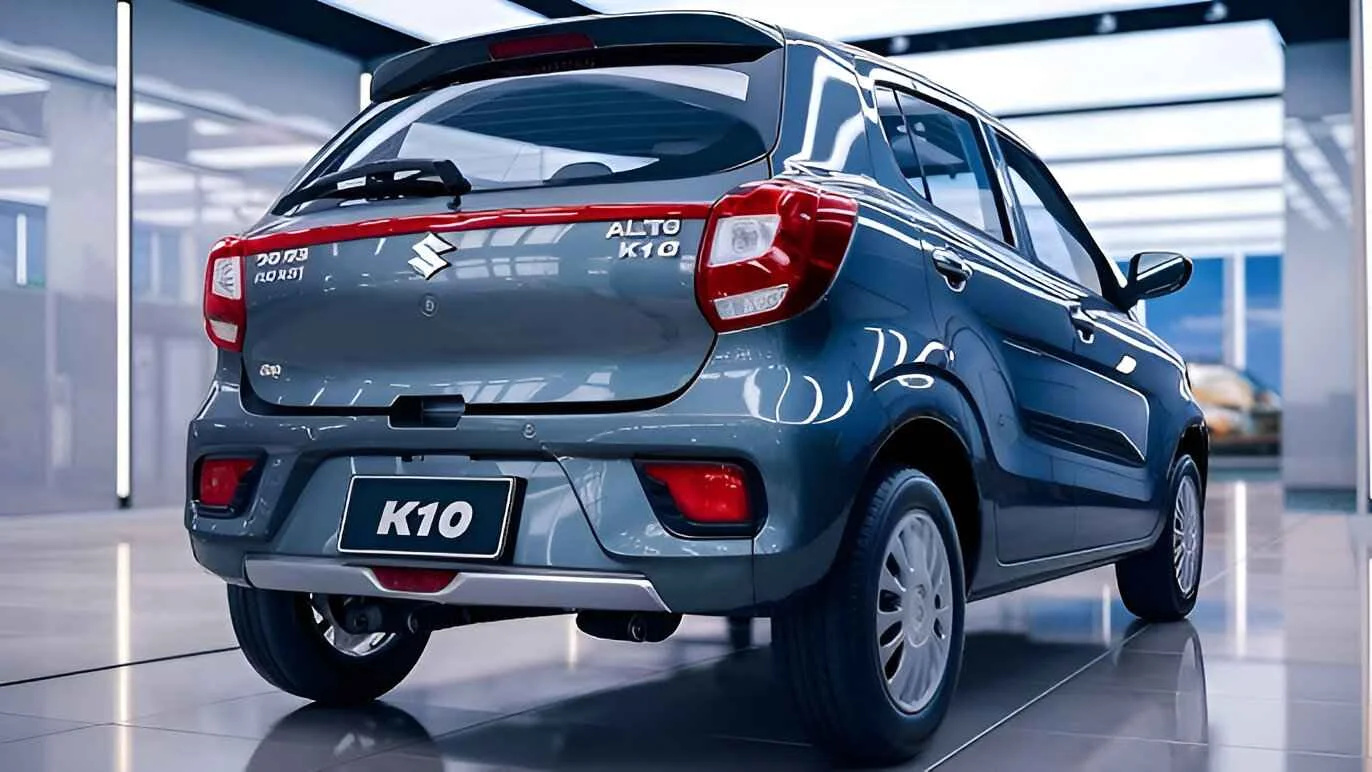
Maruti Suzuki Alto K10 costs around R$ 19,500 in India, has a 1.0 engine, CNG option, AGS transmission, and up to 6 airbags.
While the popular car has gradually disappeared from the Brazilian market and entry-level models have surpassed the R$ 80,000 mark, India remains one of the few places in the world where manufacturers still compete in an extremely affordable category. It is precisely in this scenario that Maruti Suzuki maintains one of the cheapest urban hatches in its lineup: the Alto K10.
Sold as a compact aimed at urban mobility, the model starts at ₹3.69 lakh, about R$ 19,500 in direct conversion, without considering Brazilian taxes, freight, homologation, importation, or commercial margins. Even costing less than a quarter of the price charged for many compacts sold today in Brazil, the hatch offers a three-cylinder engine, automated versions, CNG option, and a safety package that already includes six airbags in various configurations of the Indian market.
Alto K10 costs less than Kwid, Mobi, and Citroën C3 even offering a 1.0 three-cylinder engine
The Alto K10 occupies the base of the Maruti Suzuki lineup in India. According to the manufacturer, the hatch uses the 1.0 K10C engine, a three-cylinder 998 cm³ engine developed to prioritize low consumption and urban use. The gasoline version delivers 65.7 bhp and 89 Nm of torque, numbers compatible with several compacts currently sold in Brazil.
-
Two new 300cc models from QJ Motor are expected to arrive in Brazil as SBM to target the CB 300F and shake up the low-displacement market, with more power and liquid cooling than Honda.

-
Camaro may reappear in 2027, but not as you remember: Chevrolet prepares the return of the icon with four doors, manual transmission, and an extreme performance version to face the new era of sports cars.

-
Is the BYD Song Pro worth it? The Anderson Sincero channel says it doesn’t exceed R$ 140,000, and the price dropped by R$ 47,000, reinforcing the depreciation of the plug-in hybrid in the Fipe table.
-
Caoa Changan CS75 arrives for R$ 199,990 with 4.77 m in length, a trunk of up to 1,620 liters, 8-speed Aisin transmission, 180 hp, 37.2 inches in screens, and Zero Gravity seat with massage.


Even being an extremely affordable car by international standards, the model does not use outdated low-displacement engines.
Suzuki positions the K10C as a modern engine focused on energy efficiency and operation in large urban centers.
Hatch offers manual or AGS automated transmission in a segment where many rivals still rely only on the basics
One of the differentiators of the Alto K10 is the transmission options. In addition to the five-speed manual transmission, the hatch can also be configured with the AGS (Auto Gear Shift) system, Suzuki’s automated transmission aimed at reducing effort in intense urban traffic.


This type of offer draws attention because many entry-level cars around the world remain exclusively limited to manual transmission.
In India, Suzuki uses the automated option precisely as an argument to broaden the urban appeal of the model.
CNG version reaches over 33 km per kilo of gas
Another important point is the offer of alternative fuel. The Alto K10 has S-CNG versions, a configuration quite popular in the Indian market due to its reduced operational cost.
According to Maruti Suzuki, the hatch can achieve about 33.40 km/kg using compressed natural gas. The VXI S-CNG version shows a certified consumption of 33.85 km/kg in specialized bases of the local automotive market.
This efficiency is one of the factors that help explain the enormous popularity of CNG-powered compacts in India.
Safety evolved and hatch now receives a package with six airbags
For years, popular Indian cars were criticized for offering limited safety equipment.

In the latest update cycles, Maruti Suzuki initiated a strategy to increase the presence of six airbags in its lineup. In 2025, several vehicles of the brand began to receive the equipment as a standard item, including the Alto K10.
In addition to airbags, the hatch also offers ABS with EBD, three-point seat belts for rear occupants, and other items related to the manufacturer’s so-called “Safety Shield” strategy.
Even compact, model brings multimedia and urban package aimed at dense cities
The proposal of the Alto K10 is not to compete with premium hatches. Its focus is on simple and economical mobility.
Even so, higher versions can receive a 7-inch touchscreen multimedia center, Bluetooth connectivity, steering wheel controls, electric windows, and central locking.
Suzuki’s strategy is to offer a light, compact, and cheap vehicle without completely eliminating the features considered essential for modern daily use.
214-liter trunk and compact dimensions reinforce urban focus
The Alto K10 was developed for dense urban environments. According to the manufacturer, the hatch has a length of 3,530 mm, a width of 1,490 mm, a height of 1,520 mm, and a wheelbase of 2,380 mm.
The trunk offers a capacity of 214 liters. The reduced dimensions favor maneuvers, parking, and commuting in cities with heavy traffic. The Alto K10 helps to show a huge difference between the Brazilian and Indian markets.
While in Brazil entry-level compacts have undergone a strong price increase in recent years, India still maintains an extremely competitive category of affordable urban vehicles.
In many cases, they cost less than half the price of popular cars currently sold in the Brazilian market.
Hatch became one of the symbols of Suzuki’s strategy for volume and low cost
The Alto K10 was not created to impress with performance. Its mission is different. Suzuki uses the model as one of the entry points for its lineup, betting on reduced cost, energy efficiency, and simple maintenance to sustain high sales volumes in the Indian market.

This formula continues to work in a country that remains one of the largest automotive markets on the planet.
Technical specifications of the Maruti Suzuki Alto K10
| Specification | Data |
|---|---|
| Model | Maruti Suzuki Alto K10 |
| Country of sale | India |
| Starting price | ₹3.69 lakh (approximately R$ 19,5 thousand in direct conversion) |
| Engine | 1.0 K10C naturally aspirated |
| Displacement | 998 cm³ |
| Cylinders | 3 cylinders |
| Power (gasoline) | 65.7 bhp |
| Torque (gasoline) | 89 Nm |
| CNG version | Yes |
| Power (CNG) | 55.92 bhp |
| Torque (CNG) | 82.1 Nm |
| Transmission | 5-speed manual or AGS automated |
| Fuel consumption gasoline | Up to 24.90 km/l |
| Fuel consumption CNG | Up to 33.85 km/kg |
| Trunk | 214 liters |
| Length | 3,530 mm |
| Width | 1,490 mm |
| Height | 1,520 mm |
| Wheelbase | 2,380 mm |
| Airbags | Up to 6 airbags |
| ABS brakes with EBD | Yes |
| Multimedia center | Up to 7 inches in higher versions |
Technical data provided by Maruti Suzuki and specialized Indian automotive platforms.
While the Brazilian market has practically abandoned the idea of a truly cheap hatchback, the Alto K10 shows that there are still countries where a compact car with a 1.0 engine, CNG option, automated transmission, and up to six airbags continues to be sold for less than R$ 20 thousand in direct conversion.


-

-

2 people reacted to this.