






 Portuguese
  Spanish


Trend Resurges With Focus on Safety and Usability
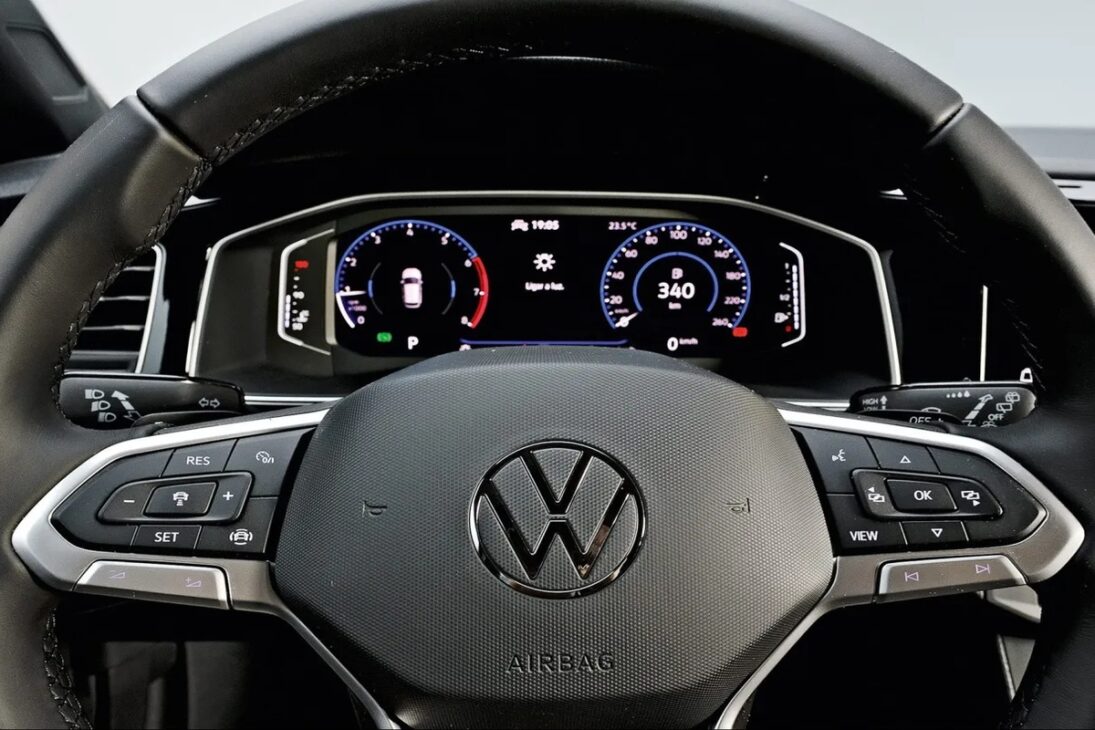
Volkswagen, known for anticipating automotive trends, decided to revive physical buttons on the panels of its vehicles.
This change was revealed by Thomas Schäfer, global CEO of the brand, during an interview with the British site Autocar in June 2024.
According to Schäfer, the decision addresses demands from consumers who value safety and practicality while driving.
The automaker reaffirms its commitment to ergonomics, avoiding distractions and reducing errors caused by touch screens.
Enhanced Safety Boosts the Return of Tactile Technologies
With discussions about distractions while driving, the return of physical buttons at Volkswagen has become a strategic priority.
Since 2020, drivers have reported difficulties in operating multimedia systems using only digital commands.
According to Automotive News Europe, published in May 2024, research indicates that drivers prefer traditional controls.
These commands require less time for visual diversion.
Thus, the automaker bets on integrating digital solutions with tactile controls, seeking a balance between innovation and safety.
European Market Directs Manufacturer Decisions
In major European markets, the return to physical buttons is already showing a positive impact.
According to Der Spiegel, published in April 2024, German customers prefer vehicles with more intuitive panels.
Additionally, Volkswagen announced that new models, such as the updated Golf, will bring this configuration starting in 2025.
This strategy strengthens the brand’s image, adapting to regional trends without compromising technological advancement.
-
2027 Toyota Corolla Cross Unveiled: New Design, Enhanced Fuel Efficiency, Reduced Maintenance Costs, Advanced Technology, Connected Services, and Up to 10-Year Warranty

-
Fiat Cronos Precision 2018: Affordable Sedan with Spacious Trunk and Reliable Maintenance
-
Volkswagen to Cut Production by 1 Million Cars by 2030, Reducing Jobs and Platforms, Focusing on More Profitable Models

-
Toyota Launches First 100% Electric Car in Brazil: bZ4X with 343 HP, All-Wheel Drive, 361 km Range, Priced at $419,990 BRL, Limited to 99 Units



Consumers Influence Innovations in Interior Design
To meet various demands, Volkswagen conducts periodic opinion surveys.
In March 2024, 68% of respondents reported missing physical controls in newer cars.
Thus, the company promises to align digitalization and ergonomics, maintaining virtual assistants while not neglecting manual solutions.
This demonstrates that the automaker listens to its audience and implements changes based on concrete data.
The brand follows transparent standards and does not create unrealistic expectations.
Future Plans Balance Technology and User Experience
Volkswagen’s projection indicates that, therefore, by 2026 all vehicles in the main line should, in addition, adopt the hybrid concept.
Physical buttons will be allies, therefore, to digital interfaces, which enhances the experience.
This configuration ensures, thus, greater usability, especially on heavily trafficked roads.
This stance, in this way, strengthens consumer confidence.
The brand, therefore, establishes itself as a reference in solutions that unite comfort and safety.





A Honda já percebeu isso a 3 anos atrás. Quando substituiu os botões digitais dos AC e o mínimo no multimídia….