Portuguese
  Spanish


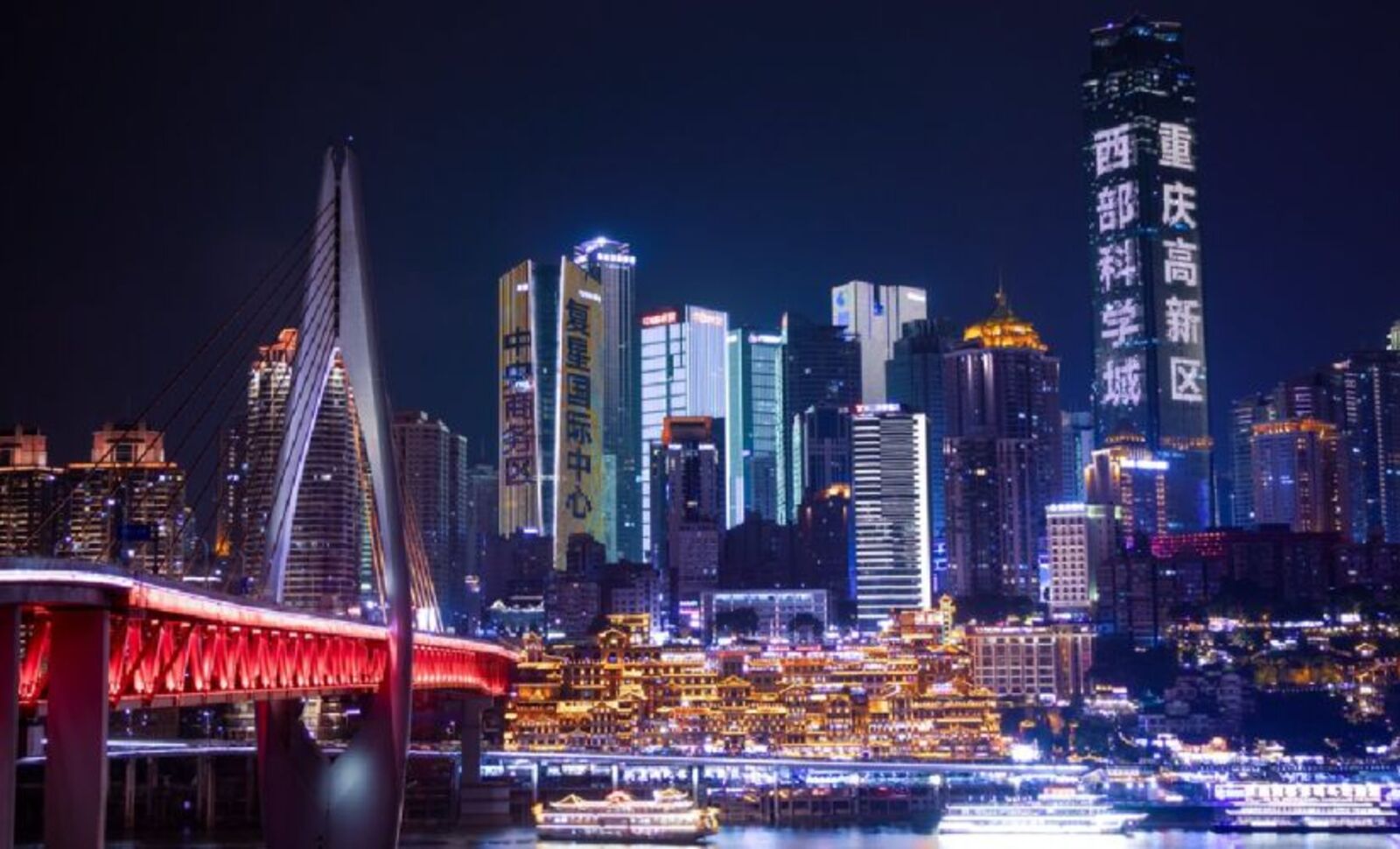


Chongqing mixes neon, vertical architecture, monorails between buildings, and robotics and AI projects, reinforcing its futuristic image and consolidating its fame as the most impressive cyberpunk city in China
Chongqing, in southwestern China, features buildings illuminated by neon, monorails crossing through structures, and robotics and AI projects, a combination that reinforces its reputation as a cyberpunk city and helps explain why the metropolis is seen as futuristic today.


Vertical city and futuristic visual
Built between rivers and mountains, Chongqing has gained fame for its unusual landscape. The city has become a reference for cyberpunk cities due to its striking architecture, density of buildings, and a nighttime visual dominated by colorful lights.
Known as the “Vertical City,” the metropolis is also associated with the concept of “8D City.”
-
Cold War Secret Plane Lost Engine Mid-Flight, Forcing Six to Parachute in Darkness; Wreckage Remains in Death Valley Mountains 73 Years Later

-
Opened in 1980, Shopping Recife was Pernambuco’s first mall and helped transform Boa Viagem into a bustling and sought-after district in southern Recife.
-
Tired of Monthly Water Supply, South African Villagers in Limpopo Connect Mountain Spring to Taps, Bringing Water to 5,000 People with $700 Initiative

-
Rare Case of Neurocysticercosis in Spain: 60-Year-Old Man’s Suspected Brain Cancer Turns Out to Be Tapeworm Cysts, Avoiding Invasive Cancer Treatments




The model combines intense verticalization, platforms, tracks, and architectural solutions to adapt occupancy to the available terrain.
Neon as a trademark
At night, the buildings draw attention for the contrast between modern futuristic lines and elements of classical Chinese architecture.
The result is a landscape that blends tradition and innovation amidst extensive neon strips.
The lights are not there by chance. The city government itself highlights this installation as a trademark of Chongqing, where buildings, bridges, and even temples receive specific lighting, reinforcing the image that brought the city closer to the cyberpunk imagination.
These lights are also called Zishui Xiaodeng, a term understood as “night lanterns reflected in the water.” During festivals, this effect becomes one of the major highlights of the local landscape.
Verticalization and transportation
The large concentration of buildings is linked to an ancient characteristic of the region: the scarcity of flat areas.
To make better use of the available space, verticalization has become the practical solution, making Chongqing one of the most vertical cities in the world.
Technology is evident in the railway network. Chongqing is known for the monorails that cut through the city and pass through commercial and residential buildings, making the most of the available space.
Robotics, AI, and Connected City
The futuristic profile is also reflected in initiatives related to innovation. The city is home to the Robotics and AI Application Demonstration Center, where more than a hundred different robots have been demonstrated.
The local administration seeks to attract investment in “embodied AI,” bringing humanoid robotics operations and funding projects in this area.
This strategy expands the presence of technology in urban routines and strengthens the image of a cyberpunk city.
In mobility, Chongqing has also become one of the first Chinese pilot cities for “vehicle-road-cloud” integration.
By the end of 2024, the municipal platform was operating with real-time data from 559 road equipment and 5,859 connected vehicles.
With information from Gazeta de São Paulo.