Portuguese
  Spanish


A hybrid concept developed in Europe points to new possibilities for low-consumption gasoline engines, using renewable fuel and technical solutions that seek to reduce losses without abandoning combustion.
Low-consumption gasoline hybrid engine
A gasoline hybrid engine with consumption below 3.3 liters per 100 kilometers in the European WLTP cycle has once again placed combustion efficiency at the center of the technical discussion on mobility.
The project, called HORSE H12 Concept, was developed by Horse Powertrain in partnership with Repsol and runs on 100% renewable gasoline, according to the companies.
The figure is equivalent to just over 30 kilometers per liter, depending on the conversion adopted.
-
Rolls-Royce Turns Heads with 30-Inch Floating Wheels, 6.6-Liter V12 Engine, and 563 Horsepower

-
2019 Kia Sportage EX: A Spacious and Cost-Effective SUV with 2.0 Flex Engine and Panoramic Roof
-
Fiat Strada Becomes Top Seller in June, Surpassing Onix, Polo, Hilux, and T-Cross with 107 HP Engine and 732 km Range.

-
Suitcase-sized hydrogen engine spins at 25,000 rpm, nearly doubling the efficiency of conventional cars and replacing exhaust smoke with water vapor


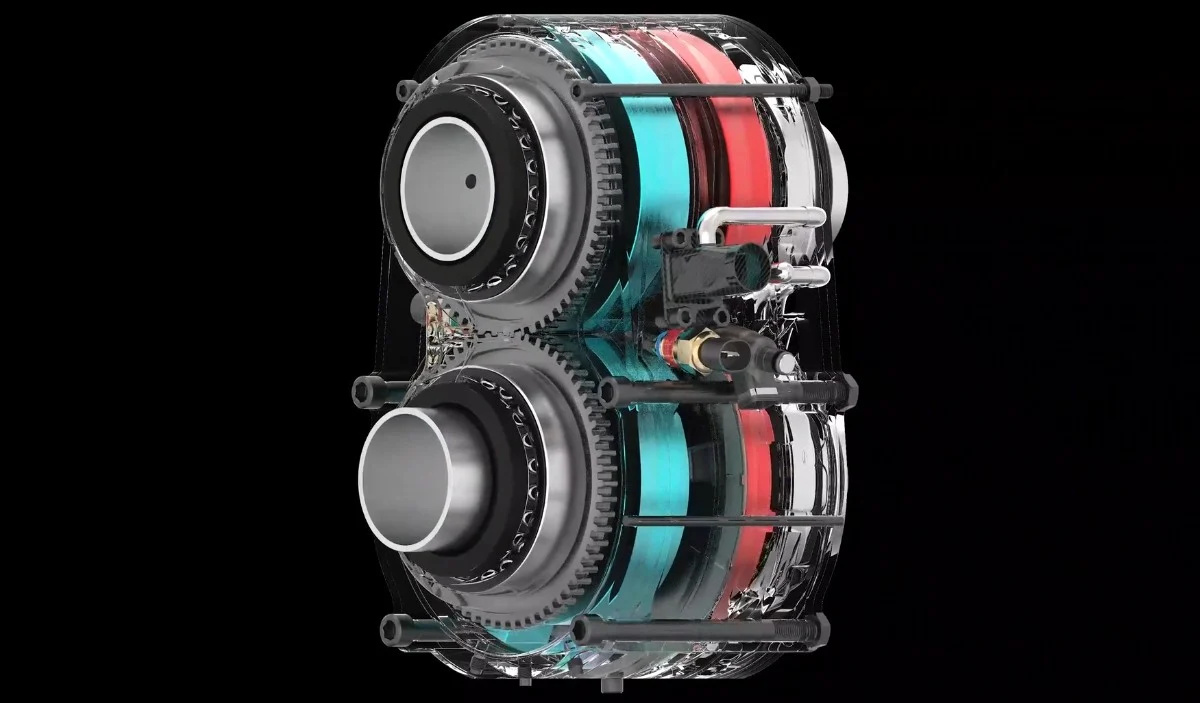
At the concept’s presentation, Horse and Repsol reported that the powertrain reduces consumption by 40% compared to the average of new gasoline cars registered in Europe in 2023, considering the same test standard.
The technology does not yet correspond to an engine available in vehicles sold to consumers.
It is a concept with prototypes built and performance validated by the companies.
The H12 derives from the HR12 engine, a 1.2 three-cylinder already known in Renault group models, but has received modifications to operate with a hybrid system and renewable fuel.
What changes in the H12 Concept
Horse reports that the H12 Concept achieves 44.2% maximum thermal efficiency, an index that measures how much of the fuel’s energy is converted into useful work by the engine.

To achieve this result, the project combines a compression ratio of 17:1, exhaust gas recirculation, optimized turbo, high-energy ignition, and a hybrid transmission with revised electronic management.
In practice, the system seeks to keep the combustion engine in more efficient operating ranges.
The electric part acts at times when thermal engines tend to consume more fuel, such as starts, accelerations, and rapid load variations.
This logic already appears in hybrid vehicles, but the concept tries to further reduce system losses.
Repsol also participated in the development with fuels and lubricants aimed at reducing friction.
In combustion engines, part of the energy is dissipated as heat, internal movement, and gas pumping.
Therefore, small gains in different components can change the consumption measured at the end of the test cycle.

Renewable gasoline and CO₂ emissions
The H12 Concept was calibrated to run on Repsol’s 100% renewable Nexa 95 gasoline.
According to the company, the fuel can be used in current gasoline vehicles without modifications to the car or the refueling infrastructure.
Industrial production was announced at the Tarragona complex in Spain.
Compatibility does not eliminate tailpipe emissions.
The difference pointed out by Repsol lies in the net CO₂ balance, which considers the renewable origin of the fuel and its production cycle.
According to the company, renewable gasoline reduces net CO₂ emissions by more than 70% compared to conventional gasoline.
In the case of the H12 Concept, Horse and Repsol estimate that an average car equipped with this setup, driving 12,500 kilometers per year, could emit 1.77 tons less CO₂ per year compared to a similar vehicle with a conventional engine and fuel.
The figure is an estimate by the companies for the presented concept, not a result obtained from massive consumer use.
Internal combustion in the energy transition
Electrification remains a cornerstone of European targets for new cars.
The European Parliament states that, from 2035, all new cars placed on the European Union market will not be allowed to emit CO₂.
The rules, however, do not remove existing gasoline and diesel vehicles from circulation.
In this context, more economical hybrid engines appear as a complementary alternative to reduce emissions during fleet renewal.
The application of this type of solution depends on industrial scale, availability of renewable fuel, price, and regulatory acceptance in each market.
Horse Powertrain’s structure also helps explain the investment in this field.
The company was created from businesses linked to Renault Group and Geely, but its corporate structure now includes Aramco, which completed the acquisition of a 10% stake.
Renault Group and Geely each retain 45%.
According to a statement from the Renault Group, the partnership involves the development of technologies for internal combustion engines, hybrids, alternative fuels, and lubricants.
The company itself states that its operations cover solutions such as full hybrids, longer-range plug-in hybrids, and engines prepared for alternative fuels.


Challenges to reach production cars
The distance between a technical concept and a series production product remains a central point.
To reach the market, a setup like the H12 would have to prove durability, competitive cost, viable maintenance, and consistent performance outside standardized laboratory cycles.
Fuel availability also limits large-scale application.
In February 2026, Repsol reported that renewable Nexa 95 was available at 30 service stations in Spain.
In the same communication, the company stated that renewable diesel was offered at more than 1,500 stations in Spain and Portugal.
Another aspect is the cost to the consumer.
The original text mentioned a difference of about 10 euro cents per liter compared to conventional fuels, but this value was not reliably confirmed in a recently consulted official source.
For this reason, the information was removed from the edited version.
Thermal efficiency, hybrids, and renewable fuel
The scientific contribution of the H12 lies in the combination of already known resources, and not in a single isolated component.
The concept combines a high thermal efficiency engine, a hybrid system, specific lubrication, electronic control, and renewable fuel.
The result reported by the companies shows how the integration of these technologies can reduce consumption in standardized tests.
For the consumer, the promise of driving more than 30 kilometers on one liter of renewable gasoline still depends on large-scale production and commercial availability.
For the industry, the project indicates that research into thermal engines continues to be associated with electrification and fuels with a lower net carbon footprint, especially as the global fleet maintains a large presence of combustion vehicles.