






 Portuguese
  Spanish


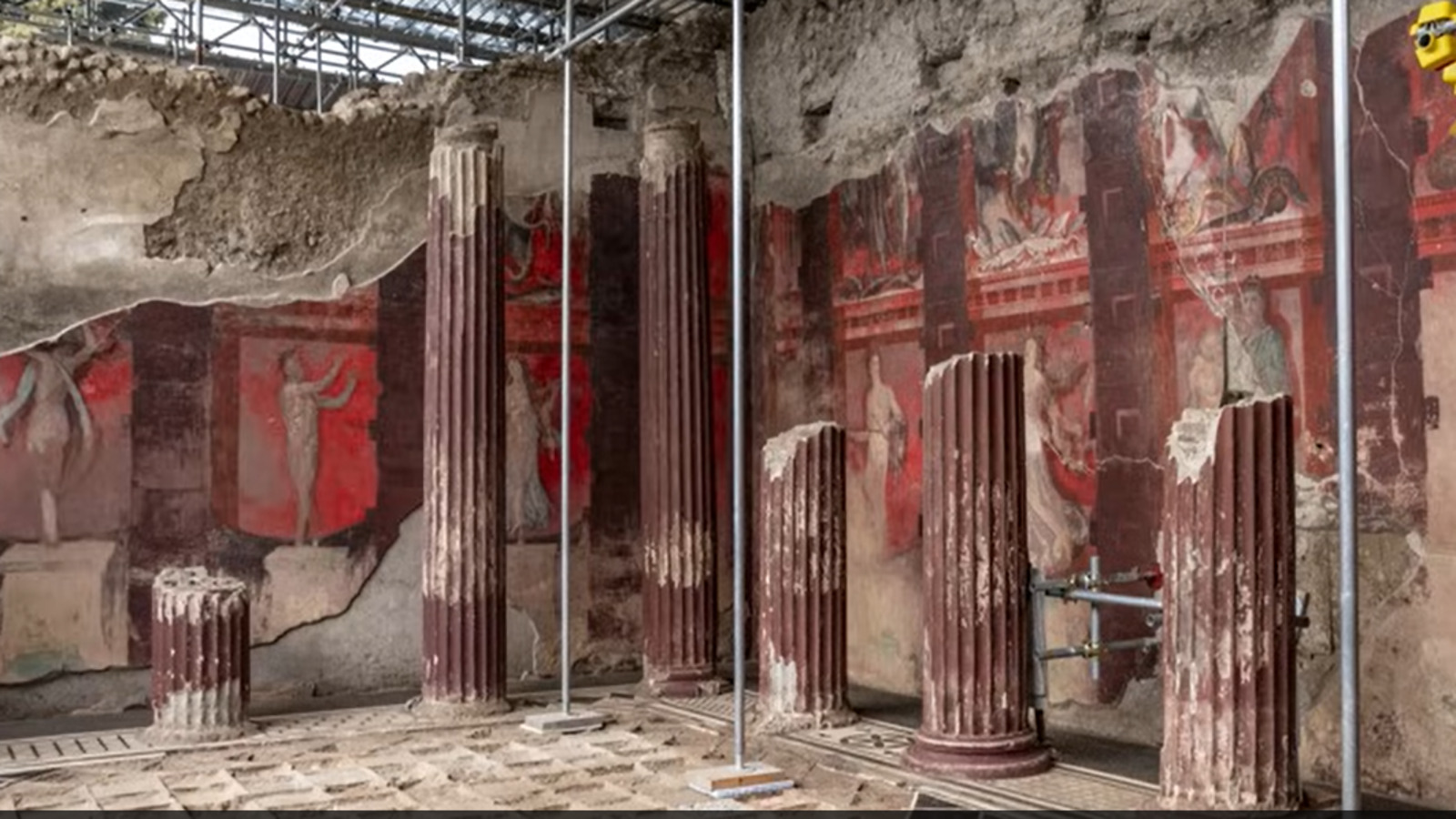


Excavations in Regio IX of Pompeii revealed a banquet hall with a monumental frieze on three walls, figures almost life-size, and scenes linked to the Dionysian procession, more than a century after the Villa of Mysteries
A large banquet hall decorated with a monumental frieze emerged in excavations carried out last year and reported by Reuters on May 2, 2025, in the central area of the Pompeii Archaeological Park, in insula 10 of Regio IX. The discovery draws attention for the megalography, a painting with figures almost life-size, associated with the procession of Dionysus.


Discovery occurred in the central area of Pompeii
The environment was identified in the Pompeii Archaeological Park.
The room belongs to a dwelling that archaeologists have named the House of Thiasos, in reference to the festive procession linked to the god Dionysus.
-
Cassini Discovers Fresh Organic Molecules Emanating from Enceladus’ Hidden Ocean, Making Saturn’s Icy Moon a Prime Target in the Search for Extraterrestrial Life

-
Scientists Discover Simple Fluids Can Shatter Like Solids Under Extreme Force, Challenging Our Understanding of Matter

-
Xiaomi to Launch Robot Vacuum 6 Max Globally: Features 85°C Mop Cleaning, 35,000 Pa Suction, Extendable Arms, AI with 3 Cameras, and 6 cm Obstacle Clearance
-
Engineers Develop Jacket That Converts Air Humidity Into Drinkable Water, Producing Up to 900 ml Daily for Hikers, Campers, Rescuers, Rural Workers, and Military in Remote Areas



The discovery occurs more than a century after the Villa of Mysteries, also known for paintings associated with the Dionysian universe.
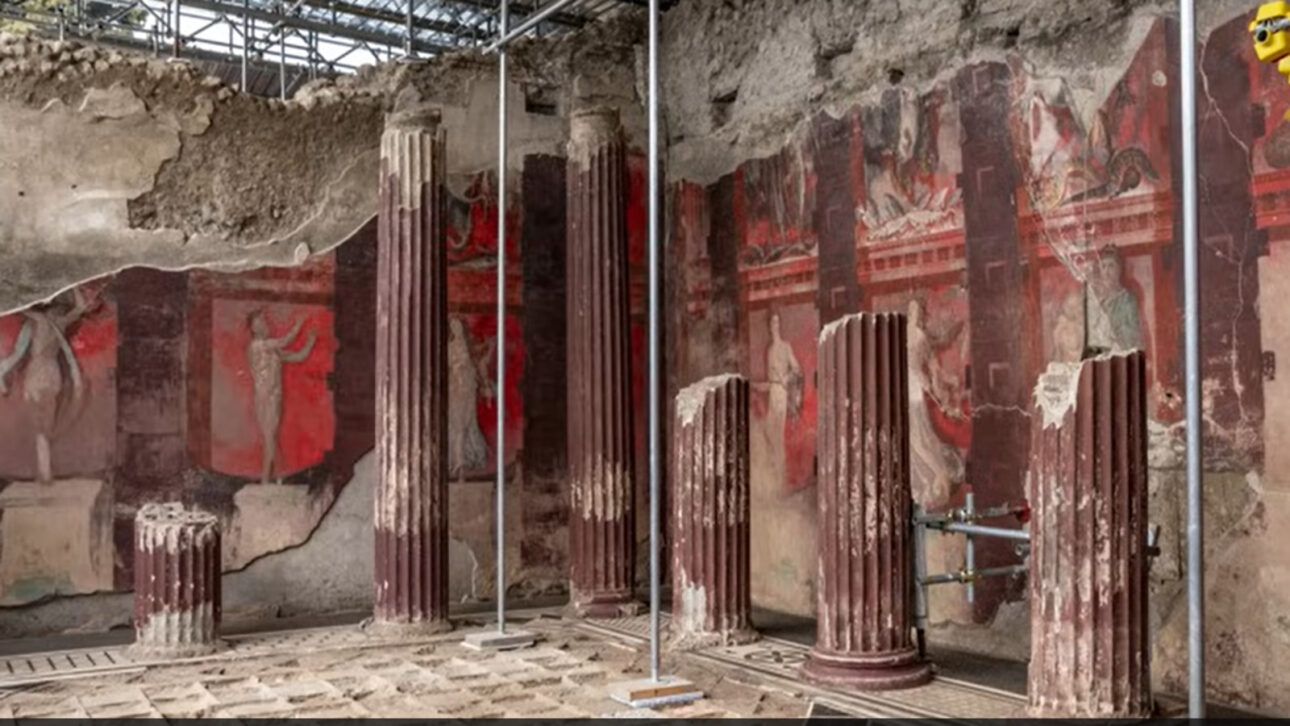
Monumental frieze occupies three walls of the room
The main highlight of the banquet hall is the frieze that decorates three walls of the environment. The fourth wall opens to a garden, composing the structure of the newly revealed room.
The painting was described as a megalography, a term of Greek origin used to indicate a large-scale painting.
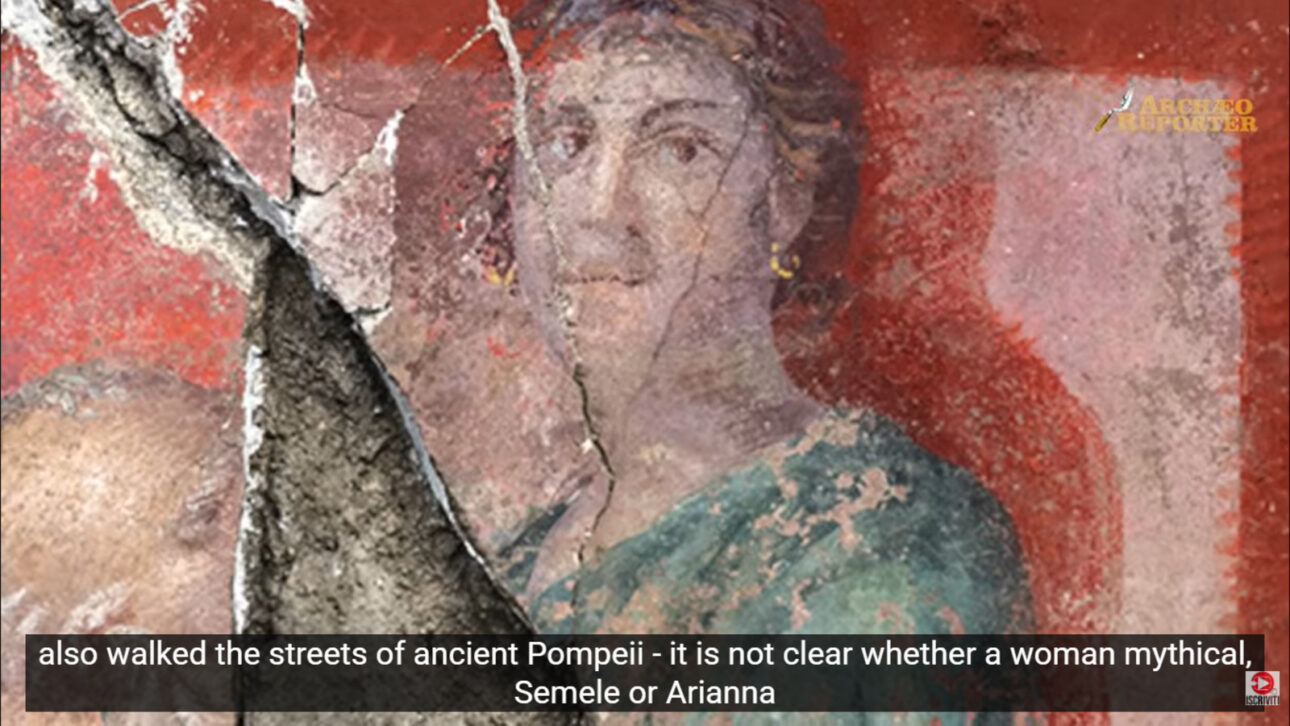
Procession of Dionysus dominates the scene
The frieze shows a Dionysian procession with bacchantes, satyrs, a Silenus, and a woman initiated into the mysteries of Dionysus.
The figures appear on pedestals, like statues, but with gestures, fabrics, and skin tones that suggest movement.
This article was prepared based on information from the base material provided, with data, names, descriptions, and terms preserved as per the content consulted.


