Portuguese
  Spanish


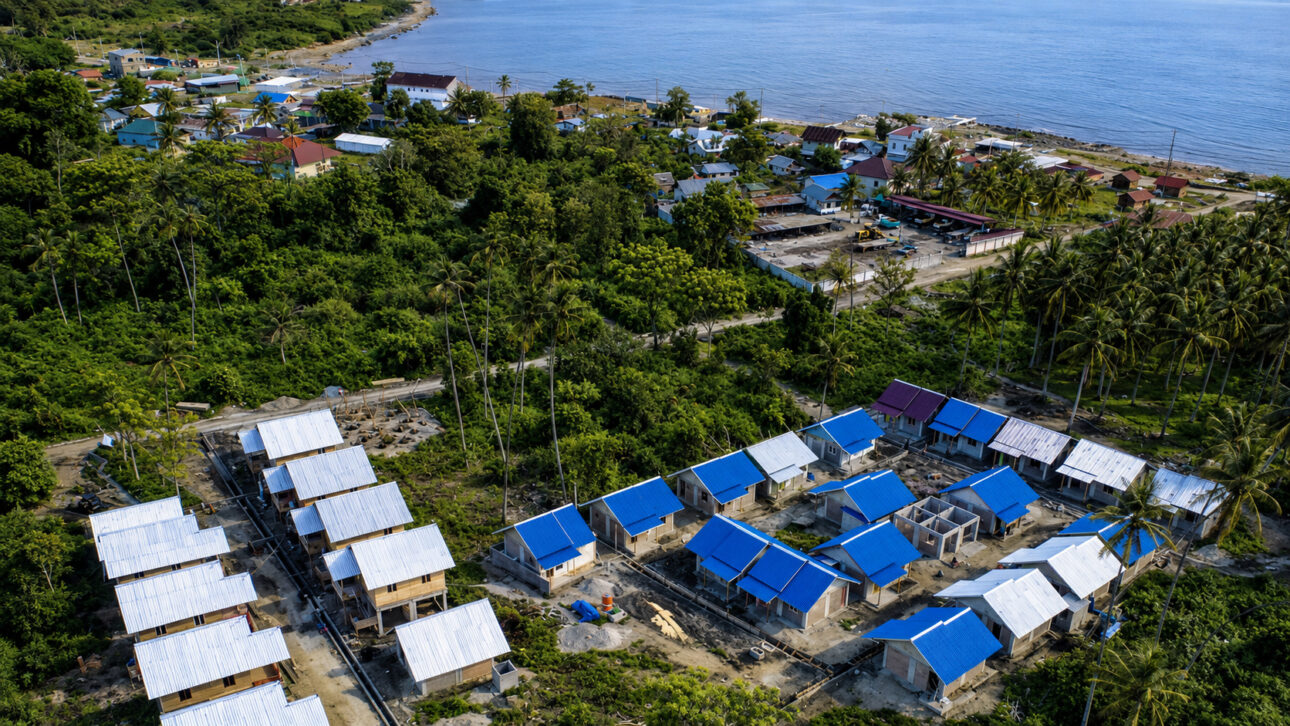
Families affected by the earthquake and tsunami of 2018 participated in community reconstruction in Indonesia, chose a safe area, helped design the settlement, and built 38 earthquake-resistant houses without breaking the link with fishing and income near the sea
After losing everything in an earthquake and tsunami in Indonesia, survivors helped choose the land, designed the new settlement, and built 38 earthquake-resistant houses to restart near the sea.
The information was published by World Habitat, the organization responsible for the World Habitat Awards. The project took place after the disaster of September 2018, which hit the Palu Bay on the island of Sulawesi, leaving families homeless.
The reconstruction drew attention because it did not treat residents only as beneficiaries. The community of Mamboro Perikanan Village participated in decisions about where to live, how to build, and how to maintain work related to fishing.
-
In a city where every piece of land is worth gold, he began buying plots in the 1960s and built a real estate empire with over a thousand properties.

-
An artist sank over 500 life-sized human statues at the bottom of the Caribbean Sea, and what seemed like macabre art turned into a living reef covered with corals that attracts divers from all over the world.

-
A fossil kept for years in a small museum in Montreal concealed 450-million-year-old soft tissue, a discovery that has only happened once before in history.

-
Engineers spend a decade building a $2.3 million bridge, but the project features a surreal curve, becomes a joke, and ends with seven suspended.


How the community chose the land without being far from work at sea
After the disaster and earthquake, there was a proposal to relocate coastal communities to a higher-risk area. The new planned location was 5km inland.
For those who lived from fishing, drying, and selling fish, this distance could become a daily problem. The house could be safer, but access to livelihood would become more difficult.
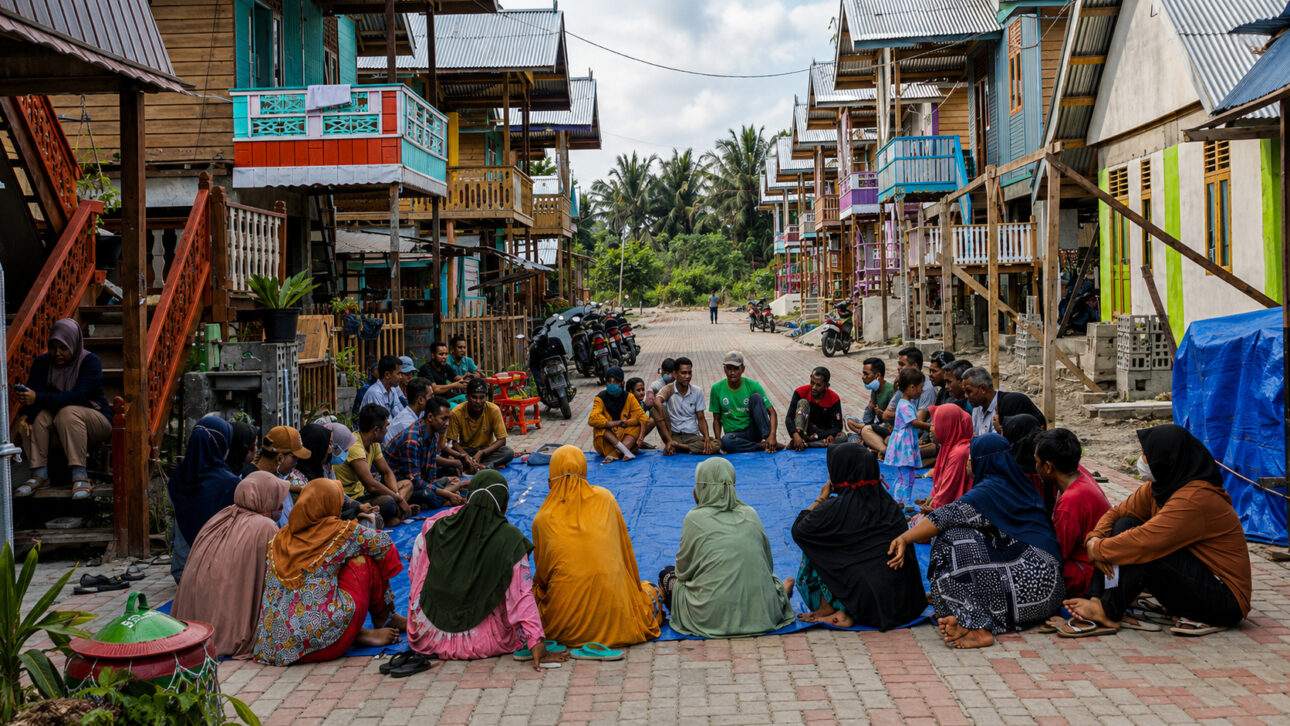
With support from the non-governmental organization Arkom Indonesia, the residents chose another area within a safe zone. The proposal was accepted by the local government and allowed the reconstruction to keep the community closer to the routine connected to the sea.
This decision showed that rebuilding after a disaster does not just involve raising walls. It also involves protecting income, neighborhood, memory, and the way of life of families who depend on the territory.
What makes the 38 houses more earthquake-resistant
The 38 earthquake-resistant houses were created to offer more safety to families in a region prone to tremors. This means a construction designed to reduce risks when the ground shakes.
A resistant house is not an indestructible house. It is made to better protect people, reduce damage, and prevent more severe collapses during new tremors.
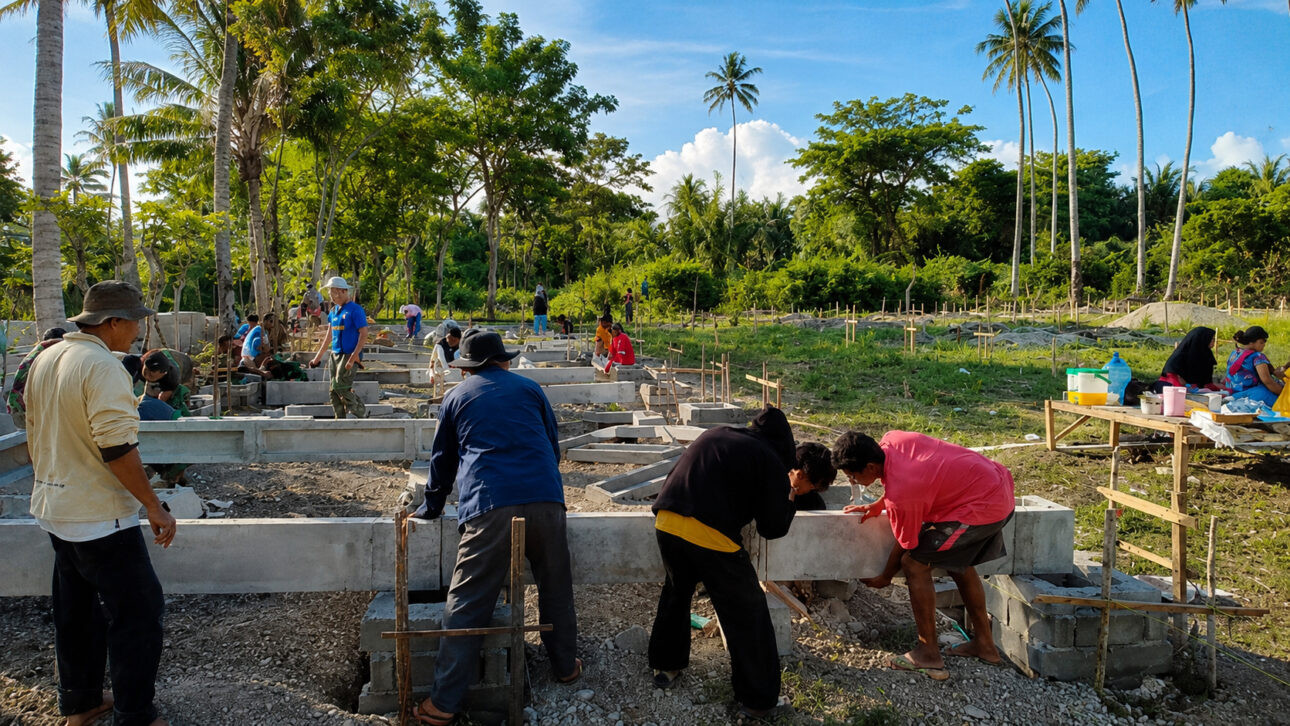
The homes were completed in December 2020. Since then, they had withstood shocks below 5 on the Richter scale, a measure used to indicate the strength of earthquakes.
This data helps to understand the central goal of the project. The reconstruction did not just aim to return a roof to families but to create homes better prepared to face natural risks.
Why participating in the construction changed the survivors’ new beginning
The reconstruction had direct participation from men, women, and children. The community was involved in the process from the search for land to stages related to the design and construction of the settlement.
This type of participation changes the meaning of the house. The home ceases to be just an external delivery and becomes part of a collective decision made by those who truly know the place.
Emilia, a resident affected by the disaster and earthquake, summed up the community’s sentiment by saying that they were already independent, had reached that point, and needed to move forward without looking back.
The statement shows that the new beginning was not treated just as shelter. For many families, participating in the construction also meant regaining autonomy after a profound loss.
The cost of the project and the fund created to sustain the community
The total cost of the project was approximately IDR 8.4 billion ($586,516 USD), funded by donations and grants. The amount supported the construction of the houses and the formation of the new settlement.
World Habitat, the organization responsible for the World Habitat Awards, also recorded the creation of a community fund. Each family makes monthly payments to this fund, used for education, economy, and long-term housing needs.
This fund shows that the reconstruction did not end with the delivery of the homes. The community created a way to maintain collective support for future demands.
In practice, the project united home, security, and community organization. This combination strengthened the families’ lives after the disaster.
What Brazilian reconstructions can learn from Indonesia’s experience
Indonesia’s experience leaves an important lesson for any country facing floods, landslides, or other disasters. A new house can solve the lack of shelter, but it also needs to consider work, transportation, school, and community ties.
In the case of Mamboro Perikanan Village, moving residents 5km away from the sea could disrupt the economic routine of families dependent on fishing. Therefore, the choice of land became a central part of the reconstruction.
For Brazil, the example shows that listening to residents is not a detail. Those who live in the territory know which paths they use, where they work, how they move around, and what changes can immediately affect their lives.
The community reconstruction in Indonesia also reinforces that security and participation can go hand in hand. The project did not ignore the risk but found a solution with more dialogue between the need for protection and the real lives of families.
A policy change increased the weight of residents’ participation
The project’s outcome led to a change in official policy. This change could give thousands of people more space to decide how and where to rebuild their lives after a disaster.
This point is important because relocating families without listening can solve one problem and create another. A house far from income, school, or support network can increase the difficulty of starting over.
In the case of the affected community in Indonesia, the solution came from a more careful choice. The settlement needed to be safer but also needed to keep residents connected to the sea.
The story of the 38 earthquake-resistant houses shows that reconstruction is not just construction. It is also decision-making, belonging, and the chance to start over without erasing the life that existed before the disaster.
After the earthquake and tsunami of 2018, the community of Mamboro Perikanan Village showed that affected residents can participate in the most important decisions of their own reconstruction. The project ended with safer houses, a collectively chosen settlement, and families still connected to income near the sea.
Do you think post-disaster reconstructions in Brazil should prioritize ready-made houses anywhere or listen more to the residents before deciding where life will restart?