Portuguese
  Spanish


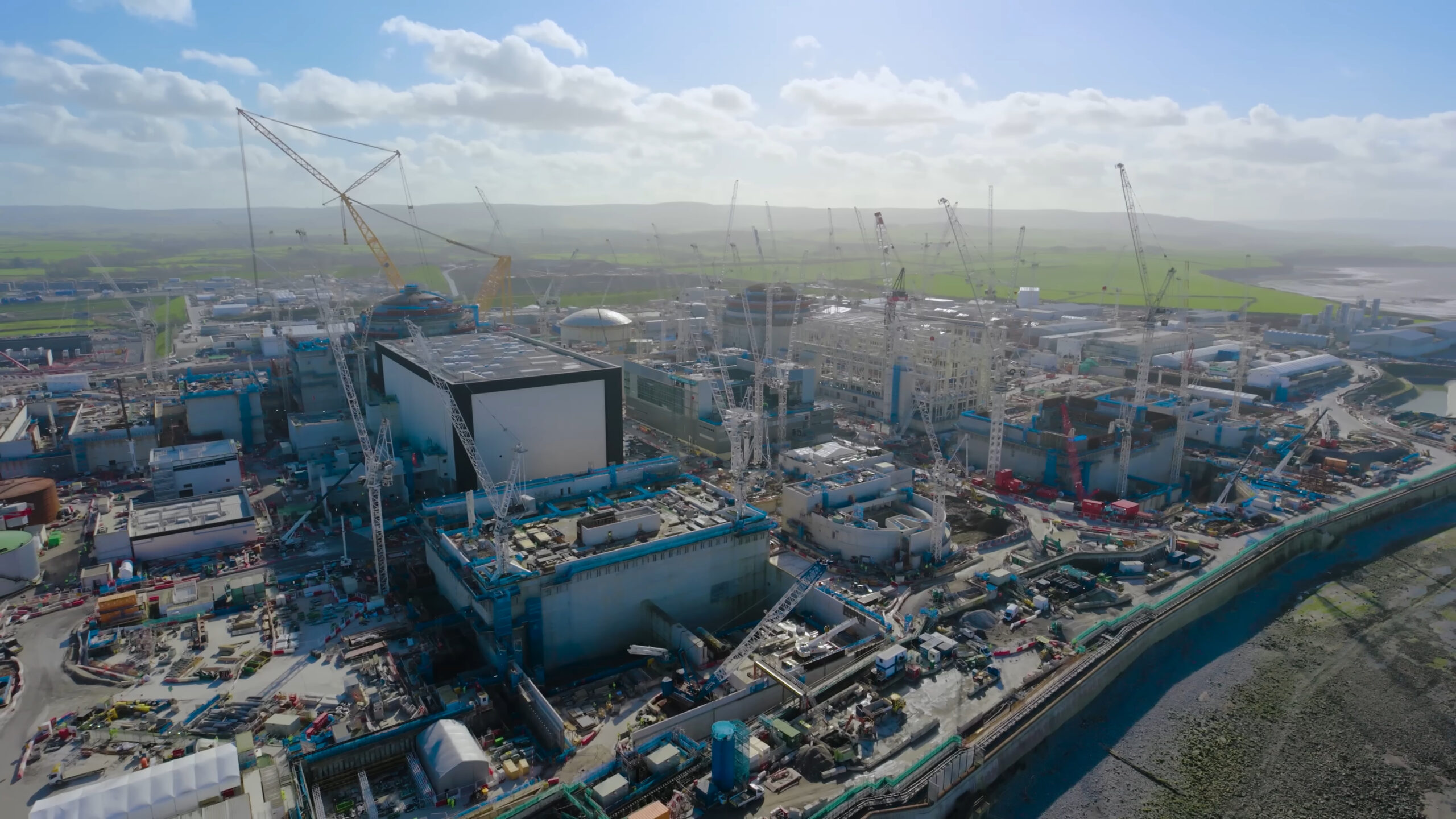

Hinkley Point C builds giant underwater tunnels to capture water and cool a mega nuclear power plant in the UK.
On the coast of Somerset, in southwest England, one of Europe’s most complex nuclear infrastructure projects is transforming the bottom of the Bristol Channel into an essential part of the future Hinkley Point C nuclear power plant. According to Jacobs, as of January 30, 2025, the project involves 8.8 kilometers of underwater tunnels, excavated almost 30 meters below the Bristol Channel, to capture and return gigantic volumes of water used in the cooling system of the two reactors to the sea.
The scale is impressive due to the daily volume moved. Jacobs states that the system was designed to circulate enough water to fill 4,200 Olympic swimming pools per day, while EDF reported, on February 15, 2024, that the intake and discharge structures include **5,000-ton** underwater heads and linings installed **25 meters below sea level**. All of this will be used to keep two EPR reactors under thermal control in a **3.2 GW** plant, capable of supplying low-carbon electricity to approximately **6 million homes** in the United Kingdom.
What appears to be just a tunneling project is, in practice, a critical piece of submarine engineering, nuclear energy, and operational safety built to function for decades.
-
U.S. City Builds Tiny Home Village on Water Company Land to House 136 Homeless People: Inside the Social Housing Units

-
Woman Turns Shipping Container into Home, Embraces Rural Life to Cut Monthly Expenses to Just Over $330
-
France Revamps 530 Social Housing Units with Large Balconies and Glass Facades Without Demolishing Existing Buildings

-
Facing high rent, couple transforms parents’ garage into a fully functional apartment, creating a complete home at a fraction of the market cost.




Hinkley Point C will be one of Europe’s largest nuclear power plants
The plant is being built in Somerset, in the British southwest. The venture belongs to EDF Energy and uses EPR model reactors, considered among the most powerful of the current nuclear generation.
When fully operational, the plant is expected to produce enough electricity to power millions of homes in the UK.

Nuclear power plants generate gigantic amounts of heat during operation. To prevent overheating, systems need to continuously remove thermal energy from the reactors. At Hinkley Point C, the chosen solution was to use water from the Bristol Channel on a colossal scale.
8.8 km underwater tunnels were excavated under the seabed
The project’s marine system is one of the most impressive aspects of the work. Approximately 8.8 km of underground tunnels were designed under the maritime channel to capture and return water used for cooling.
These tunnels function as giant arteries connecting the ocean directly to the nuclear infrastructure.

The operational figures impress even experts. According to information released by Jacobs, the cooling system will daily move volumes of water comparable to approximately 4,200 Olympic swimming pools.
This shows the dimension of the thermal energy produced by the nuclear reactors.
Seawater is used to remove heat from nuclear reactors
The system’s operation is based on thermal exchange. Water captured from the Bristol Channel circulates through cooling systems and absorbs heat generated by the reactors.
After that, it is returned to the sea within controlled temperature and environmental safety parameters. The construction of the tunnels required complex underground operations.
Specialized excavation machines worked below the seabed to open the channels connecting the plant to the ocean. This type of work requires extreme control due to pressure, infiltrations, and geological instability.
Nuclear project is part of British energy strategy
Hinkley Point C holds a strategic position in the UK’s energy policy. The country aims to reduce carbon emissions and replace part of its fossil fuel-based generation.
Nuclear energy appears as one of the alternatives to ensure continuous large-scale electricity supply.
The project uses EPR reactors, an acronym for European Pressurised Reactor. These models were developed to operate with high safety levels and large electricity generation capacity.
At the same time, they are known for their enormous technical complexity and high construction costs.
Bristol Channel became part of the plant’s operational infrastructure
The sea does not just function as a landscape around the nuclear power plant. In practice, the Bristol Channel has become an active component of the plant’s operational system. Without the continuous flow of seawater, reactor cooling would be unfeasible.

From the outset, Hinkley Point C generated intense debates in the UK. Critics point to high costs, delays, and environmental concerns related to the thermal impact on the marine environment.
Meanwhile, proponents argue that the project is fundamental to ensuring energy stability and reducing emissions.
Modern nuclear infrastructure relies on gigantic systems hidden from the public
Much of the population imagines nuclear power plants only by their reactor buildings. But modern projects rely on enormous invisible structures, including:
- underground tunnels
- marine systems
- transmission lines
- industrial cooling
- coastal protection
These elements represent an essential part of the operation. The volumes of water used in cooling help visualize the thermal power involved.
Nuclear power plants transform energy released by atomic fission into heat, then into steam, and finally into electricity. All of this requires continuous removal of enormous quantities of residual heat.
Project transforms seabed into an extension of a nuclear power plant
The tunnels excavated under the Bristol Channel show how modern infrastructure extends beyond the visible surface.


An important part of the operation takes place hidden beneath the ocean, connecting the sea directly to the nuclear systems. In practice, the seabed functions as an underground extension of the plant.
The project involves thousands of workers, billions of pounds in investment, and infrastructure on a gigantic scale.
In addition to the reactors, the work includes marine systems, tunnels, coastal structures, and complex electrical grids. This makes the plant one of the largest energy projects underway in Europe.
Extreme engineering aims to ensure electricity supply for decades
Hinkley Point C is expected to operate for many decades after commissioning. Therefore, the systems were designed to withstand continuous operation, marine corrosion, and severe conditions.
Durability is considered essential to make the undertaking economically viable. Most people will never see the underground systems responsible for cooling the reactors.
But it is precisely these hidden structures that enable the safe operation of the plant. Without them, it would be impossible to control the heat produced by a nuclear facility of this size.
The UK is using the ocean to keep one of Europe’s most complex energy machines alive
Perhaps the most impressive aspect is the integration between the sea, underground engineering, and nuclear energy.
The tunnels under the Bristol Channel show how modern infrastructure utilizes natural elements on an extreme scale to sustain gigantic operations.

Ultimately, the project transforms the ocean itself into a fundamental part of one of Europe’s largest energy machines.
Did you imagine that a nuclear power plant would need to daily pull enough water to fill thousands of Olympic-sized swimming pools through giant submarine tunnels hidden under the seabed?