






 Portuguese
  Spanish
  5 min of reading
  0 comments


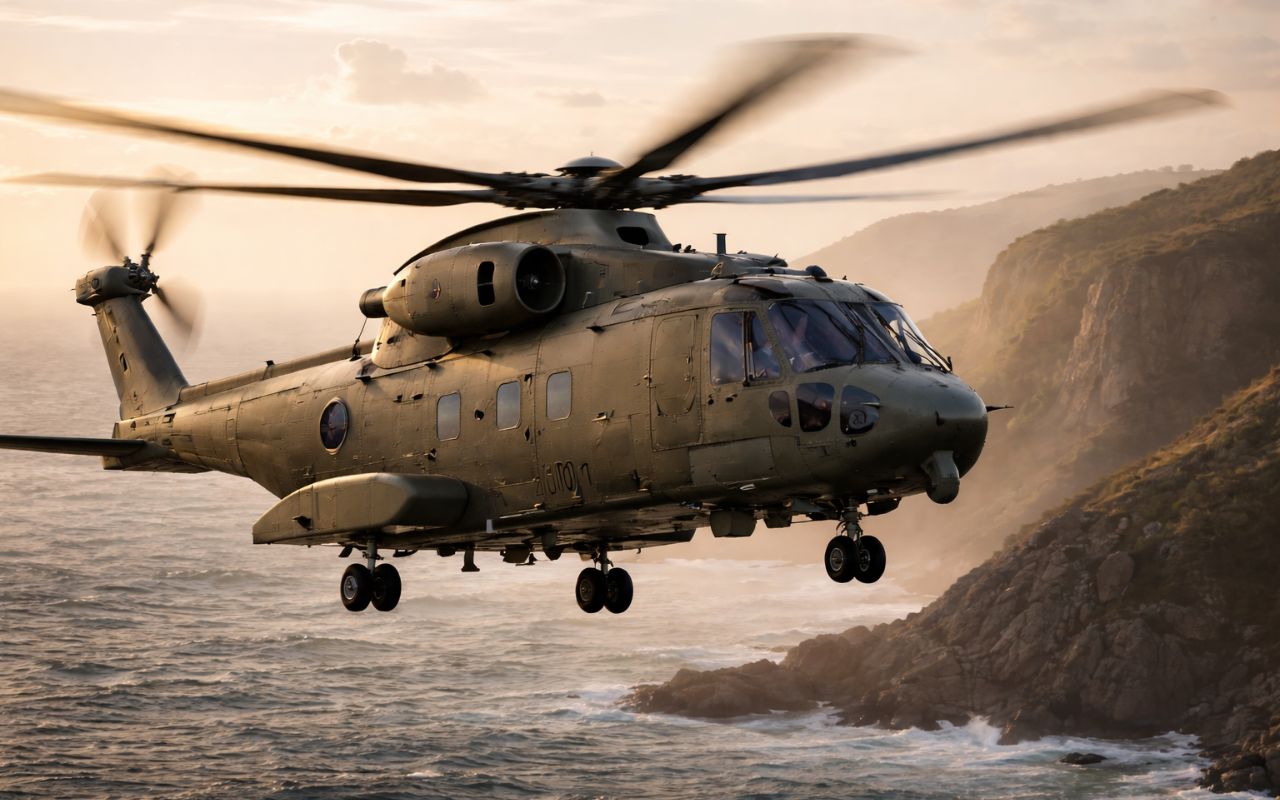
Know the AgustaWestland AW101, multifunction military helicopter, its history, specifications, and use by different countries.
Developed through international cooperation between the United Kingdom and Italy, the AgustaWestland AW101 helicopter emerged to meet specific military demands, especially in anti-submarine warfare, replacing older models like the Sea King. The project began in the 1970s, took shape with the creation of a joint venture in 1979, and made its first flight on October 9, 1987. Since then, the aircraft has undergone evolutions, name changes, and adoption by different armed forces around the world, being used in missions ranging from transport to search and rescue.
Origin of the AgustaWestland AW101 helicopter
The history of the model begins in 1977 when the British Ministry of Defence was looking for a replacement for its fleet of naval helicopters. The initial proposal came from Westland Helicopters, which developed the WG.34 project.
Meanwhile, Italy faced a similar need. The Italian Navy was also looking to replace its helicopters, which led to a rapprochement between the companies of the two countries. As a result, a formal partnership was established in November 1979, giving rise to EH Industries, responsible for leading the development.
-
The True Story of Beavers Parachuted into Idaho: A Post-WWII Mission Using Planes and Special Crates to Relocate 76 Animals to a Remote U.S. Region

-
Trailblazing Brazilian Mother of Three Becomes First Woman to Drive BYD Electric Truck, Inspiring Her Daughter to Follow Suit

-
6-Year-Old Boy Finds 1,000-Year-Old Viking Sword During School Activity in Norway

-
Mother Who Orchestrated Her Daughter’s Genius Education Enters History After Crime That Still Mystifies Spain


The initial name of the project was EHI01, but it was curiously changed: a swap between the letters “I” and “1” in an internal document resulted in the designation EH101, which was retained.
Evolution of the project and change to AW101
As studies progressed, it became clear that the helicopter could serve not only navies but also other types of operations. Thus, the project became more versatile, allowing adaptations according to the needs of each customer.
The official name change occurred in 2007 when it was renamed AgustaWestland AW101, reflecting the merger of the involved companies.
Technical specifications of the AgustaWestland AW101 helicopter
The Merlin HM1 model is one of the most well-known versions of the aircraft. Below are the main technical data organized:
Specification table
| Category | Details |
| Length | 19.30 m |
| Rotor diameter | 18.60 m |
| Height | 6.61 m |
| Empty weight | 10,500 kg |
| Maximum weight | 14,600 kg |
| Engines | 3 RTM322-01 turboshafts |
| Power | 5,100 hp per engine |
| Max speed | 277 km/h |
| Range | 740 km |
| Endurance | 8.3 hours |
| Max ceiling | 4,575 m |
Additionally, the helicopter is equipped with advanced radar, sonar, and electronic countermeasure systems, essential for complex military operations.
Operational capabilities and armaments
The AgustaWestland AW101 helicopter was designed to operate in different scenarios, especially in maritime missions. Among its main capabilities are:
- Anti-submarine warfare
- Troop and equipment transport
- Search and rescue (SAR and CSAR)
- Surveillance and reconnaissance
- Airborne early warning operations
In terms of armament, the aircraft can be equipped with:
- 7.62 mm machine guns
- Bombs and torpedoes (up to 960 kg)
- Depth charges
Use of the AgustaWestland AW101 helicopter by the United Kingdom
The United Kingdom was one of the first operators of the model. The Royal Navy ordered 44 units for anti-submarine missions.
The operational entry occurred as follows:
- First helicopter delivered: May 17, 1997
- Start of active service: June 2, 2000
- Deliveries completed: late 2002
Additionally, the British Air Force acquired 22 units for transport, expanding the use of the model in different roles.
Operation in Italy and diversification of roles
The Italian Navy received its first helicopter in January 2001. The order included 36 units, distributed in different versions:
- Anti-submarine
- Transport
- Surveillance
- Early warning
The deliveries were completed by the end of 2004, consolidating the use of the model in the country.

AgustaWestland AW101 in Portugal and SAR missions
Portugal incorporated the model on February 24, 2005, using 12 units in various operations.
The helicopters are operated by Squadron 751 and divided into three versions:
- SAR (search and rescue)
- CSAR (combat search and rescue)
- SIFICAP (fishing inspection)
A distinguishing feature of the Portuguese models is the tactical green and brown camouflage paint, unique among operators.
Additionally, there is a readiness system:
- Two helicopters on 30-minute alert
- One helicopter on 45-minute alert
The bases include Montijo, Lajes, and Porto Santo.
Attempt at presidential use in the United States
In 2001, an agreement was signed to market the helicopter in the United States under the name US101. The goal was to compete for the replacement of the presidential helicopter “Marine One.”
On January 28, 2005, the model was announced as the winner of the competition, surpassing Sikorsky’s design. The contract called for 23 units.
However, the program was later canceled due to costs deemed excessive, and a new competition was planned.
History in Canada and controversies
Canada had a complex relationship with the AgustaWestland AW101. Initially, there was an order in 1987 to replace old aircraft, but the contract was canceled in 1993, resulting in penalties exceeding the original amount.
Subsequently:
- In 1998, the country resumed acquisition for search and rescue
- The first delivery occurred in September 2001
- Entry into service happened the following year
Even so, the model faced competition from the Sikorsky S-92, which was ultimately chosen in 2004 for another program.
Operational issues were also recorded, including a high maintenance requirement and component failures.
Expansion to other countries and civil use
The helicopter has also been adopted by other nations:
- Japan: police use since 1998 and military from 2003
- Denmark: acquisition for search and rescue missions
The Tokyo Police was the first civilian customer, marking the model’s entry outside the military environment.
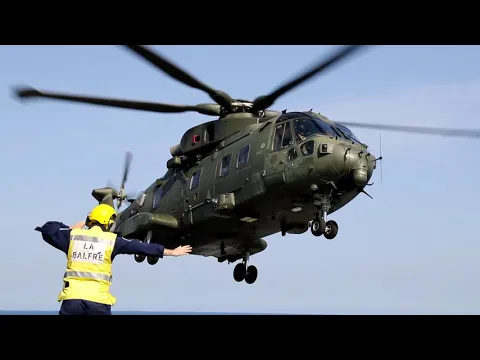

Features that marked the project
The development of the AgustaWestland AW101 was guided by several key factors:
- Unprecedented international cooperation between the United Kingdom and Italy
- Adaptability to different missions
- Integration of radar and sonar technologies
- Use in maritime and land environments
These features allowed the model to be utilized by different forces around the world, with variations according to operational needs.
Over the decades, the AgustaWestland AW101 helicopter has established itself as a multifunctional platform, the result of a joint project that evolved to meet various military and civilian demands. Its trajectory includes name changes, international disputes, contract cancellations, and adoption by various countries, reflecting the complexity and importance of the program within aviation.






Be the first to react!