Portuguese
  Spanish


Army and Petrobras project transforms heavy refining residue into a base for carbon fiber and aims for technological autonomy in sensitive areas of Brazilian Defense and industry.
The Army Technological Center is developing research to produce carbon fiber from petroleum pitch, a dark and heavy material that remains in the refining process.
The initiative, called TECFIBRA, is supported by Petrobras and funded by Finep and the National Fund for Scientific and Technological Development.
In practice, the project attempts to solve a known problem in high-tech sectors: Brazil still depends on external suppliers to obtain advanced materials used in military equipment, aircraft, industrial structures, cars, and energy systems.
-
Free Internet Begins Testing in São Paulo Metro Stations, Network-Wide Rollout Expected by 2026

-
Man Transforms Desert Ranch into Forest by Harvesting Rainwater, Captures 15,000 Gallons in One Downpour, Builds 100 Dams with 6 Volunteers

-
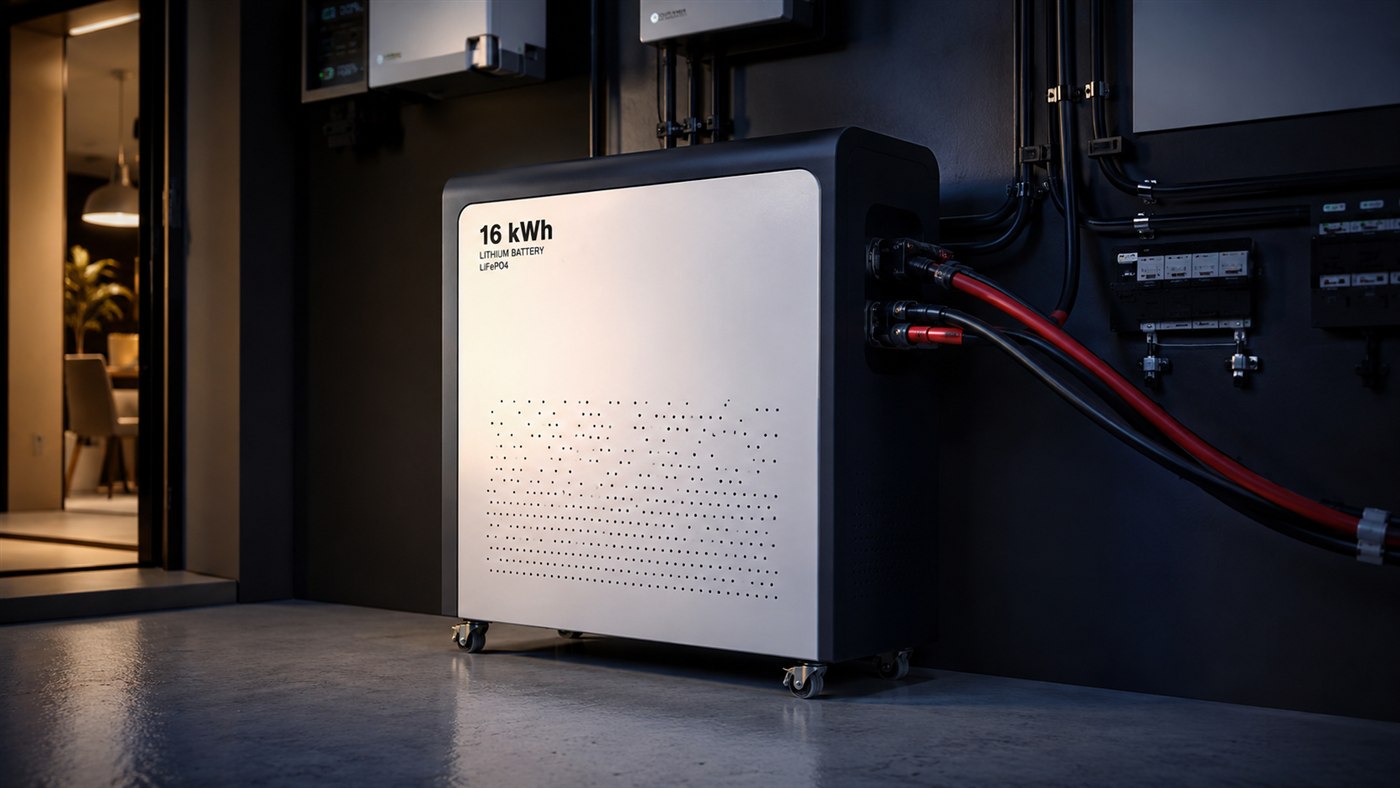
16 kWh Solar Battery Powers Entire Home Off-Grid, Lasts Over 22 Years with 8,000 Cycles, Delivers 10,000 Watts for Appliances
-
Drones Can Now Detect Underwater Mines Hidden by Sand and Algae Using Aerial Images, Special Light, and AI




The technology, however, is not yet in commercial production.
Public records of the agreement show that the project is in the research, development, and scale-up phase, with a term from December 23, 2022, to December 23, 2026, and a value of R$ 29,576,561.15.
This means that the country does not yet have a national factory operating on a large scale with this carbon fiber.
What exists so far is a technological route in development to transform a petroleum residue into a material of greater industrial value.
How petroleum enters carbon fiber production
Carbon fiber is known for combining two highly sought-after characteristics by the industry: low weight and high strength.
Therefore, it appears in sectors where every kilogram makes a difference, such as airplanes, racing vehicles, wind turbines, military equipment, engineering structures, and components used in extreme environments.
Today, a large part of commercial carbon fiber is made from a raw material called polyacrylonitrile, known by the acronym PAN.
The Army’s project follows another path: it uses pitches derived from heavy fractions of petroleum, materials with high carbon content and availability within the refining chain.
Petrobras stated, in a communication reproduced by the sectoral press, that the proposal is to take advantage of a residue from the refining process to generate a product of higher added value.
The then Director of Innovation and Technology of the state company, Juliano Dantas, stated that petroleum is a “fundamental input” for advanced products, such as carbon fiber.
The statement helps explain the company’s interest in the project.
In addition to supplying fuels, petroleum can also serve as a base for materials used in high-performance technologies.
What the Army Intends to Develop
TECFIBRA is not just looking to create small samples in the laboratory.
The work plan of the agreement includes optimizing the production process, scaling up, spinning cables with a thousand filaments, and specifying a pilot plant for research and development of continuous production.
This stage is important because there is a significant difference between making a material work in the laboratory and producing the same material regularly, with quality and viable cost.
In the case of carbon fiber, the process involves several technical phases, such as raw material preparation, spinning, stabilization, carbonization, graphitization, surface treatment, and performance testing.

Each of these stages influences the final quality of the material.
If the fiber does not meet the necessary standards of strength, rigidity, weight, and thermal stability, it cannot be used in more demanding applications.
Why the Technology Interests Defense
The military area depends on lightweight, strong, and reliable materials.
These characteristics can influence the performance of vehicles, drones, aircraft, embedded systems, protective structures, and other operational equipment.
The TECFIBRA work plan classifies carbon fiber as a dual-use material, meaning it has both civilian and military applications.
It also states that, until the project’s development, Brazil did not have national technology for commercial-scale carbon fiber production, which kept the country dependent on imports.
This dependency is a sensitive point for Defense.
When a country needs to purchase strategic materials abroad, it may face trade restrictions, technological access limitations, price increases, and supply difficulties in times of crisis.
Therefore, mastering a national production route is treated as a way to expand technological autonomy.
Even so, public documents do not confirm that this autonomy has already been achieved.
What they show is ongoing research, with planned stages to reach a pilot plant and, in the future, allow technology transfer to national companies.
Five Effects Related to the Project
What exists are public records of the project, institutional communications, and information from the agreement that allow us to point out expected effects for Defense and the industry.
The first effect is the attempt to reduce dependency on imports of a material considered sensitive.
The second is the strengthening of the Defense Industrial Base, formed by companies, research centers, and institutions working with technologies related to national security.
Another point is the training of specialized labor.
Projects of this type require researchers, engineers, technicians, and laboratories capable of handling advanced materials, chemical processes, and performance tests.
There is also the potential gain for the oil chain.
If the technology advances, heavy fractions of refining could gain a higher value-added application, instead of remaining associated only with uses of lower industrial complexity.
The fifth effect is in civilian applications.
Petrobras itself cites potential uses in the automotive, aerospace, oil and gas, military, and structural engineering industries.
The limit between research and mass production
Despite the potential described in the project, there is still no public confirmation of large-scale industrial production in Brazil.
The available documents indicate that TECFIBRA is in the development phase, scaling up, and planning a pilot plant.
This difference needs to be clear to the reader.
Brazil has not yet started to compete in the global carbon fiber market with a consolidated production chain.
What the country is developing is a technology that can open this path, if the next stages are completed and the industry can absorb the process.
The work plan itself states that products and pilot batches depend on subsequent phases.
It also points out that the transfer to national companies will be necessary to install production units on an industrial scale.
Without this step, the research remains relevant from a technological point of view, but it still does not turn into a regular commercial offering.
Why few countries dominate this material
The production of carbon fiber requires precise control of raw material, temperature, spinning, and chemical treatment.
It’s not enough to have oil or pitch available.
It is necessary to master the complete process to obtain fibers with repeatable quality and properties suitable for the final use.
The TECFIBRA plan states that the manufacturing of carbon fibers from mesophase pitches is restricted to a few countries, mentioning the United States and Japan.
The document also notes that process and product data are usually kept confidential by manufacturing companies.
This context helps explain why the technology receives attention from institutions related to Defense and innovation.
Advanced materials do not depend solely on raw materials; they depend on accumulated knowledge, production scale, quality control, and industrial capacity.
What is needed for the national fiber to leave the laboratory
The next barrier is in transforming research into continuous production.
For this, the project needs to advance in the pilot plant, test larger scale batches, prove performance, and attract companies capable of bringing the technology to the industrial park.
This path usually requires time, investment, and technical validation.
It also depends on real market demand, as carbon fiber needs to compete with international suppliers already producing at scale.
If this transition occurs, Brazil could have its own route to manufacture carbon fiber from a petroleum byproduct.
Until then, TECFIBRA should be understood as an ongoing technological development project, with the potential to reduce external dependencies, but still without confirmation of consolidated commercial production.