





 Portuguese
  English
  Spanish
  5 min of reading
  0 comments


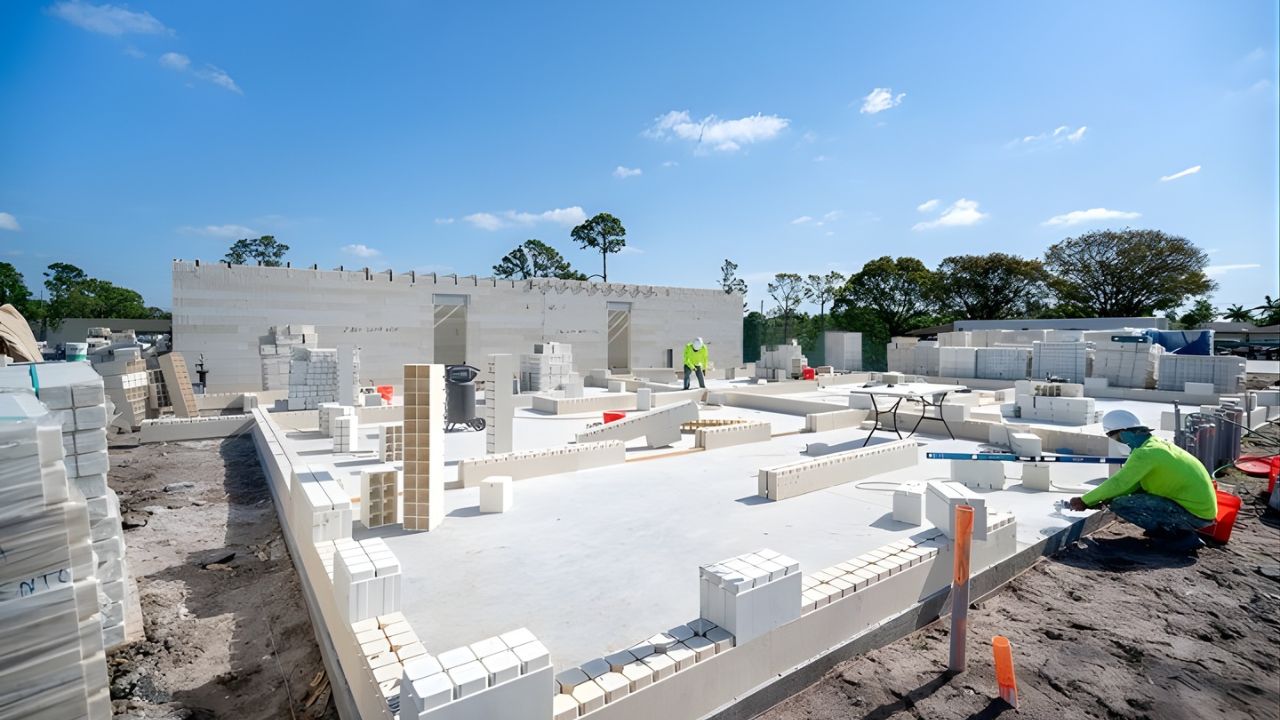
Interlocking structural block technology promises to reduce cost and construction time by up to 20% and raise buildings in weeks.
In 2023, the American company RENCO put to the test a concept that has been a promise in the construction sector for decades: raising entire buildings using structural blocks that fit together like giant pieces, eliminating traditional stages of construction. The test took place in the state of Florida, in the United States, with the construction of the Lakewood Village project, a residential complex of multiple buildings that drew attention not only for the final result but mainly for the process used.
According to data released by the company itself and by associations in the composites sector, the project was completed in less than eight weeks for the main structural phase, using a team of only 11 workers. This number directly contrasts with conventional construction models, which require larger teams, more stages, and longer execution times.
System replaces traditional concrete with interlocking structural blocks
The core of the technology developed by RENCO is in a material called MCFR, an acronym for a composite that combines recycled fiberglass, plastic, limestone, and resin. Unlike traditional concrete, this material does not depend on curing, does not require complex forms, and can be molded into structural blocks with precise fit.
-
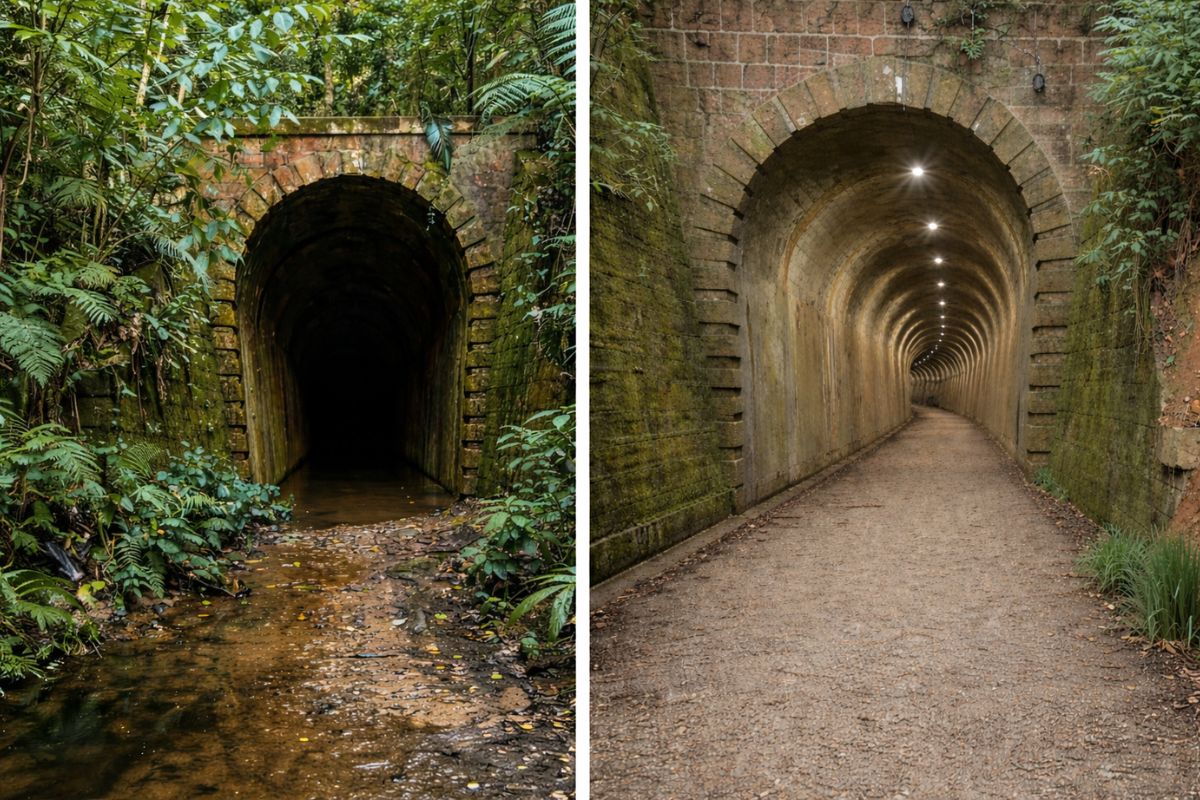
Reopened on April 10, the largest tunnel of the old railway in Santa Catarina, located in Ribeirão Carvalho, measures 260 meters and has gained access and lighting after decades of abandonment since 1971, now becoming part of the municipality’s tourist itinerary.
-
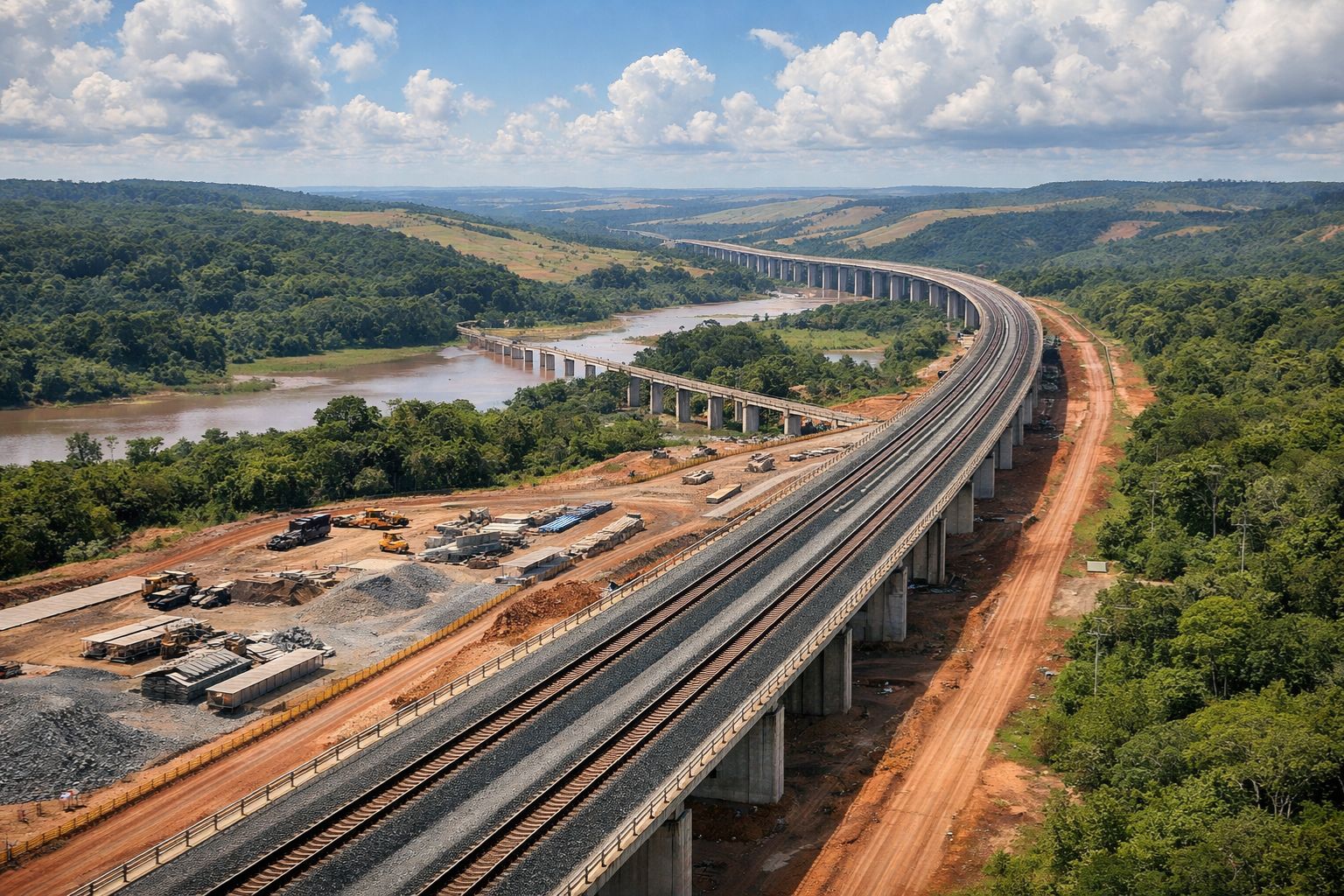
The mega railway of 933 kilometers and 25 billion reais that was halted for 12 years finally receives the green light from the TCU, but still faces a battle in the STF due to indigenous lands and a national park.
-
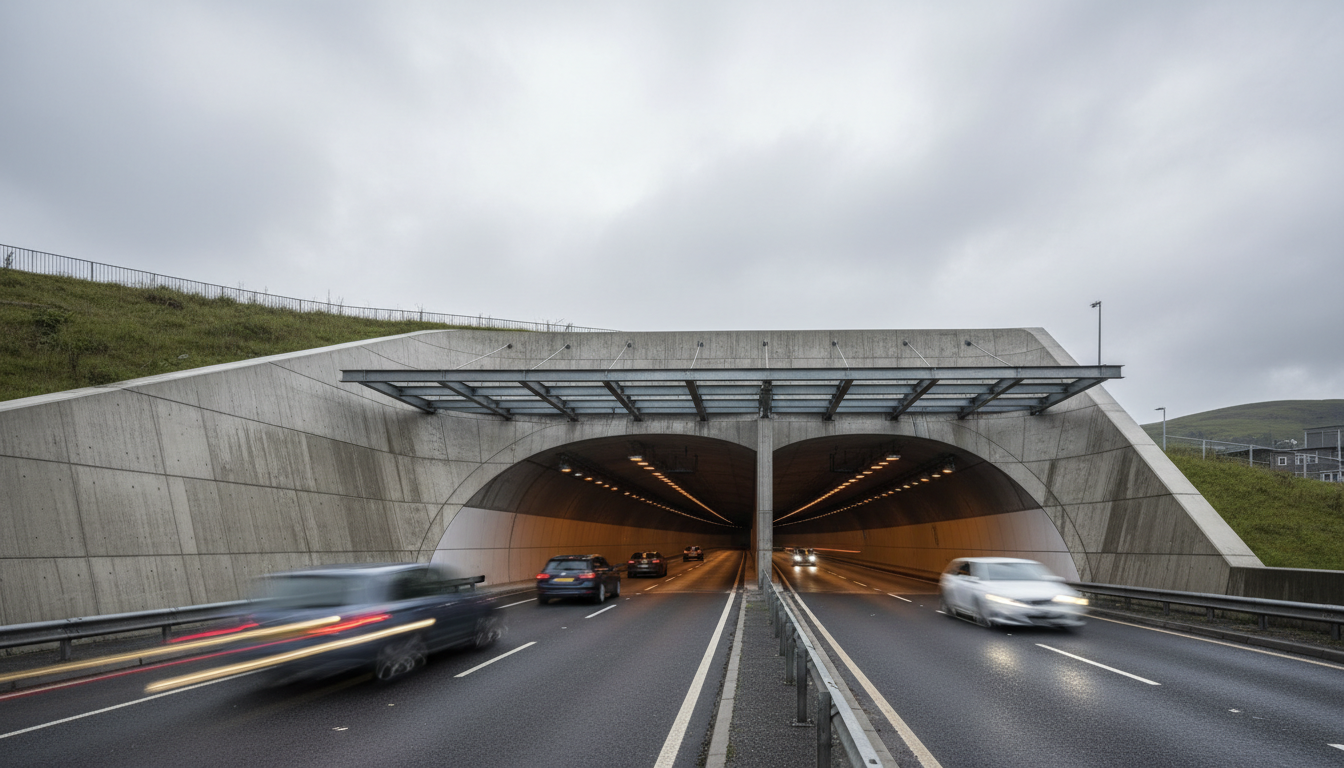
After 16 years of planning, the United Kingdom has just begun construction on the country’s largest road tunnel, a 4.2-kilometer passage under the River Thames that will cost £9 billion and use green hydrogen in its construction.
-
With an investment of R$ 34.9 million, a new overpass at CIC will begin in May and promises innovation in traffic in Florianópolis with the separation of flows, more lanes on Avenida da Saudade, and new bridge widenings.

These blocks function as pieces of a modular system. They are produced with industrial tolerances and designed to connect directly, without the need for structural mortar between the joints.


In practice, this eliminates one of the most critical stages of conventional construction: the waiting time for concrete curing, in addition to reducing the variability associated with manual execution.
Construction with few workers changes the logic of construction sites
One of the most striking data from the project carried out in Florida is the size of the team involved. While traditional building projects require dozens or even hundreds of workers at different stages, RENCO’s system was executed with only 11 people in the main structural phase.
This reduction occurs because the process ceases to depend on multiple simultaneous specializations. There is no need for separate teams for forming, concreting, curing, shoring removal, and complex structural adjustments.
The construction operates more like an assembly line than a traditional job site, with blocks being positioned, aligned, and locked sequentially.
Execution time can drop drastically compared to the conventional method
The company claims that the system can reduce the total construction time by up to 20% compared to traditional methods, especially in regions prone to extreme weather events, such as hurricanes.
In the case of Lakewood Village, the main structure was raised in less than eight weeks, a significantly shorter timeframe than observed in conventional projects of similar type.
This time reduction not only impacts the schedule but also the indirect costs of the project, such as equipment rental, logistics, and financing.
System has already received approval in building codes in the United States
One of the factors that differentiate this technology from other experimental proposals is the fact that it has already been approved in relevant building codes.
The RENCO system has obtained validation within the standards of the International Building Code (IBC) and the International Residential Code (IRC), two of the main regulatory benchmarks in the sector in the United States.

This approval is a critical point because it indicates that the material and method meet the structural, safety, and performance requirements necessary for real use in buildings, and not just in prototypes.
Material offers structural resistance and durability in extreme environments
The MCFR composite was designed to withstand severe environmental conditions, including regions prone to hurricanes, a determining factor for its initial application in Florida.
According to data released by the company, the material has high resistance to corrosion, moisture, and chemical degradation, in addition to not undergoing the same cracking processes typical of concrete.
This can reduce maintenance costs over the lifespan of the building, an aspect often overlooked in initial cost comparisons.
Reduction of waste and waste is one of the main arguments of the system
Another relevant point is the reduction of waste on the construction site. As the blocks are manufactured in a controlled environment and arrive ready for assembly, there is less waste generation, less water use, and less need for rework.
This brings the construction industry closer to a more industrialized model, with greater predictability and less variability, something that has been pointed out for decades as one of the major challenges of the sector.
The adoption of interlocking structural blocks also directly impacts the design process. Architects and engineers start working with standardized modules, which can facilitate the compatibility of systems and reduce execution errors.
On the other hand, this also requires adaptation in design methods, as geometric flexibility may be lower compared to structures molded on-site.
Modular construction gains strength in a sector pressured by costs and deadlines
The advancement of technologies such as those from RENCO occurs in a context of increasing pressure on the construction sector.
Material costs, scarcity of skilled labor, and the need for greater productivity have led companies to seek more efficient solutions.
Modular and industrialized construction emerges as a direct response to these challenges, offering greater control over deadlines, costs, and quality.
Technology still faces challenges for large-scale adoption
Despite advancements, the system still faces barriers to large-scale adoption. Among the main challenges are the need to adapt production chains, acceptance by the market, and initial implementation costs.
Additionally, the logistics of transporting structural blocks and adapting to different international standards may limit immediate expansion.

The case of RENCO illustrates a broader trend of transformation in the construction industry. Just as other industries underwent industrialization processes throughout the 20th century, the building sector is beginning to incorporate similar principles.
Standardization, prefabrication, and rapid assembly are replacing artisanal processes, reducing uncertainties and increasing efficiency.
Do you believe that interlocking systems can replace traditional concrete in the future
The evolution of technologies such as interlocking structural blocks raises a central question for the sector. If faster, cleaner, and more predictable systems become economically competitive, the traditional model based on site-cast concrete may lose ground.
In light of these changes, is the construction industry about to undergo a transformation similar to that which other industries have already faced?







Seja o primeiro a reagir!