Portuguese
  Spanish


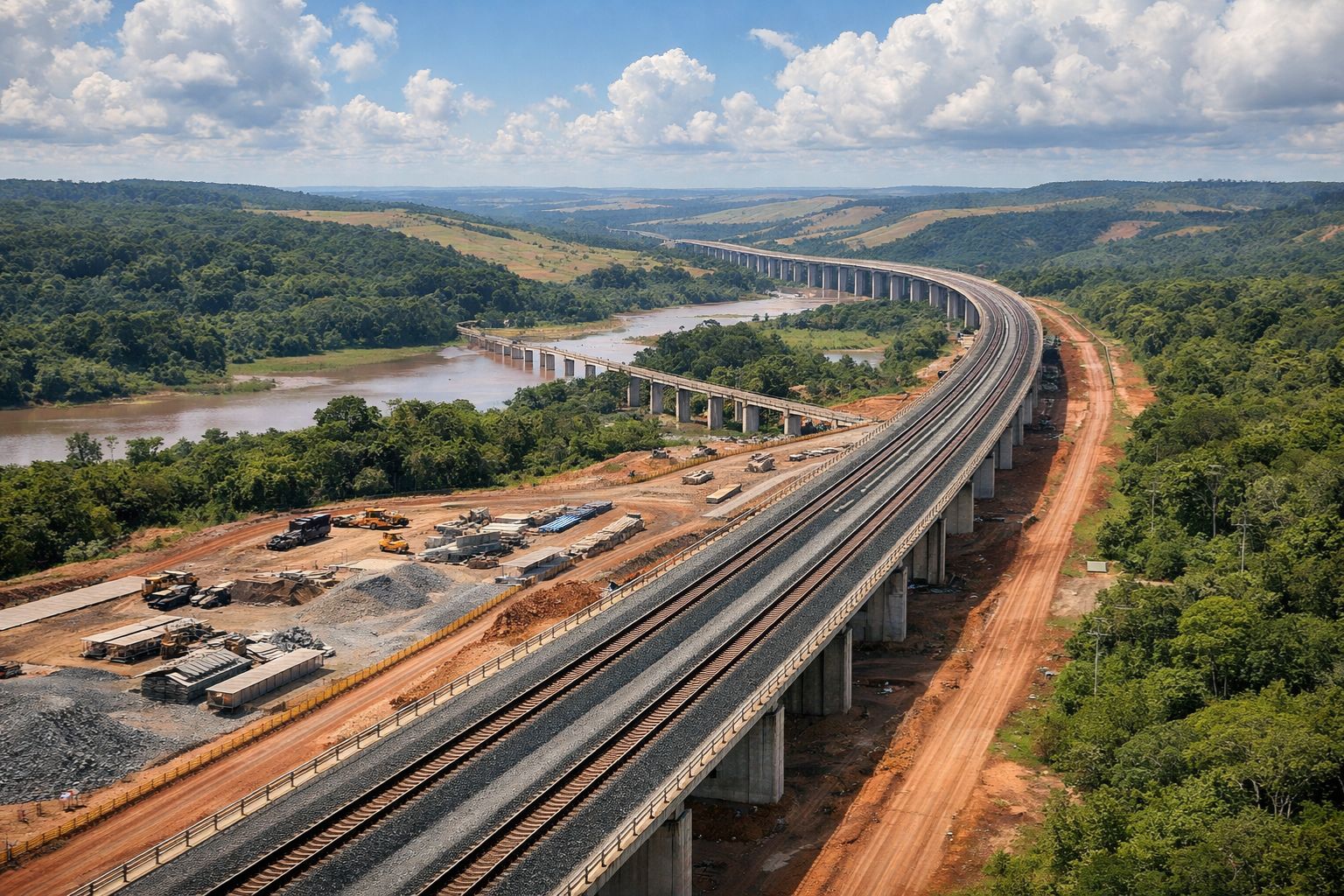

The mega railway Ferrogrão, 933 km long between Sinop (MT) and Itaituba (PA), had its concession process unlocked by the TCU after 12 years of paralysis. The investment of R$ 25.20 billion promises to generate 385 thousand jobs, but the project still depends on a decision from the STF regarding the reduction of the Jamanxim National Park and faces resistance from indigenous communities.
The mega railway most ambitious in Brazil has just taken a decisive step to come to fruition. On Monday (13), the acting minister of the TCU, Marcos Bemquerer Costa, authorized the continuation of the preparatory acts for the concession of Ferrogrão (EF-170), a railway line of 933 kilometers that will connect Sinop, in Mato Grosso, to Itaituba, in Pará, with an estimated investment of R$ 25.20 billion. The process had been stalled for about 12 years, and in February, the TCU itself had maintained the suspension due to lack of socio-environmental viability. The decision on Monday reverses this scenario, but does not eliminate the obstacles that the mega railway still faces.
The main obstacle now lies with the STF. The Court is assessing the validity of the law that reduced about 862 hectares of the area of the Jamanxim National Park, in Pará, to enable the construction of the mega railway. Indigenous communities are protesting against the project, and the Federal Public Ministry points out that the route of Ferrogrão has potential impact on 48 indigenous territories. The trial is expected to resume next week, following a request for a review by Minister Flávio Dino in October. The rapporteur, Alexandre de Moraes, voted for the validity of the law and was joined by then-minister Luís Roberto Barroso, but the final decision has yet to be made.
What is the mega railway Ferrogrão and what is it for
According to information from the portal ndmais, named Ferrogrão, the EF-170 was designed to consolidate a new railway corridor for exporting soy and corn through the so-called Northern Arc. The mega railway would connect the grain-producing region of the Midwest to the state of Pará, flowing into the Port of Miritituba, from where the production would continue by river and sea to international markets. The projected demand is 33.54 million tons by 2030 and 40.6 million tons by 2050, volumes that justify the billion-dollar investment.
-
28-meter, 156-ton titans traveled 20,000 km from China to the port of Santa Catarina: Portonave received 7 fully electric megacranes, part of a R$ 210 million package, to double container handling.

-
They exchanged the idea of a large house for a 35 m² warehouse, spent US$ 12,000 on the structure, and created a tiny house in Colorado with space to live and work.

-
A newly opened terminal in the middle of the Amazon has begun transporting soy and corn through Amapá, eyeing the queue of ships that is congesting the ports in the South.

-
Goodbye to old tiles: renovation technique without construction transforms bathrooms in a few hours, eliminates debris, and reduces costs with coverings using special paints, high-resistance adhesives, and modern finishes that completely renew the space.



The main line of 933 kilometers would be complemented by two branches: one of 32 kilometers between Itaituba and Santarenzinho, a district of Rurópolis (PA), and another of 11 kilometers in the municipality of Itaituba. According to ANTT (National Agency for Land Transport), the mega-railway would create about 385,828 direct, indirect, and income-effect jobs, the latter generated by consumption in local commerce and services in the regions crossed by the railway. The Ministry of Transport argues that the project would reduce carbon emissions by alleviating truck traffic on BR-163, one of the most congested highways in the country.
Why the mega-railway stayed stopped for 12 years
The Ferrogrão project has faced obstacles since its inception. The mega-railway was included in the federal government’s concession program over a decade ago, but the TCU’s analysis was stalled due to technical, environmental, and legal issues that prevented the advancement of the bidding process. The main obstacle was the lack of proven socio-environmental viability, a requirement that the court considered essential before authorizing the concession of a project of this magnitude.
In February 2026, the TCU had maintained the suspension of the analysis for exactly that reason. The decision on Monday by Minister Marcos Bemquerer Costa does not mean that all pending issues have been resolved, but it authorizes the preparatory procedures for the concession of the mega-railway to advance while environmental and legal issues continue to be evaluated. In practice, the government can now prepare the bidding notice and the necessary studies, but the effective concession still depends on resolving the impasses in the STF and meeting environmental requirements.
The conflict in the STF that could determine the fate of the mega-railway
The Federal Supreme Court is analyzing the constitutionality of the law that reduced about 862 hectares of the area of the Jamanxim National Park to make way for the mega-railway. The reduction of the park is considered essential for the viability of the route, but environmentalists and indigenous communities argue that the precedent is dangerous: if the government can reduce a conservation unit to enable an infrastructure project, no national park is safe.
The trial has already begun and the partial score favors the project. The rapporteur Alexandre de Moraes voted for the validity of the law, followed by then-minister Luís Roberto Barroso. However, Minister Flávio Dino requested a review of the records in October, interrupting the vote. The resumption is scheduled for next week, and the result will determine whether the mega-railway can proceed with the planned route or will need to seek alternatives that avoid the park and indigenous territories, which could further increase costs and delay the project.
The impact on indigenous communities and what the MPF says

The Federal Public Ministry points out that the mega-railway has potential impact on 48 indigenous territories along its 933-kilometer route. Indigenous communities in the region are protesting against the project, arguing that the construction and operation of the railway will affect their ways of life, including access to natural resources, noise, fragmentation of forested areas, and increased flow of people and vehicles in regions that have so far been relatively isolated.
The indigenous resistance is not just local. Organizations like the Socioenvironmental Institute (ISA) document the opposition of the communities and question whether the impact studies were conducted with the necessary depth. The clash between the economic interest of an export corridor that would move tens of millions of tons per year and the territorial rights of communities that have inhabited the region for centuries is the type of dilemma that Brazil repeatedly faces in infrastructure projects in the Amazon, and the mega-railway is the most recent and most expensive case of this tension.
What the mega-railway represents for agribusiness and for Brazil

image: Disclosure/Ministry of Transport
For the productive sector, the mega-railway is the missing piece in the logistical puzzle for grain export in the north of the country. The current route forces production from the Midwest to travel thousands of kilometers on congested highways to the ports in the Southeast and South, increasing freight costs and reducing the competitiveness of Brazilian products in the international market. The Ferrogrão would create a direct alternative through the Northern Arc, shortening distances and replacing trucks with trains, a mode of transport significantly cheaper per ton transported.
The environmental argument is also used in favor of the mega-railway. The Ministry of Transport estimates that replacing trucks on BR-163 with rail transport would reduce carbon emissions associated with grain export, a benefit that proponents of the project consider paradoxical in light of environmental criticisms. The question is whether the logistical and emission gains offset the impacts on the Jamanxim National Park and the 48 affected indigenous territories, a calculation that the Supreme Federal Court and Brazilian society are still making.
The 933 km Ferrogrão mega-railway and R$ 25 billion finally advanced in the TCU after 12 years, but still depends on the STF. Do you think Brazil needs this railway even with the environmental and indigenous impact? Leave your opinion in the comments.