






 Portuguese
  Spanish


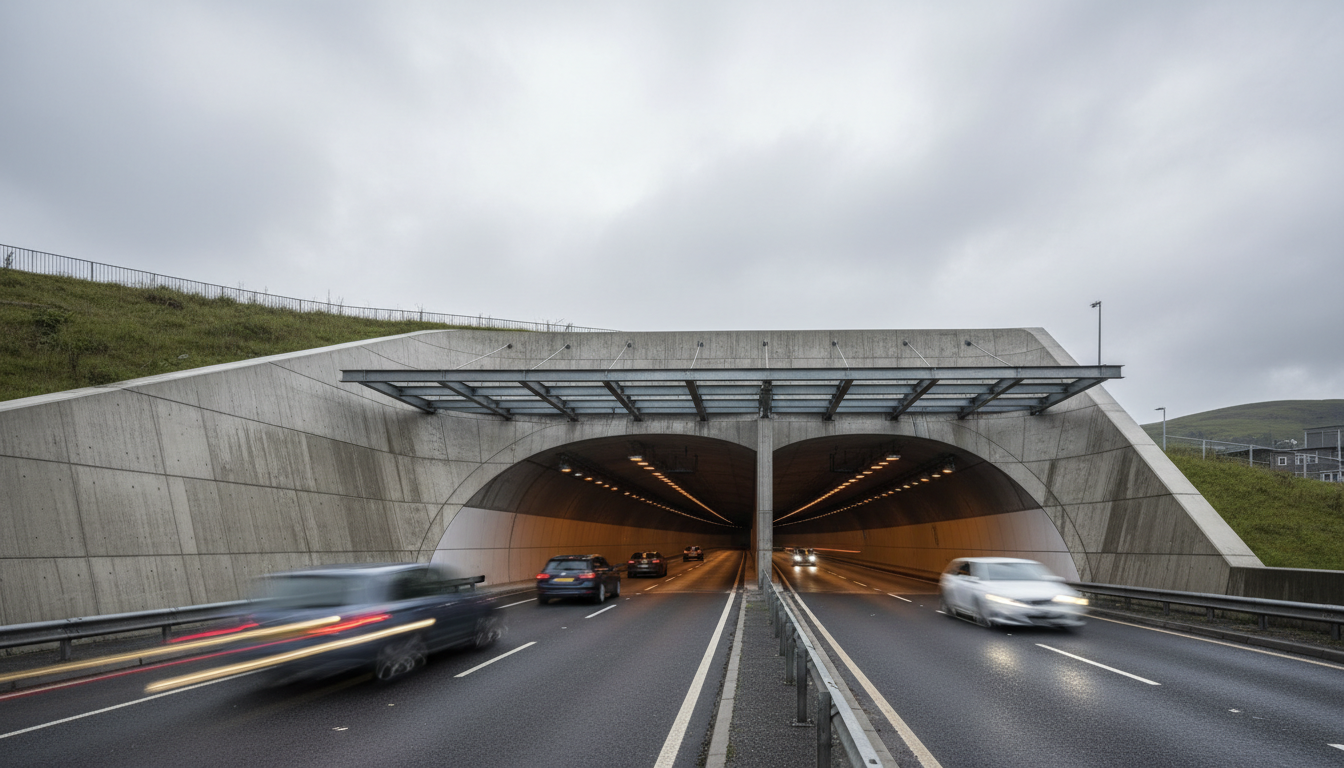

The Lower Thames Crossing will be the largest road tunnel in the UK, with 4.2 kilometers under the Thames and a budget that could reach £11 billion
After 16 years of planning, public consultations, and approvals, the UK has finally begun work on the largest road project in its history.
The Lower Thames Crossing consists of two parallel tunnels of 4.2 kilometers each, excavated under the River Thames, connecting Essex to the north and Kent to the south.
The total cost varies between £9 billion and £11 billion, depending on the source consulted.
-
Brazilian Artisan Transforms Forest Waste into $400 Necklaces Sold at MASP and Exported to London

-
Retired Engineer Transforms Boeing 727 into a 99 m² Home in the Brazilian Forest

-
Santa Catarina Launches $1.4 Billion, 145-Kilometer Highway Project with Six Lanes and Speeds Up to 120 km/h

-
Couple Transforms 1913 School into 370 m² Home with Four Bedrooms After $175,000 Purchase and Three Years of Renovation




The complete route extends for 23 kilometers and promises to nearly double the crossing capacity to the east of London.
Preliminary works began in March 2026, with the main construction and tunnel excavation scheduled for 2028.
The Lower Thames Crossing will reduce congestion at the Dartford Crossing by 50%, the most overloaded crossing in England
The project arises from the urgent need to relieve the Dartford Crossing, the existing bridge and tunnel that have been overloaded for decades.
With the new route, the crossing capacity of the Thames to the east of London will nearly double.
According to the project, congestion at the Dartford Crossing is expected to decrease by 50%.
About 50% of the workers will come from a 20-mile radius, and at least £1 in every £3 of the construction budget will be spent on local small and medium-sized enterprises.

Green hydrogen and electric machinery will make the Lower Thames Crossing the greenest road in British history
The project is not only large — it is ambitiously sustainable.
Shaun Pidcock, delivery director of the Lower Thames Crossing at National Highways, stated that the project will be “the greenest road in Britain.”
The construction will utilize 6 hydrogen generators, representing the largest volume of low-carbon hydrogen ever purchased for an infrastructure project.
Additionally, the project plans to create 1,000 hectares of new ecological habitat.
The areas include wetlands for migratory birds, public parks such as Tilbury Fields in Thurrock and Chalk Park in Gravesham, as well as trails for pedestrians, cyclists, and horse riders.
The reduction in the number of trucks during the construction — from 17,500 to 9,500 — shows the concern to minimize environmental impact during construction.
- Tunnel: 4.2 km (double), largest road tunnel in the UK
- Total route: 23 km connecting M25 to A2/M2
- Cost: £9-11 billion
- Habitat: 1,000 hectares of ecological area
- Jobs: thousands, with 50% local hiring
- Opening: early 2030s

From March 2026 to opening in the 2030s: the complete timeline of the Lower Thames Crossing
The main contract was awarded to the Bouygues Travaux Publics–Murphy joint venture in December 2023.
In 2025, the government confirmed financial support and planning approval.
Preliminary works began in March 2026, including archaeological excavations at Coalhouse Fort, where 50 archaeologists are working.
This phase also involves protecting existing infrastructure, relocating utilities, and setting up construction sites in East Tilbury and Thong.
The main construction and tunnel excavation will begin in 2028, with opening expected in the early 2030s.
Infrastructure projects of this magnitude, such as the £300 million project to bring water to São Paulo using a mountain tunnel, demonstrate that solving transport and infrastructure bottlenecks requires decades of planning and billions in investment.
Still, as with megaprojects worldwide, delays are possible.

What could go wrong: cost and timeline discrepancies surround the Lower Thames Crossing
Like any megaproject, the Lower Thames Crossing presents uncertainties.
Cost estimates vary: some sources point to £9 billion, while others go as high as £11 billion.
Opening dates also fluctuate between “early 2030s” and “mid-2030s.”
Funding partly depends on private investment, which is still being raised.
There is no public data on organized community opposition, although projects of this scale invariably generate impacts during construction.
However, National Highways reinforces its commitment to sustainability and local job creation.
Barbour ABI tracks project updates with detailed technical data on timelines and bids.
If completed as planned, the Lower Thames Crossing will transform the infrastructure of southeast England for the coming decades.


