






 Portuguese
  Spanish


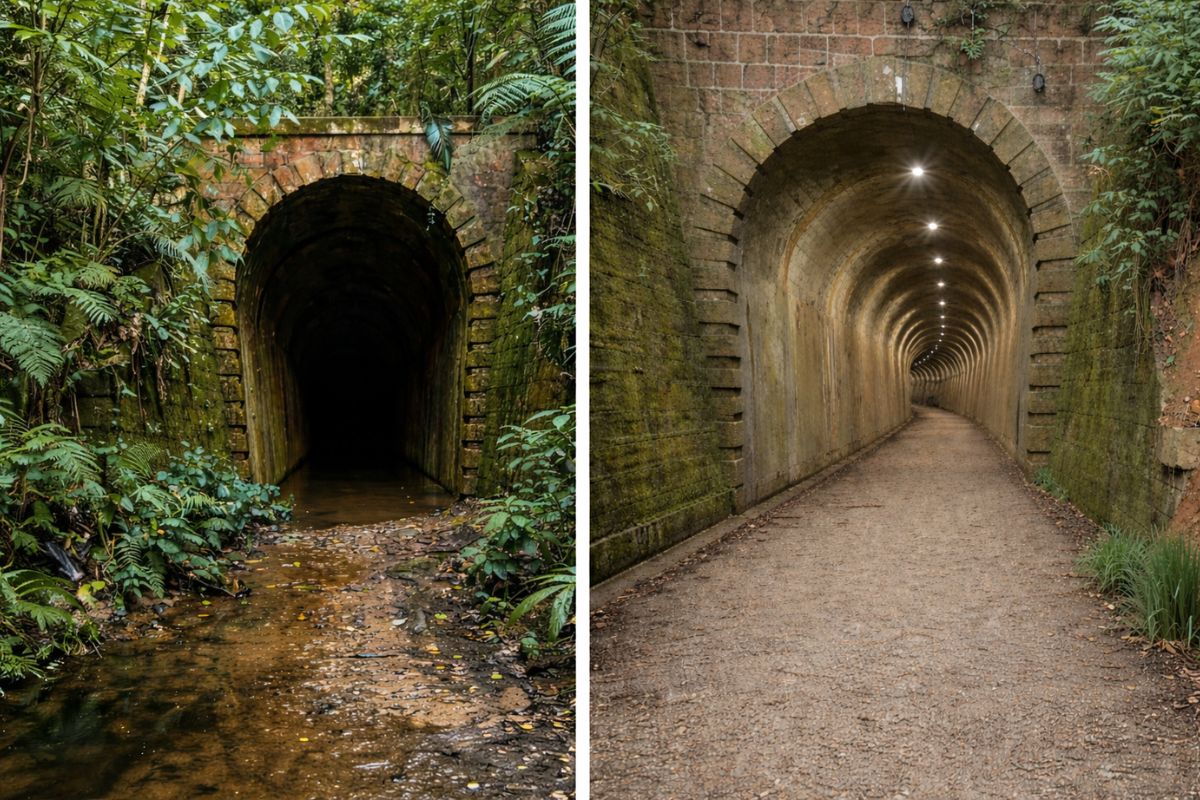
With 260 m, the tunnel inaugurated in 1954 was abandoned after the deactivation of the railway in 1971, underwent cleaning, structural improvements, and now welcomes visitors with more safety
The largest tunnel of the former Santa Catarina railway, located in Ribeirão Carvalho, was reopened on 04/10 after decades of abandonment. The structure, with a length of 260 m, received improvements in access and infrastructure to be visited again.
In addition to recovering a heritage that has been idle since 1971, the municipality bets on the tunnel as a tourist and cultural attraction, with visits that can even occur at night thanks to the installation of lighting.
A 260 m tunnel that was decades off the path of visitors
The tunnel was inaugurated in 1954 with a clear objective: to improve the safety and efficiency of locomotives on the former Santa Catarina railway. With the deactivation of the railway in 1971, the structure ceased to fulfill its original function and was abandoned for decades.
-
Ireland Installs 654 Modular Homes to Shelter 2,640 Ukrainian War Refugees, Offering a 60-Year Guarantee and a Model for Future Housing Crises

-
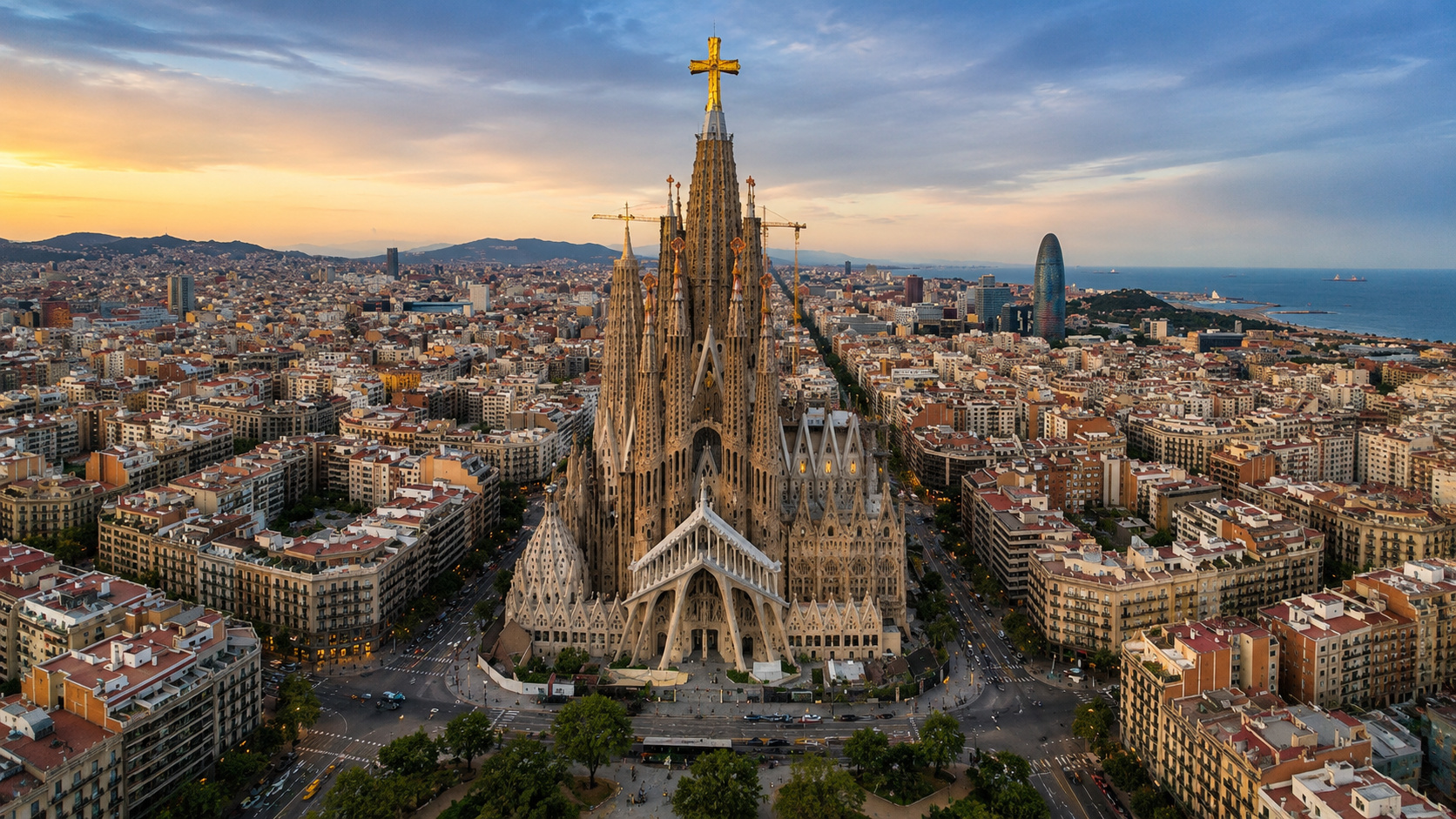
Sagrada Família Becomes World’s Tallest Church at 172.5 Meters, Surpassing German Church with Gaudí’s Design

-
Inspired by São Paulo’s Vila Reencontro, Rio Grande do Sul invests $8 million to provide 18 m² micro-homes for homeless families in four cities, offering amenities and up to two years of housing.

-
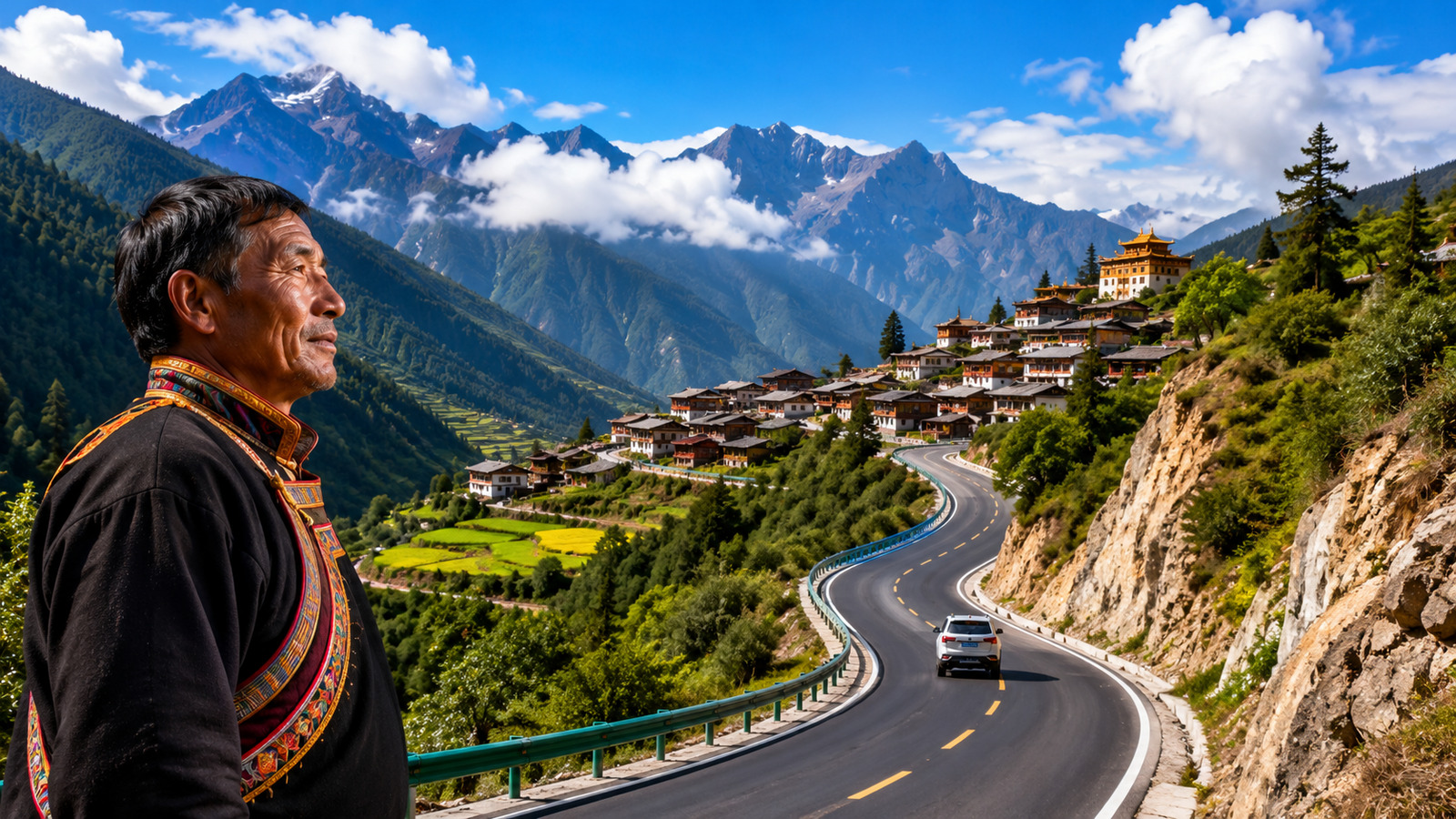
Brazil’s Piauí State Invests Over $2 Million in Road Restoration and Urban Asphalt Projects



What changes now is the logic of using the tunnel: it stops being just a forgotten railway work to become a visitation point, integrated into a tourist and cultural route focused on the municipality and the state.
What was done to recover the tunnel without altering the location

The base describes that the rescue process began last year and involved a series of practical and continuous actions. The work included cleanings, removal of vegetation, and care to preserve the space during the interventions.
Among the mentioned improvements are cleaning of the gutters, macadamization, and the application of crushed stone dust. The idea was to organize the environment, increase safety, and prepare the tunnel to receive a flow of people, without treating the revitalization as a “rushed” project and without attention to detail.
The lighting changes the experience of the tunnel and expands visitation
One of the most highlighted points is the installation of lighting to allow the tunnel to be visited at more times. Previously, the very condition of abandonment limited any safe use. Now, the infrastructure allows for nighttime circulation “at various moments,” in addition to supporting guided tours.
With lighting, the tunnel offers a more accessible and safer experience, which also favors visits from schools and groups that need predictability and structure to enter the site.
A tunnel that turns into a history lesson for schools and visitors
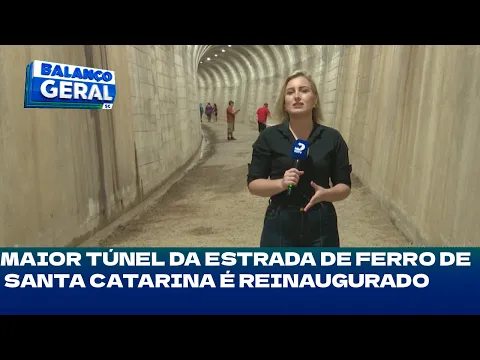

The foundation mentions school visits as part of the new cycle of the tunnel, reinforcing that the space is not just a landscape, but also a memory. The movement of children entering the tunnel appears as a symbolic image of recovery and appreciation of regional history.
The tunnel ceases to be just a “remnant” of the railway and starts to function as an educational space, connecting residents and visitors with a phase of development in Santa Catarina that was marked in the infrastructure of the countryside.
Name, homage, and the memory of those who helped to build

The tunnel was named after Edmundo da Silva Pozes, the engineer of the project at the time of construction. The homage was treated as recognition of someone who contributed to the development of the state.
A family member expressed emotion upon seeing the name remembered, mentioning that the grandfather “fought hard” and that the remembrance is important for the family. The tribute appears as a message that old works have faces, stories, and people behind them, and that revitalization is not just physical, but also symbolic.
Tourism, culture, and impact on the economy of the municipality
The revitalization of the tunnel will integrate into the tourist and cultural route of the municipality, with the expectation of attracting visitors. The foundation points out that history and tourism “enchant” and that this movement can help the local economy.
When a point like the tunnel enters the itinerary, it attracts not only visitation but also consumption in the surrounding area, such as transportation, commerce, and services that revolve around the presence of tourists.
In your opinion, what weighs more in this reopening of the tunnel: the preservation of the region’s history or the chance to generate tourism and income for the municipality?




Be the first to react!